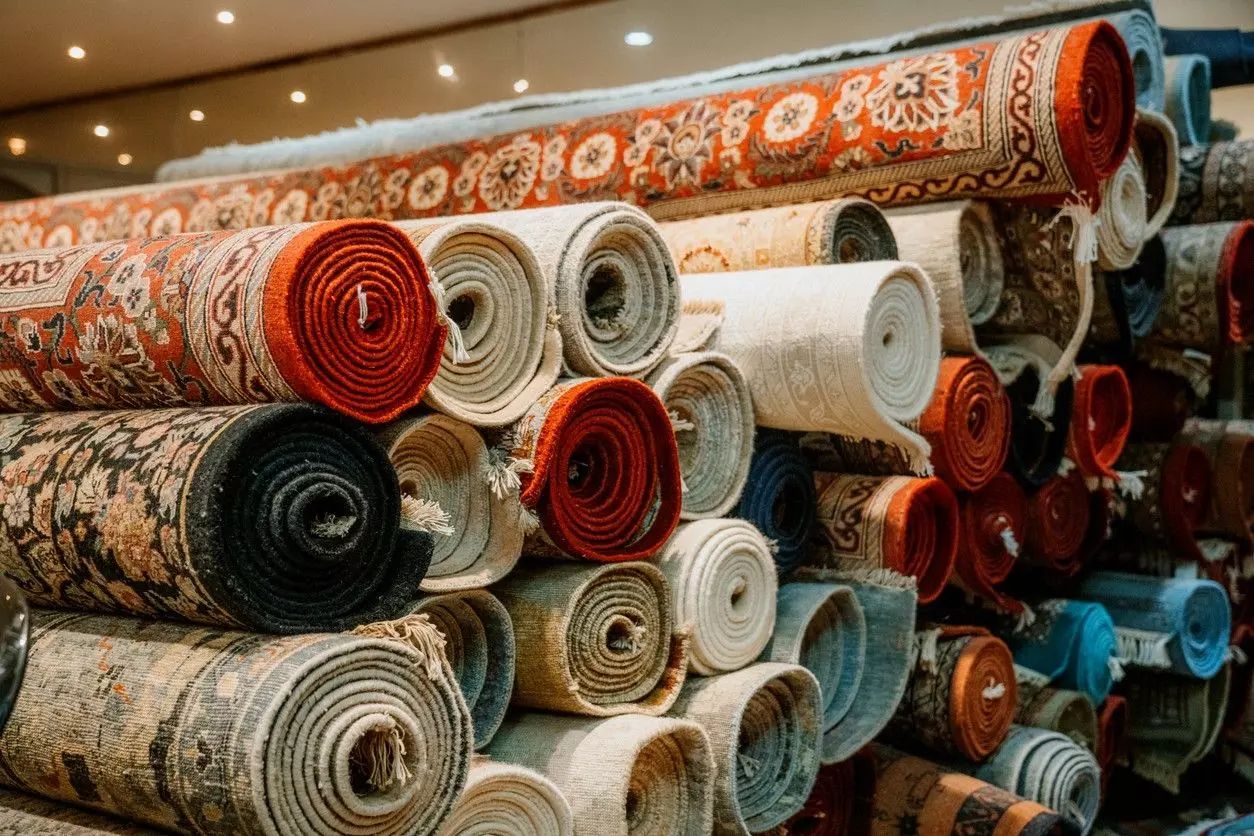
Bhadohi, a small district in Uttar Pradesh, is one of the largest carpet manufacturing hubs in the world. Photo: iStock
Iran conflict: Banarasi sarees, Agra leather and Bhadohi carpets, UP's export sector bleeds
Luxury goods — anything beyond essentials — have seen a 70–80 per cent drop in sales across Gulf markets

Like several other sectors across India, Uttar Pradesh’s export-driven micro, small and medium enterprises (MSMEs) sector has also been hit by a deepening crisis owing to the current conflict in West Asia.
Also read: Mourning Khamenei: Lucknow’s ties with Iran run deeper than geopolitics
For those engaged in manufacturing the state’s signature Banarasi sarees and Bhadohi carpets; the craftsmen of Moradabad, a major hub in the state; the leather traders of Agra; or the makers of Kannauj perfume – the frozen shipments, cancelled orders, and soaring freight costs have opened a window of endless uncertainty.
Exports to UAE, one of top markets, halt
With the Strait of Hormuz, the shortest sea route between India and the Gulf, effectively turning into a war zone, the shipping industry itself has faced a massive threat. Several cargo ships have remained stranded, and the insurance companies have either pulled cover entirely or hiked premiums to three per cent of cargo value. Alternative routes exist, but they're longer, costlier, and still uninsured.
The result: exports to the UAE — one of UP's most lucrative markets — have ground to a halt.
Disaster strikes during Ramadan, Eid
The timing could not be worse. The weeks before Ramadan and Eid are the single biggest shopping window for Indian exporters in the Gulf. Dubai's retail markets draw buyers from across the world, and UP's Banarasi furnishings, handicrafts, leather goods and Kannauj perfumes are perennial bestsellers in this season.
This year, those shelves are going unfilled.
Also read: How West Asia conflict has left India's coastal economy with empty nets
“Our cushion covers, curtains and furnishing items were already shipped before Ramadan. But mall sales collapsed. Old payments have stopped coming in. New orders have dried up entirely,” said Mukund Agarwal, a Banarasi fabric exporter to the UAE, including Dubai.
Luxury goods — anything beyond essentials — have seen a 70–80 per cent drop in sales across Gulf markets. Goods that reached there before the crisis broke are now sitting in warehouses, on hold.
Chaudhary Shafikurrahman, a leather exporter from Agra with 25 years in the business, says shipping companies have raised rates three to four times.
“Export is impossible unless you pay the surcharge. And even then, you can't get insurance,” he said.
Also read: West Asia conflict paralyses South India’s granite exports
Trade expert Harjinder Singh puts it plainly, “Insurance companies have hiked coverage costs to three per cent of product value. The Strait of Hormuz is blocked. Longer routes cost more. And now Iran, Israel and the US are targeting financial infrastructure — banks. Until banking channels reopen, export payments won't flow.”
Appeal to govt to step in
People like Singh have urged the government to step in before the damage becomes irreversible. Many MSME units took loans to fund this season’s production and shipments. With payments frozen and new orders absent, loan defaults loom.
“An advisory from the government would at least reassure the sector,” said Singh.
“Without it, units will shut down, and the millions of artisans behind them will lose their livelihoods.”
(The article was originally published in The Federal Desh.)