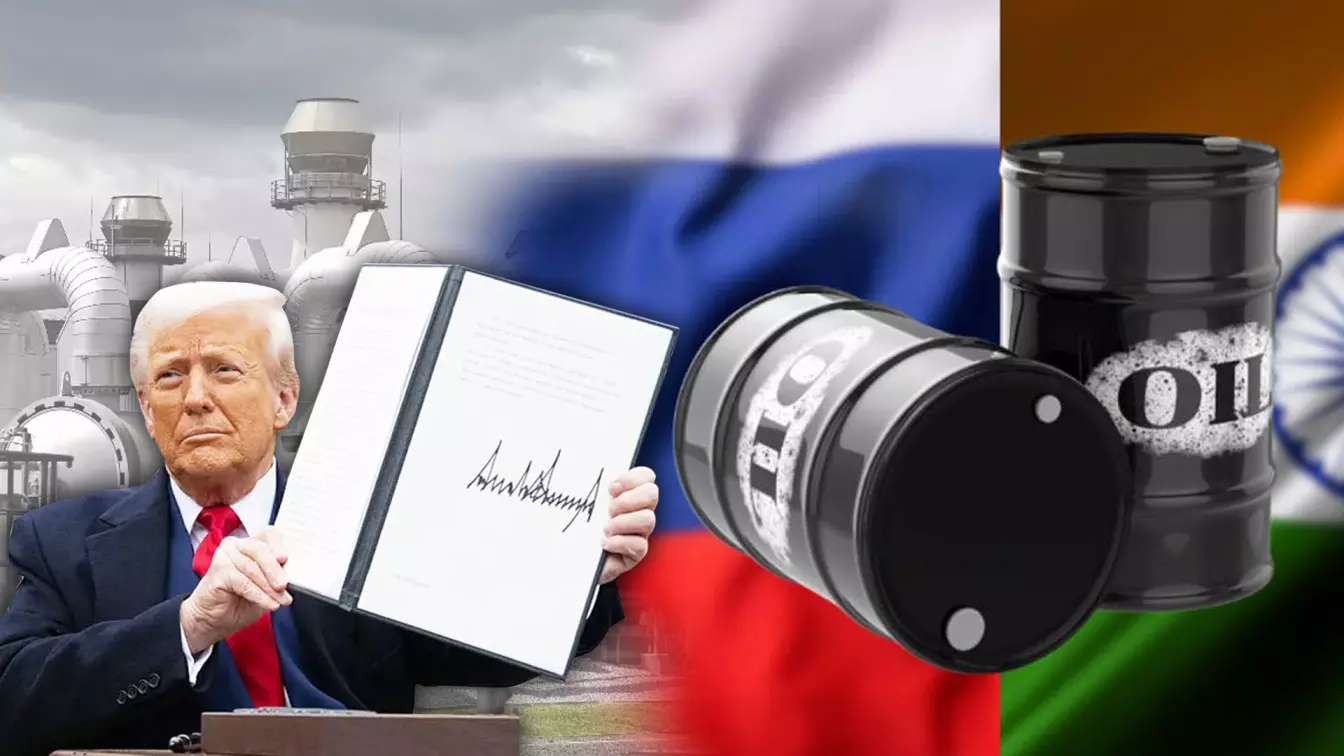
Explained: Russian oil, American tariffs, and the Indian economy
With the US warning of steep tariffs over Russian crude, India’s energy choices are now deeply tied to geopolitics. Can we balance oil security and trade ties?

Oil has always been a strategic pressure point for India, but that vulnerability is being tested again as global politics tighten around energy trade. With the United States signalling tougher sanctions on buyers of Russian crude, India’s oil imports are now firmly in the geopolitical spotlight.
Oil is no longer only about fuel prices. It has emerged as a bargaining chip in global trade negotiations. Washington has repeatedly warned countries importing Russian crude of economic consequences, including higher tariffs and sanctions-linked measures, placing India and China under sharper scrutiny.
The pressure has intensified after former US President Donald Trump approved a bipartisan sanctions bill that allows penalties on countries knowingly purchasing Russian oil. This could potentially expose India to tariffs of up to 500 per cent, raising concerns across policy and economic circles.
Sanctions pressure
After the Ukraine war began, the US and its allies imposed sweeping sanctions on Moscow. India did not join these sanctions but faced diplomatic pressure for continuing to buy Russian crude at a time when global energy markets were volatile.
Also read: US tariffs on India may rise up to 500% as Trump backs Russia sanctions bill
At several points, the US publicly linked energy trade with broader trade negotiations, signalling that oil choices now carry geopolitical consequences. These warnings come even as India has begun trimming Russian imports amid growing uncertainty.
Meanwhile, India’s fuel demand continues to rise. A Reuters report said India’s fuel consumption touched a record high last month, highlighting how disruptions in oil supply could fuel inflation, push up prices, and slow economic growth.
Import dependence
India is the world’s third-largest oil importer, with crude oil powering transport, electricity generation, manufacturing, and logistics. About 90 per cent of India’s crude oil needs are met through imports, making the economy highly sensitive to global oil flows and prices.
Even small shifts in supply or pricing can affect inflation, the rupee, and government finances. The Ukraine war significantly reshaped India’s oil sourcing strategy in this context.
Also read: Modi 'not happy with me' over steep tariffs, says Trump
Russia emerged as one of India’s top crude suppliers, offering oil at discounted rates. Estimates suggest India has purchased well over €140 billion worth of Russian crude since 2022, helping refiners cut costs and cushion domestic fuel prices during global volatility.
Shifting strategy
At its peak, Russian oil accounted for nearly 45 per cent of India’s crude imports. That share has since begun to decline, as major refiners signal a more cautious approach amid tightening sanctions, insurance risks, and geopolitical uncertainty.
Energy purchases are now increasingly linked to trade concessions, tariff threats, and diplomatic pressure. This marks a shift where oil decisions are no longer purely economic but strategic and geopolitical.
Also read: Trump on India's Russian oil purchases: 'Modi knew I wasn't happy'
For India, this means balancing affordability, energy security, and diplomatic relations will remain a delicate task. Decisions on oil imports today have implications for trade relations, foreign exchange outflows, inflation, and long-term economic stability.
(The content above has been transcribed from video using a fine-tuned AI model. To ensure accuracy, quality, and editorial integrity, we employ a Human-In-The-Loop (HITL) process. While AI assists in creating the initial draft, our experienced editorial team carefully reviews, edits, and refines the content before publication. At The Federal, we combine the efficiency of AI with the expertise of human editors to deliver reliable and insightful journalism.)