Satluj row | Film based fully on SC judgment; there's no fiction: Niren Bhatt
Co-writer of controversial film on Jagjit Singh Khalra says it's based entirely on official records, that it tells a poignant true story, and there's no propaganda

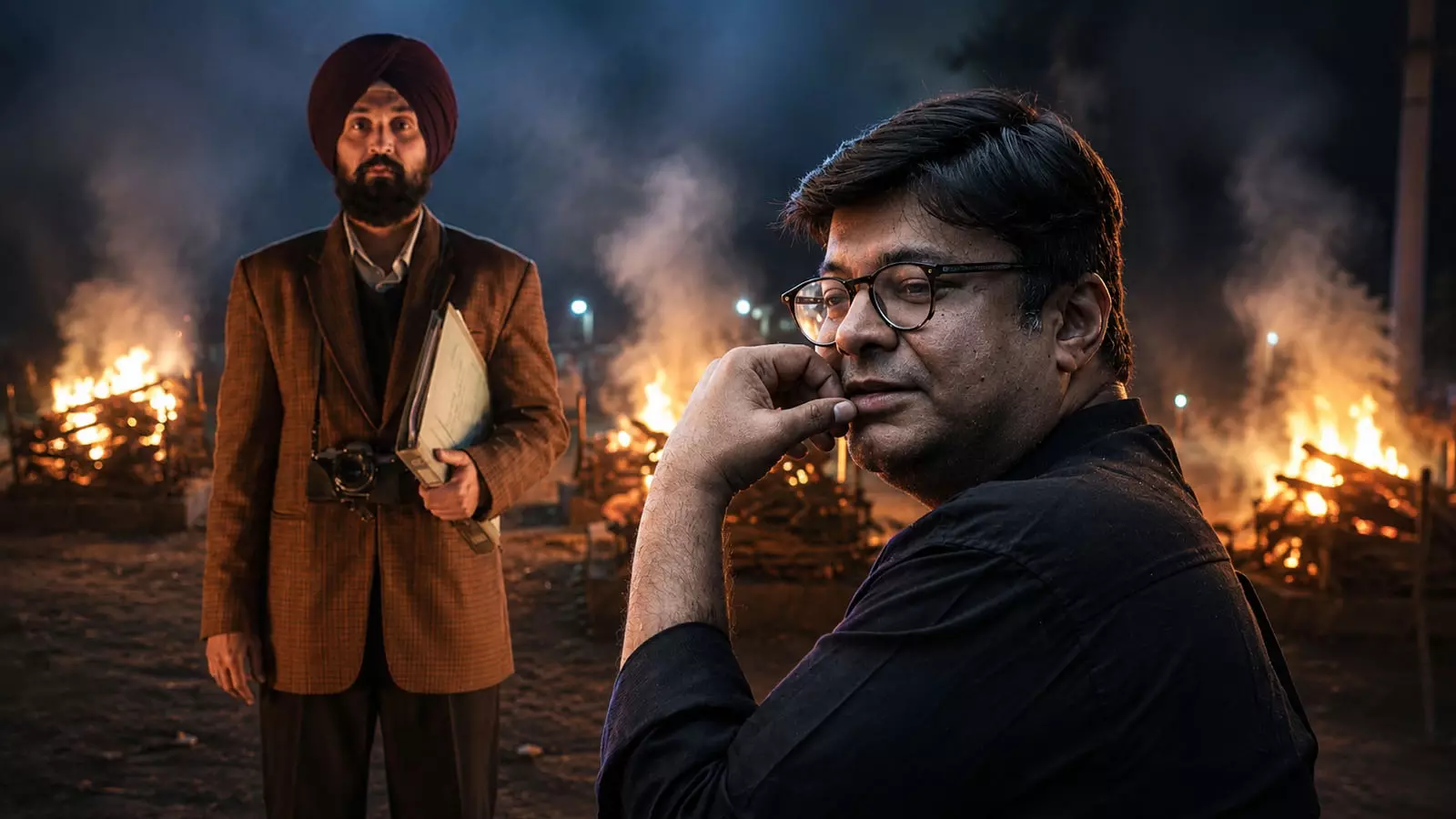
After being stuck in with the CBFC for years, Satluj dropped on the OTT platform Zee5 last week, but was removed two days later.
Biographical drama Satluj has been traversing turbulent waters ever since it was made back in 2022 as Punjab '85.
For a long time, the Central Board of Film Certification (CBFC) allegedly dragged its feet to clear the film. Suddenly, last week, the film dropped its earlier title and quietly landed on OTT platform Zee5 in its new avatar, Satluj. Equally suddenly, it was summarily removed two days later.
Also Read: 'Satluj' OTT takedown sparks political firestorm across poll-bound Punjab
Pirated links of Satluj are all over the internet and social media. It's available on foreign shores and "is being telecast outside gurdwaras in London". Now, the Information & Broadcasting (I&B) Ministry is set to examine the film.
Authorities reportedly cite “security concerns” and fear of stoking militancy in Punjab ahead of an election year for the pullback. Punjab Assembly elections are scheduled for next year. But, Niren Bhatt, the co-writer of Satluj, in an interview with The Federal, refuted these narratives.
'Telling a sad, sad story'
“Someone is trying to play devil's advocate here. The film, streamed across the world, is just evoking empathy and not promoting separatism in any way. It does not provoke, it is just telling a sad, sad story. And, we do great injustice to people like human rights activist Jaswant Singh Khalra by trying to label this film as controversial or saying that it tells just one side of the story. Moreover, this kind of stalling will eventually discourage filmmakers to make political films or tell real stories. The Hindi film industry will end up making more popcorn movies and masalas," he claimed.
The veteran screenwriter said writing for a film like Satluj was a "rare opportunity" and "so fulfilling". "People keep complaining Bollywood doesn't make good films, but how will we, if they don’t allow us?” he asked.
Watch/Read: Satluj row: Is banning the film only making more people watch it?
Bhatt, who also co-wrote the commercial hit Stree 2, said Satluj is not banned in India. “The screening has just been paused,” he said, adding that it is getting a good reception abroad.
“People are speechless and break down crying after watching the film. The film evokes empathy towards the people who suffered in Punjab during the militancy period in the 1980s and '90s,” he said.
"What about films like Punjab 1984? Police brutality is shown explicitly in the film. Gulzaar Saab’s Macchis tells you the story of a militant who picks up arms against police brutality. Tamil film Visaranai even went to Oscars.”
Satluj tells the story of Khalra's mission to hunt for people who went missing in Punjab during the police crackdown on militancy. The story goes that in their bloody fight against militants, the police allegedly picked up many innocents, killed them and disposed of their bodies. Human rights activist Khalra (played by Diljit Dosanjh) too disappeares one day. The film journeys down his wife's (along with a CBI officer) battle to uncover the truth.
'Based on SC judgment'
According to Bhatt, the film is entirely “based on the Supreme Court judgement” delivered in the Khalra case, and interviews with RS Bains, the Supreme Court advocate who fought the case. "Our research documents ran into 1,500-1,700 pages," he said, claiming that the film is not a fictionalised account.
People keep complaining Bollywood doesn't make good films, but how will we, if they don’t allow us?”
“The entire film is based on the final Supreme Court verdict in the case. We based our screenplay on all the testimonies, witnesses, all the people involved, including the culprits and their final testimonies. All of this is proven in the Supreme Court of India, which gave a verdict punishing the four policemen who killed Jaswant Khalra. So, everything you see in the film is based on that verdict. We have not deviated on a single aspect. It is based entirely on facts,” he insisted.
Also read | Why was Diljit Dosanjh's Satluj removed from ZEE5? Explained
Maybe, someone may even question a recorded interview of a witness, he shrugged. “But what can I say, the story is culled from the legal judicial history of this country. Everything that is shown in the film is proven in the Supreme Court of India and it is there as a legal document,” he stressed.
Why tell Khalra's story?
In Bhatt's view, it is important to tell Khalra’s story.
“Will you or me ever put our lives on the line to obtain other people's death certificates? Because that is what he did," said the writer. According to him, Khalra was "warned, tortured for three months, killed by a bullet, his body cut with a knife and wrapped in barbed wire and dropped in the Harike canal, where the Sutlaj waters flow".
It is poignant that a man who was fighting for missing people went missing. His body is not found till date," he said.
Khalra, a bank employee, "sacrificed his career to search for missing people", added Bhatt. The activist reportedly found missing people's names in crematorium records and started a whole mission to find how they died and demanded an explanation from the police.
Why closure matters
“What is pertinent is that he was pursuing a very noble cause. He just wanted the death certificates of the people who went missing. Because the death certificate is important for children to get the money left in their father’s bank account or for a wife to get property,” he said.
“The children were not getting their father's inheritance, wives were not getting access to bank accounts and parents were suffering because the only earning member of the family was gone and nobody knew where that person was or what happened to him. It was a very human cause that he fought for,” Bhatt stressed.
'Why the debate?'
Meanwhile, Rahul Mittra, producer and actor, who plays a cop in the film, told The Federal that he is "perplexed" by the debate around the film.
Legal Lens | Sutlej takedown: State as a super censor, swapping scissors with switch
"It is just a biographical film on a human rights activist. Whatever is depicted about Khalra, the fact he was banker, kidnapped and killed is not fabricated. If it was fabricated or exaggerated, then we can have a debate. I don’t understand when people say it is propaganda and Punjab will be tainted.
"Efforts of separatism have gone on for a long time in Punjab but nothing has happened. Punjab has sustained, I am proud of being a Punjabi," said Mittra, who grew up in Punjab and said he has witnessed the turbulent times in close quarters.
Rahul Mittra plays a cop in the Diljit Dosanjh starrer, Satluj
According to Mittra, Honey Trehan, director of Satluj, was moved by Khalra’s story and made a film. "There is no larger agenda here, the movie has been in the works for a long time now. Moreover, the government or authorities have no clarity why they don’t want the film to be shown," said Mittra. "I am aware of the film's long-drawn battle with CBFC, and like many others, I am also perplexed about it. It’s not anger, I am just questioning why."
On pirated versions of Satluj popping up on the internet, Mittra said: "Curiosity levels have gone up about the film and it is being telecast on big screens outside gurdwaras in London.
"But, I am sad about the pirated versions. Piracy is the biggest menace, and my heart goes out to the makers. It is very unfair, and I must call out piracy. I have not shared a single link with anyone. But it is a fact that in villages, people are watching it en masse."
Other films on police brutality
But Bhatt remains hopeful. “I am quite hopeful now because the I&B Ministry has formed a special committee, which took four years to form. I believe whoever is in the committee will see what we are trying to say in the film. They will also feel the empathy. It's in no way trying to evoke any violent reaction from anyone, nor is it trying to glorify something bad. It is just trying to tell the story of a person who sacrificed himself for others. They will realise this and restore the film," he said.
The CBFC had asked director Honey Trehan to make 127 cuts. At one point, the director refused and went to court.
Describing what he called the CBFC's "lack of communication", Bhatt said: “That was in the past. For long durations, they didn't reply to us. After each iteration, we'd make those cuts and there would be a long silence for some months. We would mail and call them and they would come back and give us more cuts. But the film was just getting delayed further. That was the lack of communication."
Is that Gill?
The film shows a dialogue between the Punjab IG (played by Kanwaljeet Singh), who is pulled up by the Chief Minister and told to find Khalra at all costs. Many critics have said that the character, who defends the police actions saying they managed to control militancy in the state, portrays the late KPS Gill, the former director of police.
Gill is widely credited for crushing Khalistani militancy and restoring peace in Punjab during the 1980s and 1990s. However, human rights organisations and critics accuse him and the police forces under his command of carrying out extrajudicial killings, enforced disappearances, and a widespread system of "fake encounters" to eliminate insurgents.
The makers of Satluj deny that the character played by Kanwaljeet Singh is based on Gill. Instead, the character called Bitta plays the IG of the state, who is thanked by the Punjab CM in the film for eradicating militancy from the state, they said.
Bhatt said, "It's not as if we don’t refer to the militancy in the state and how the police eradicated it. But we are questioning the methods and the ghastly acts committed by some policemen. And, ultimately, it's the conscience of a good policeman which prevails to get justice for Khalra," he said.
Poetry in the film
Those who watch Satluj say what makes it soulful is the poetic tone woven into the film. Bhatt, who is a lyricist as well for Gujarati films, admits that he sneaked in small bits of poetry in the film.
Watch/Read | Why NTR-Trivikram's Murugan film has sparked a Tamil row
"The film is dedicated to Padma Shri Surjit Singh Patar, considered to be one of the greatest poets of this country. The film opens with his photograph and the song sung by the policemen in a vehicle on their road to hell when the film opens, is written by Shivkumar Batalavi. It is a song called The Night of the Sadness is Long and sets the prelude for the dark times through which the whole state was going through at that time. The song was popular at that time," recalled Bhatt, explaining why they decided to use this haunting number in the film.