



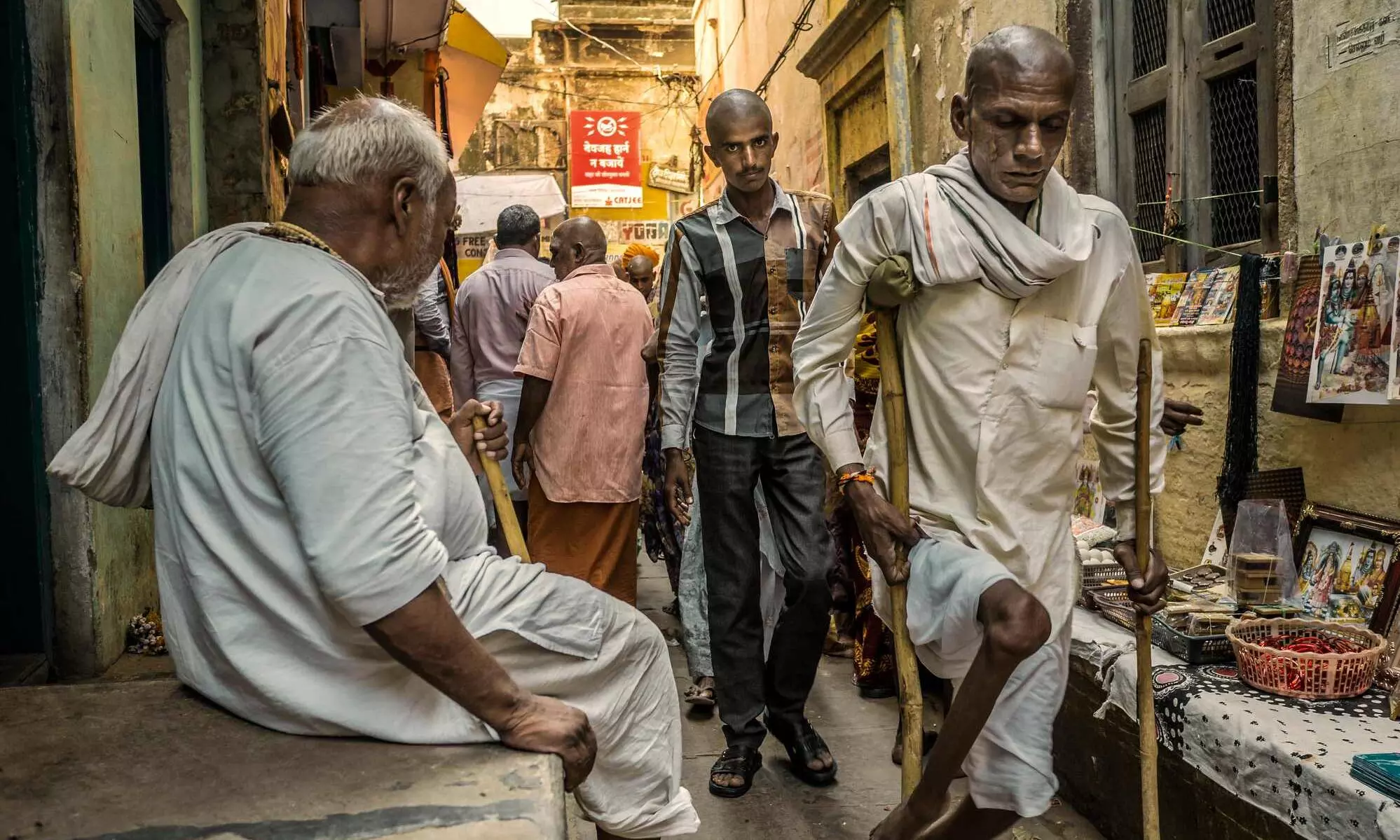
The Budget does not introduce new tax exemptions or enhanced deductions specifically for persons with disabilities. Representational image: iStock
Union Budget 2026-27 and persons with disabilities: What it offers, what it misses
Union Budget 2026-27 offers no new schemes or tax relief for persons with disabilities, relying on existing welfare, healthcare and employment programmes

The Union Budget 2026-27 presented on Sunday (February 1) offers limited direct relief for persons with disabilities. It relies on general welfare schemes, with no major new fiscal push aimed specifically at persons with disabilities.
Instead of carving out a distinct fiscal roadmap for persons with disabilities, support for the physically challenged is largely embedded within broader social welfare, healthcare and employment frameworks.
The following questions explain what the Union Budget 2026-27 offers, what it omits, and how existing measures are expected to help persons with disabilities.
Does the Budget 2026-27 introduce any new schemes for persons with disabilities?
No. The Budget does not announce any new, disability-specific welfare or empowerment schemes. There are no fresh allocations exclusively aimed at persons with physical disabilities.
Are existing disability-related benefits continued?
Yes. Existing benefits and entitlements for persons with disabilities under ongoing central schemes continue.
Also Read: Budget 2026-27: Biopharma gets big boost, public health left behind
These include access to social security programmes, subsidised healthcare and welfare initiatives that are open to vulnerable groups more broadly.
Does the Budget offer any tax relief to persons with disabilities?
The Budget does not introduce new tax exemptions or enhanced deductions specifically for persons with disabilities. Existing provisions under income tax law remain unchanged, offering continuity but no additional relief.
How does the Budget address healthcare needs of persons with disabilities?
Persons with disabilities are expected to benefit indirectly from higher or sustained spending on public healthcare, insurance coverage and medical infrastructure.
Also Read: Budget 2026-27: Here are 10 key takeaways
However, there is no targeted provision addressing disability-specific healthcare needs or assistive services.
What about employment and skilling support?
The Budget’s emphasis on skilling, employment generation and labour market participation applies equally to persons with disabilities.
Also Read: Budget 2026: With eye on Olympics, Khelo India mission gets a push
That said, it does not provide targeted incentives, reservations or funding to improve employment outcomes specifically for the physically challenged.
Does the Budget focus on accessibility and inclusive infrastructure?
No explicit fiscal push has been made for accessibility upgrades in public infrastructure or transport systems. Any progress on accessibility is expected to come through existing policies rather than new Budget commitments.
Overall, how is the Budget expected to help persons with disabilities?
The Budget’s impact on persons with disabilities is largely indirect. It relies on universal welfare schemes and general economic support measures rather than targeted interventions. While this ensures continuity of benefits, it falls short of addressing long-standing demands for focused financial support, accessibility and inclusion.