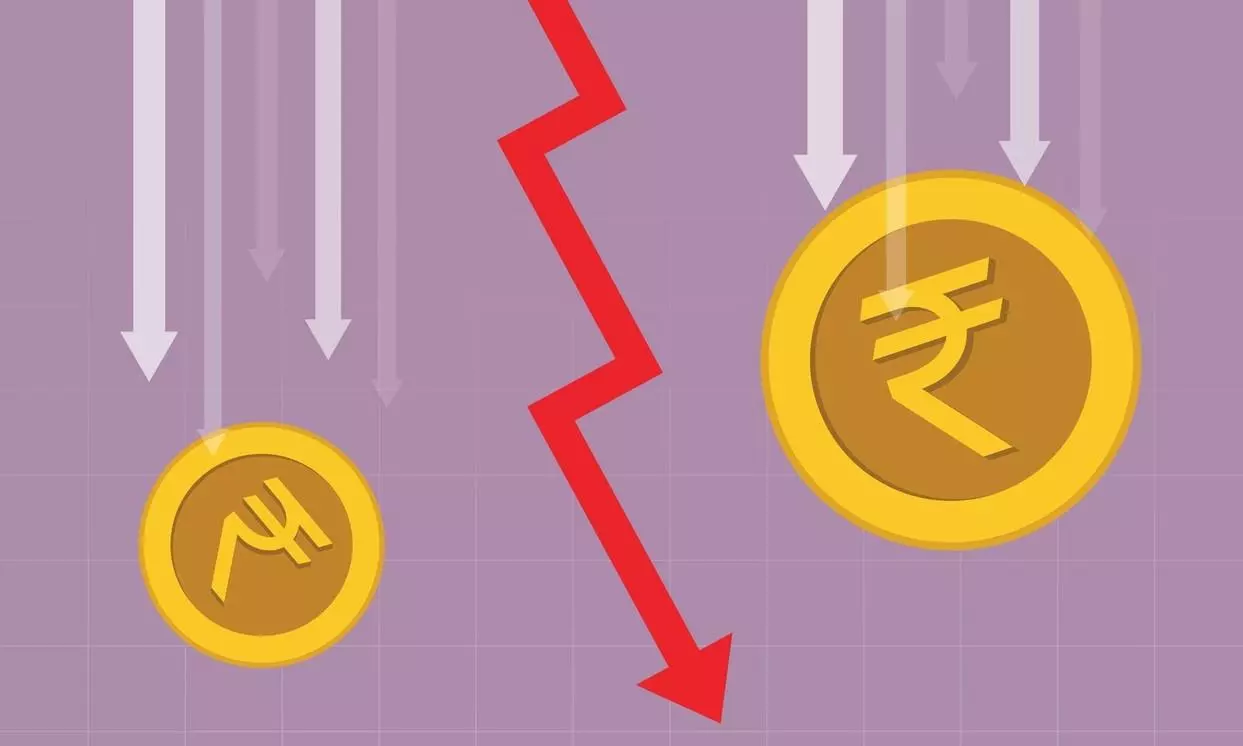
RBI to let rupee find its own level even as it breaches 90-mark again
The currency's fall vis-a-vis the USD, pound and euro, along with falling exports and flight of capital, reflects deeper malaise that remains unaddressed

As expected, the Reserve Bank of India (RBI) is unlikely to aggressively defend the rupee against the US dollar (USD) despite the downward pressures and crossing the psychological barrier of 90 again on Friday (December 5).
After the Monetary Policy Committee (MPC) meeting, RBI Governor Sanjay Malhotra made it clear that the policy is to let the rupee find its level and the market determine that level, intervening only to check excess volatility and ensure orderly movement of the currency.
Malhotra clarifies RBI's plans
He denied that the RBI’s plan to carry out a rupee-USD swap to the tune of $5 billion this month — as he had announced in his initial observations on the MPC’s decisions — is to defend the rupee. He said this is to infuse liquidity (availability of cash) in the banking system.
Also read: Rupee fall past 90 exposes cracks in India’s economic outlook
More often than not, the RBI does sell and buy the USD (rupee-USD swap) in the market to defend the rupee, as was evident under the stewardship of former RBI Governor Shaktikanta Das. There has been a rethink lately, particularly after the 50 per cent US tariffs began to hurt Indian exporters severely.
The RBI does intend to infuse more liquidity into the banking system, as Malhotra said the Open Market Operations (OMO) will resume. This is after the average liquidity surplus fell to Rs 1.5 lakh crore a day during October-November, down from Rs 2.1 lakh crore a day during the previous couple of months (August-September). Monetarists consider an average of Rs 2 lakh crore a day as ideal.
Rupee may continue to tumble
As for the falling rupee, it may continue until at least the US cuts down its punitive tariffs. A US trade delegation is expected in New Delhi next week, and the prospect of an easing in tariffs is expected after India reportedly assured US President Donald Trump of cutting down the imports of Russian crude (India is yet to deny it).
Also read: Rupee slumps to all-time low of 90.25 against US dollar
Until then, the RBI and the Union government seem keener to ease the burden on exporters by letting the rupee depreciate.
But this also means missing the opportunity to reassess the overall economic policies.
The falling rupee is against a considerably weakened USD, which has fallen by 10.5 per cent this year, against six major global currencies. The rupee’s fall against the USD is by over 5.3 per cent this year, making it one of the most under-performing Asian currencies.
Even more worrisome is that the value of the rupee has been going down over a long period, particularly since FY18, against the USD and also two other major currencies, the British pound and the euro, reflecting weakening economic fundamentals.
Weak fundamentals
By ignoring the clear signs, the RBI and the Centre are ignoring the underlying weakened economic fundamentals — falling goods exports, flight of foreign investments (FPI and FDI), falling manufacturing outputs and extremely low inflation.
Also read: How US Fed rate cut brings both relief and risks for India
The RBI governor acknowledged the decline in goods exports but not manufacturing output (IIP), and was economical about FPI/FDI flows. The growth in industrial output (IIP) has been progressively declining, down to four per cent in H1 of FY26 from 11.8 per cent in FY22. The growth core industry (eight infrastructure sectors) is also progressively declining sharply — down to 2.9 per cent in H1 of FY26 — from 10.4 per cent in FY22.
The governor did acknowledge FPIs recorded net outflows of USD 0.7 billion during April-December 3, but didn’t recognise that net FDI had turned negative in September and October (-USD 2.4 billion) due to higher repatriation and disinvestment.
Such flight of capital, along with the continued fall in exports and the value of the rupee, points to the economy losing its steam and India’s attractiveness as an investment destination eroding.
Recognising these aspects would have allowed introspection and course corrections.