



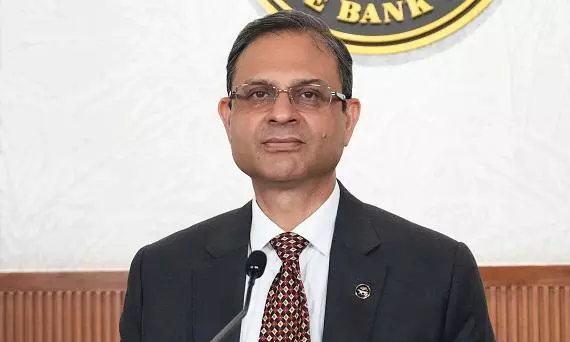
With inflation easing, RBI reduces repo rate by 25 bps to 5.25%
Cooling inflation and steady growth prompted the MPC to deliver a 25-basis-point cut amid a stable macroeconomic backdrop

The Reserve Bank of India (RBI) on Friday (December 5) cut the repo rate by 25 basis points to 5.25 per cent, marking the first reduction since its three-phase easing earlier this year, as the central bank moved to support growth amid sharply cooling inflation and a stable macroeconomic backdrop. The RBI also raised FY26 GDP growth estimates to 7.3% from 6.8% earlier. It reduced FY26 CPI inflation forecast to 2% from 2.6% earlier.
The Monetary Policy Committee (MPC) concluded its three-day meeting this morning against a backdrop of cooling inflation, robust GDP growth, the rupee breaching 90 against the dollar, and global geopolitical uncertainties. The RBI has already cut the repo rate by 100 basis points this year, in three tranches beginning February, in response to steadily falling CPI inflation.
Also read | Will Q2 growth cross 7 pc, reverse downward GDP swing? Key indicators say otherwise
RBI Governor Sanjay Malhotra said the committee voted unanimously for the rate cut after reviewing fresh data on inflation and growth trends. “After a detailed assessment of the evolving macroeconomic conditions and the outlook, the MPC voted unanimously to reduce the policy repo rate by 25 basis points to 5.25% with immediate effect,” he said.
Malhotra also announced liquidity support measures to keep markets stable. “In view of the evolving liquidity conditions and the outlook, the Reserve Bank has decided to conduct OMO purchases of government securities of Rs 1 lakh crore and a three-year dollar rupee buy-sell swap of 5 billion US dollars this month in December to inject further durable liquidity into the system.”
Explaining the rationale for the rate cut, Malhotra said the inflation outlook has improved substantially. “The MPC observed that headline inflation has eased significantly and is now expected to remain below earlier projections, largely due to exceptionally benign prices,” he said.
He noted that both headline and core inflation are likely to stay at or below 4% in the first half of next year. The governor also highlighted that the recent uptick in headline inflation was partly driven by rising precious metal prices, which alone contributed around 50 basis points. Without this factor, inflation pressures would be even weaker.
On growth, the RBI expects the economy to stay robust, though some cooling is anticipated. Malhotra said the combination of resilient growth and a favourable inflation trajectory created room for policy action. “Growth, though resilient, is expected to moderate slightly. Therefore, the growth–inflation balance, supported by the benign outlook for both headline and core inflation, provides the policy space to reinforce the growth momentum.”