HDFC Bank row sparks consumer concerns over transparency and safety
Experts urge calm but demand clarity after senior exit at HDFC Bank, as depositors question safety, accountability, and their rights amid rising uncertainty

“Strong banks are not weakened by transparency—they are strengthened by it.” This sharp observation from banking expert Nasser Salim captured the core anxiety surrounding the recent developments at HDFC Bank.
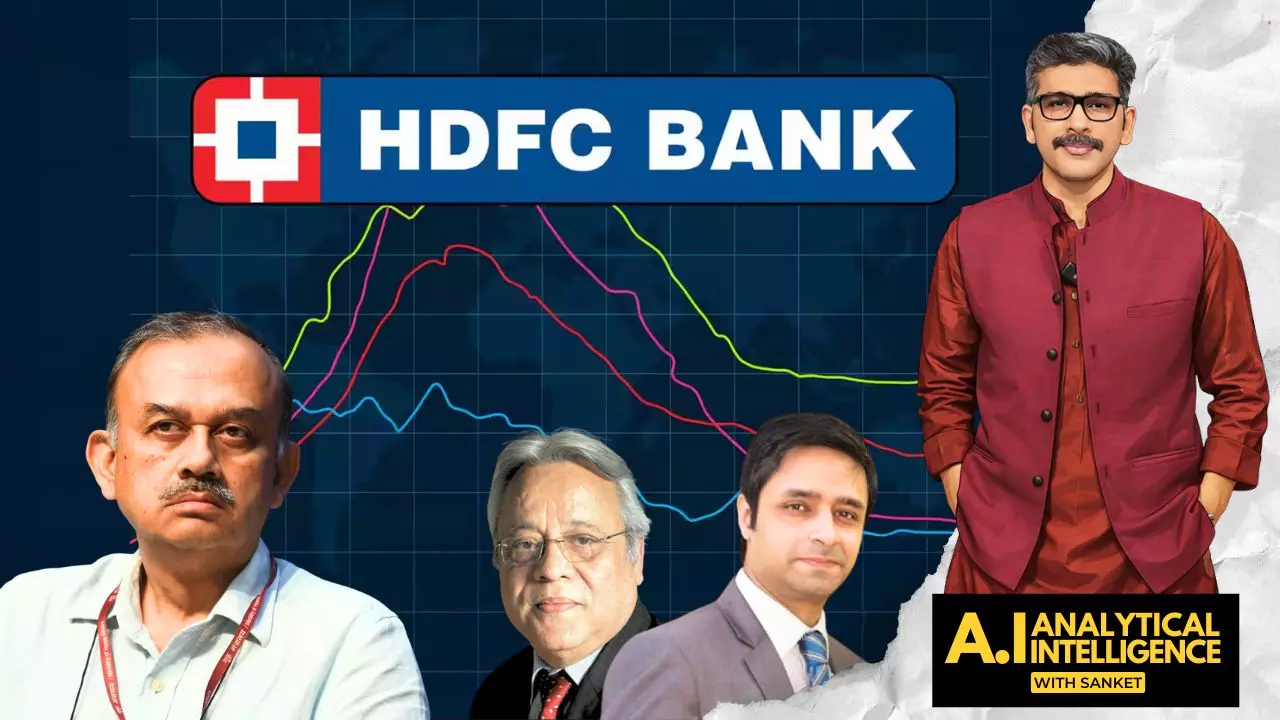
With top executive Atanu Chakraborty resigning on March 18, citing ethical concerns, and no detailed clarification from the bank, millions of customers are left asking: Is their money safe? In this episode of AI with Sanket, Nasser Salim, Managing Director of Flexi Capital, and Professor Bejon Kumar Misra, international consumer policy expert, decode what this means for depositors.
Consumer first
Professor Bejon Kumar Misra began by shifting focus to the often-overlooked stakeholder— the customer.
He stressed that while boardroom disputes dominate headlines, the real concern is the 12 crore customers of HDFC Bank. “The consumer is rarely heard first,” he noted, adding that such situations naturally create anxiety among depositors who lack the expertise to interpret corporate developments.
Despite the uncertainty, Misra advised against panic withdrawals. He emphasized that customers should continue trusting the regulatory oversight of the Reserve Bank of India (RBI), which monitors banking operations closely.
At the same time, he highlighted that consumers have fundamental rights—transparency, accountability, and access to information—which must be upheld by banks.
Allegation vs reality
Nasser Salim drew a critical distinction between allegation and proven wrongdoing.
“An allegation is not a conviction,” he said, cautioning customers against jumping to conclusions. According to him, the key issue is not the allegation itself, but how the institution responds to it.
Also Read: Petrol, diesel excise rate cut breather for oil companies, explained | AI With Sanket
He explained that banks are custodians of lifetime savings, and any sign of instability at the top raises valid concerns about governance and internal controls. However, what matters most is whether the system is strong enough to protect depositors.
Customers, he said, are generally tolerant of disputes—but not ambiguity. “Where there is ambiguity, discomfort begins,” he added.
Silence worries
Both experts pointed to one major issue—the lack of clear communication from the bank.
Salim noted that limited responses such as legal filings or exchange disclosures do little to reassure customers. Instead, depositors expect direct, simple communication confirming the safety of their money.
“If nothing is wrong, why not say so clearly and calmly?” he asked.
Misra echoed this, saying banks should voluntarily communicate with customers instead of waiting for regulators to step in. He even suggested that relationship managers should proactively reach out to reassure clients during such situations.
Too big to fail?
The discussion also touched upon HDFC Bank’s systemic importance.
As a Domestic Systemically Important Bank (D-SIB), it is considered “too big to fail.” This means regulators would likely intervene to prevent any major crisis, given the bank’s scale and impact on the financial system.
Salim explained that HDFC Bank holds one of the largest shares of deposits in the private sector, making its stability crucial not just for customers but for the broader economy.
However, he warned that if any serious governance lapse emerges, the consequences could ripple across financial markets, including stock indices like the Nifty and Sensex.
Lessons from past
The host referenced past crises such as the PMC Bank collapse in 2019 and the Yes Bank crisis in 2020, where withdrawal limits severely impacted depositors.
Salim clarified that regulatory frameworks have since improved, with cooperative banks now under RBI supervision. He also highlighted the RBI’s strong track record in crisis management, including stepping in to stabilize Yes Bank.
Still, he acknowledged the risk of panic withdrawals. If large numbers of customers withdraw funds simultaneously, even a fundamentally strong bank can face liquidity stress.
What customers should track
Instead of reacting emotionally, Salim advised customers to focus on key financial indicators:
- Capital adequacy ratio (CAR)
- Non-performing assets (NPAs)
- Deposit strength (CASA ratio)
These metrics provide a clearer picture of a bank’s health than speculation or media reports.
He emphasized that transparent disclosure of these numbers would go a long way in restoring confidence.
Right to know
A major theme of the discussion was consumer rights.
Misra strongly argued that customers have the right to demand clarity. “You want my KYC, I want your KYC—know your bank,” the host remarked, echoing public sentiment.
According to Misra, banks are legally obligated to ensure transparency, quality service, and proper grievance redressal. In situations like this, clear communication is not optional—it is essential.
He also raised concerns about deposit insurance, which currently covers up to ₹5 lakh. He argued that full insurance coverage would eliminate panic and build stronger trust in the banking system.
Resignation questions
The panel was particularly critical of the manner in which the resignation was handled.
The vague reference to “ethical concerns” without further explanation drew sharp reactions.
Misra said such ambiguity is unacceptable for someone in a senior position, as it creates confusion and mistrust among customers.
Also Read: From budding cricketer to boss: Know Aryaman Birla, the new RCB chairman
Salim went further, calling it “irresponsible.” He pointed out that senior executives have multiple channels—such as whistleblower mechanisms and board disclosures—to raise concerns formally.
“You cannot shoot and scoot,” he said, emphasizing the fiduciary responsibility of banking leaders.
Trust deficit
Salim summed up the issue using a framework he described as “TRUST”:
Transparency
Resilience
Underwriting quality
Stability
Treatment of customers
He argued that these principles must guide all banking decisions, especially during crises.
The current situation, he said, risks undermining these values unless addressed quickly and clearly.
Call for clarity
Both experts agreed on one immediate need—clear, credible communication.
They urged both the bank and regulators to issue detailed statements addressing customer concerns. Such communication would:
- Prevent panic withdrawals
- Counter misinformation
- Reinforce institutional strength
As Salim put it, “Protect depositors from unnecessary anxiety.”
While experts advise against panic, they also underline a crucial point—trust in banking is built on transparency.
For millions of HDFC Bank customers, reassurance cannot come from silence. It must come from facts, clarity, and accountability.
(The content above has been transcribed from video using a fine-tuned AI model. To ensure accuracy, quality, and editorial integrity, we employ a Human-In-The-Loop (HITL) process. While AI assists in creating the initial draft, our experienced editorial team carefully reviews, edits, and refines the content before publication. At The Federal, we combine the efficiency of AI with the expertise of human editors to deliver reliable and insightful journalism.)