



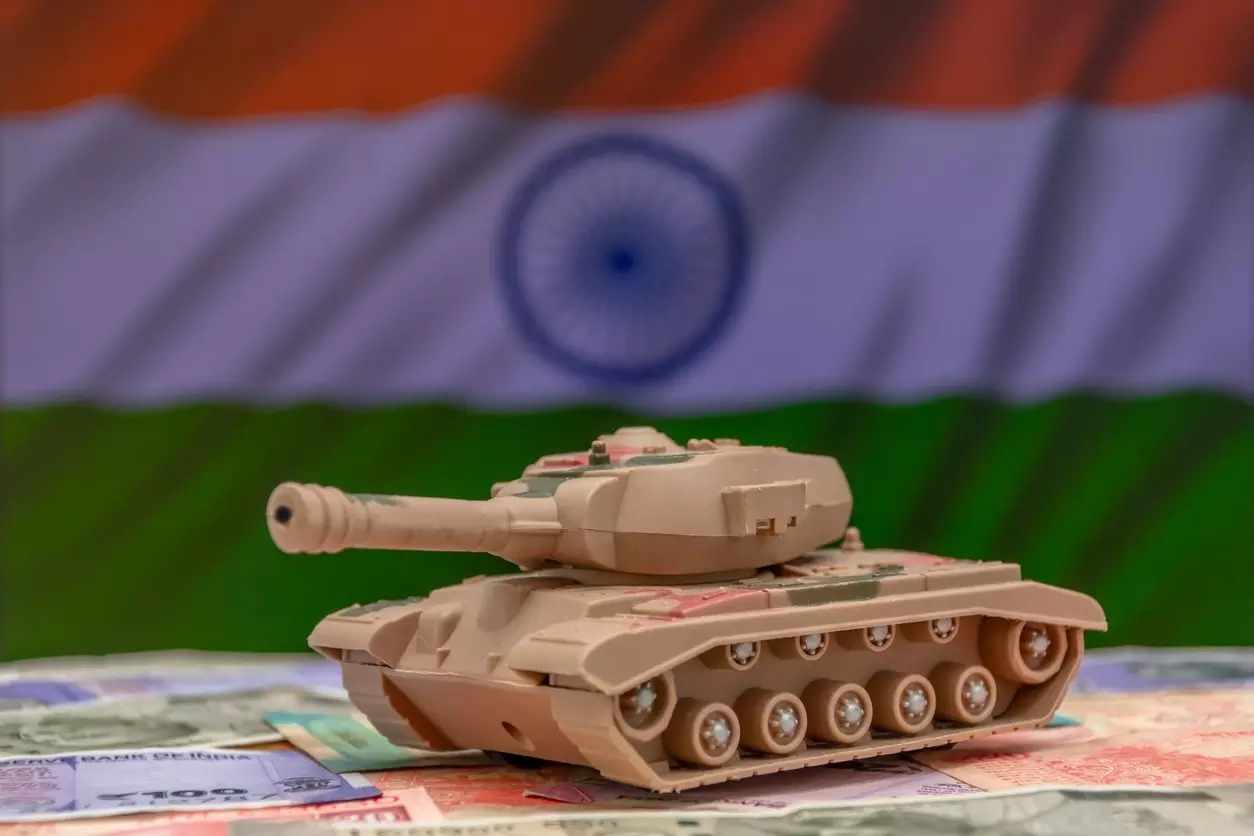
A significant rise in allocation for the defence sector was expected in Budget 2026-27, particularly in the wake of military tensions with Pakistan and China. Representative Photo: iStock
Operation Sindoor effect: Major hike in defence spending
Allocation rises to 11 per cent of GDP as the government focuses on military modernisation, domestic manufacturing, and regional security challenges

Union Finance Minister Nirmala Sitharaman assured the country’s defence establishment while presenting the Budget 2026-27 document by stepping up spending in the defence sector. She allocated Rs 7.85 lakh crore to the defence sector, up from Rs 6.81 lakh crore allocated in FY26, emphasising a continued emphasis on military preparedness, modernisation and the welfare of the personnel.
Follow Budget 2026-27 Live here
As per the Budget documents, the overall allocation for the defence ministry in FY27 encompasses defence services (revenue), capital outlay, defence pensions, and civil establishments under the ministry.
India's 2026-27 Defence Budget: In figures
- The defence budget for 2026-27 has been provisioned at Rs 7.85 lakh crore, compared to Rs 6.81 lakh crore in the previous financial year.
- The 2026-27 defence budget has seen a 15.27 per cent rise over the previous budget, which was 9.5 per cent higher than the year before.
- This year's defence budget includes revenue expenditure of Rs 553,668.56 crore.
- Budgetary allocation for FT 2026-27 under the capital head to the defence forces is at Rs 2,19,306.47 lakh crore, which is nearly 22 per cent more than the estimates of FY 2025-26.
- Out of this, Rs 1.85 lakh crore is provided for capital acquisition, which is around 24 per cent more than the capital acquisition budget for the last FY.
- Defence budget earmarked Rs 3,65,478.98 crore for spending under revenue heads.
- The budgetary allocation to the DRDO has been increased to Rs 29,100.25 crore
The ministry also has major projects in the pipeline, such as contracts for Rafale fighter jets, submarines and unmanned aerial vehicles, agencies reported.
Rajnath thanks PM Modi
Defence Minister Rajnath Singh welcomed the increase in the defence allocation and thanked Prime Minister Narendra Modi, saying, "This budget has provisioned Rs 7.85 lakh crore for the defence sector, for which I thank PM Modi. After the historic success of Operation Sindoor, this budget has strengthened our resolve to further strengthen the country's defence."
The allocation for defence in this Budget is more than 15 per cent than the previous one, while the Ministry of Defence has received its largest share.
Military allocated Rs 2.19 lakh cr
When one breaks up the figures, the military has been allocated Rs 2.19 lakh crore, reflecting a 21.84 per cent increase, for modernisation in FY2026-27.
In the FY2025-26 budget, the defence ministry's capital expenditure was Rs 1.8 lakh crore.
Also read: Budget 2026-27: Here are 10 key takeaways
The capital expenditure allocations include Rs 63,733 crore designated for aircraft and aero engines.
Furthermore, the budgetary allocation for defence services (revenue), which encompasses the segment of the defence budget reserved for daily operations, including maintenance, recurring costs such as ammunition, fuel, repairs, and salaries for support personnel, has been increased by 17.24 per cent.
Pensions increased by 6.53pc
And the allocation for pensions was hiked by 6.53 per cent to Rs 1.71 lakh crore.
Overall, the increased budget for defence saw it constituting 11 per cent of the GDP, up from eight per cent last year.
Also read: Sitharaman unveils major tourism push in Budget 2026-27; eyes job generation
In that budget allocation, the defence services (revenue) — which encompasses spending on salaries, allowances, maintenance, and operational readiness — represented Rs 3.12 lakh crore.
Sitharaman also declared the exemption of basic customs duty on raw materials brought in for the production of aircraft components utilised for maintenance, repair, or overhaul by units within the defence sector.
Budget hike amid growing geopolitical challenges
With global geopolitical situation turning uncertain and India finding itself at odds with many of its neighbours, including Pakistan, China and Bangladesh, and memories of last year’s Operation Sindoor still fresh, defence spending remains a critical component of New Delhi’s broader public investment plan, with officials reiterating often that capital-heavy defence expenditure backs domestic manufacturing and makes strategic autonomy robust, improving the long-term preparedness.
Also read: Budget 2026-27 leaves transgender welfare largely untouched
A heightened spending on the armed forces was not surprising, particularly after last year’s air skirmishes between the India and Pakistani forces. The defence ministry, if reports are to be believed, sought a 20 per cent hike. Sources said in May 2025, when the Operation Sindoor was conducted, that a rise of Rs 50,000 crore was mooted, said an NDTV report.
The Narendra Modi government has asserted that an increasing portion of the defence capital budget will continue to be allocated to the domestic industry, aligning with the initiative for ‘Aatmanirbharata’ or self-reliance in defence manufacturing.
Reports suggest that India's defence expenditure has increased by more than 40 per cent over the last quarter of a century, with a particular emphasis on defence capital expenditure.