



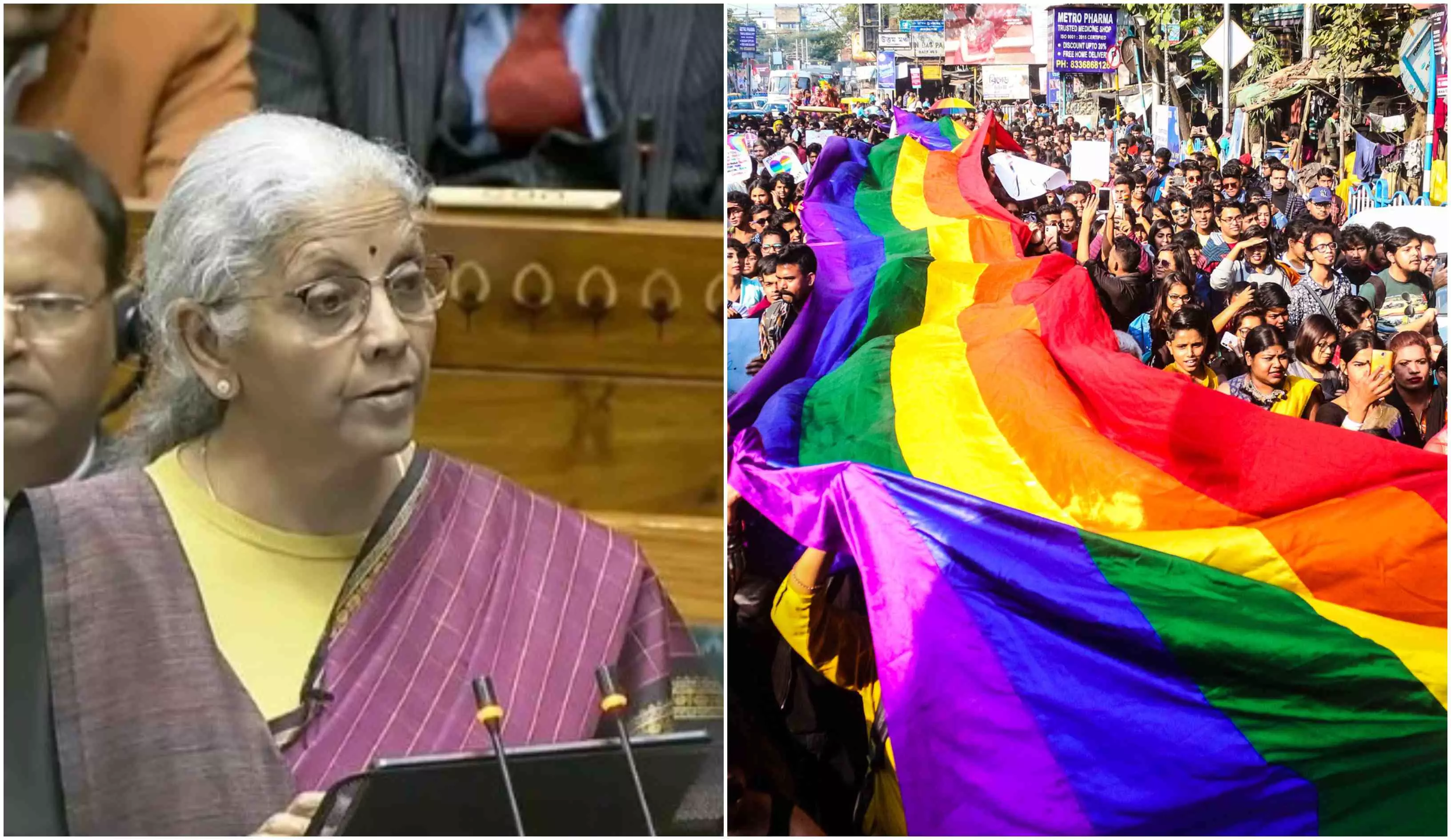
Budget 2026-27 leaves transgender welfare largely untouched
Despite past promises of inclusion, the latest Union Budget offers no fresh funding, schemes or tax relief for transgender persons

Finance Minister Nirmala Sitharaman’s Union Budget for 2026–27 marks a quiet retreat from the limited but symbolic steps taken in earlier years towards recognising transgender persons within fiscal policy. While previous Budgets at least acknowledged the community through targeted schemes or earmarked support, this year’s exercise makes no such effort.
No special schemes or policy for transgender community
There are no new welfare measures, no dedicated allocations, and no tax or policy interventions addressing the specific economic and social vulnerabilities faced by transgender people. Instead, they are subsumed under broad, generic programmes, with the expectation that universal schemes will suffice.
Also Read: Budget 2026-27: Biopharma gets big boost, public health left behind
This stands in contrast to earlier Budgets that, however modestly, signalled intent through dedicated housing, skill development or social security initiatives for transgender persons.
What are the key points that Sitharaman made in the Budget, and how far do they address transgender inclusion? Here is a look.
Does the Union Budget 2026–27 make any specific provision for transgender people?
No. The Budget does not contain any explicit, standalone provisions targeted at transgender persons. There is no direct mention of transgender people, third-gender individuals, or gender-diverse communities in the Finance Bill.
Are there any new welfare schemes announced exclusively for transgender persons?
No. The Budget does not announce any new schemes, allocations or tax measures designed specifically for transgender persons. Existing central schemes for transgender welfare are neither expanded nor separately funded in this Budget.
Do any tax changes or exemptions apply particularly to transgender people?
No. All personal income tax provisions apply uniformly, without recognising transgender persons as a distinct category for taxation, exemptions or deductions.
Can transgender people still benefit indirectly from the Budget?
Yes, but only indirectly. Transgender persons may benefit as citizens from broader measures such as general social welfare spending, employment and skilling programmes, and healthcare or housing schemes with universal eligibility.
Also Read: Budget 2026-27 | Here are 10 key takeaways
However, these are not tailored to address the specific exclusion faced by transgender communities.
Does the Budget address long-standing gaps in transgender welfare?
No. Issues such as targeted livelihood support, housing security, healthcare access—including gender-affirming care—and administrative inclusion are not directly addressed.
What does this imply for transgender inclusion in fiscal policy?
The Budget suggests that transgender welfare has not been prioritised as a distinct policy area in fiscal planning for 2026–27, with any progress expected to come outside the Budget framework rather than through new financial commitments.