Amid bonhomie with Xi, why Modi’s critical minerals caution is a reassurance to Trump
PM’s ‘weaponisation’ of critical minerals remark toes US line on China while seeking warmer ties with Xi, showing India can’t pick sides

Barely 24-hours after his bilateral with China’s President Xi Jinping, Prime Minister Narendra Modi spoke out against the “weaponisation” of critical minerals, in a clear reference to China. Is India trying to send out mixed signals? After the bonhomie over BRICS and a seeming thaw in bilateral relations, bringing up critical minerals on the last day of the summit is unlikely to have been done on a whim.
Is India relaying a US message?
Is it meant to reassure Washington? The bilateral trade agreement between India and the US has not yet been signed, nor is there any sign that it will be concluded soon. In these circumstances, is India being cautious?
The reference is unmistakable, as China dominates critical mineral supply chains, controlling between 85 and 90 per cent of rare earth processing capacity. The US accuses China of weaponising critical minerals with strict export control regulations. The world is dependent on critical minerals, and rare earth elements are essential for the production of high-tech consumer goods like computer hard drives, flare screen televisions, electric vehicles, as well as cell phones.
Also read: Modi-Xi BRICS meet excellent optics; real test will come when euphoria fades
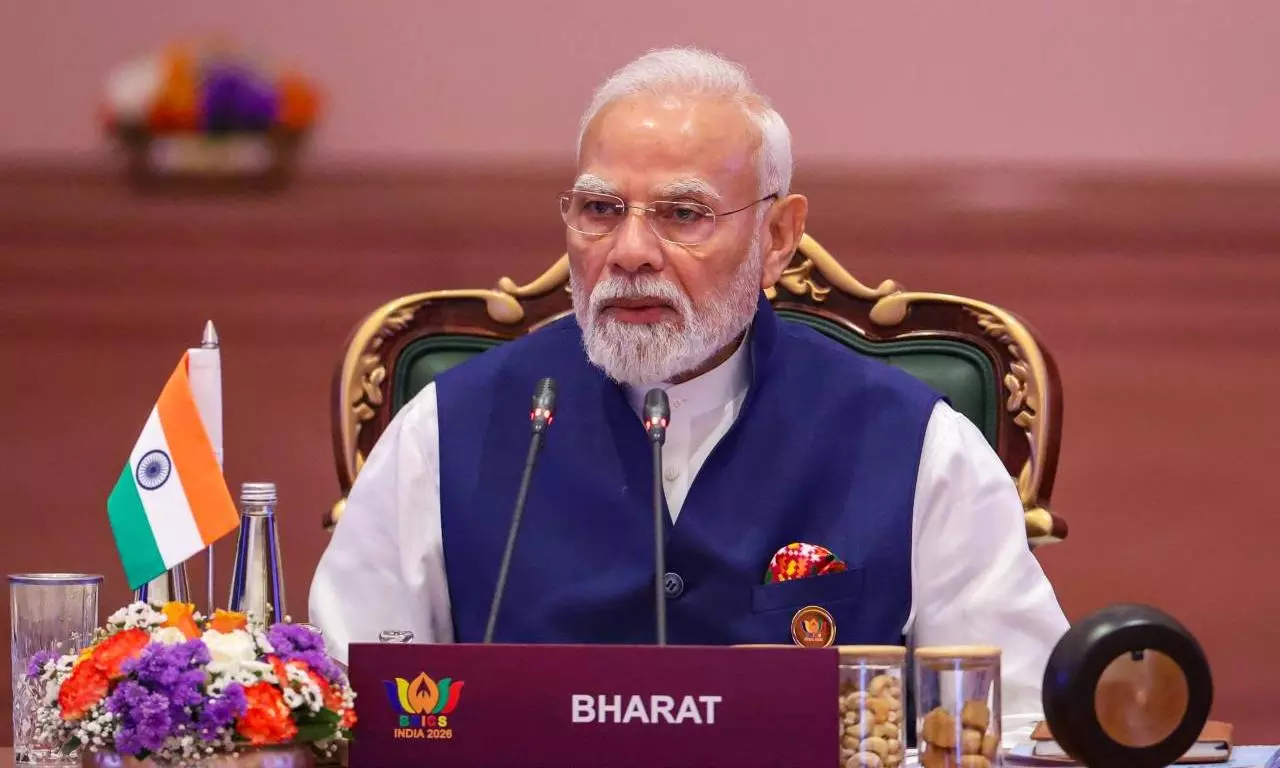
Xi was attending the session on shaping the future for inclusive global growth when Prime Minister Modi spoke. “The weaponisation of technology and critical minerals can hinder our shared progress. Therefore, we have emphasised inclusivity in the adoption of technology.” Is Delhi balancing the warmth with Xi against the need to reassure Washington?
Critical minerals and US-China acrimony
Critical minerals are emerging as the new currency in the global contest for power. Countries across the world, from developed and developing to resource-rich and resource-poor, are in the race to secure supplies and strengthen sovereign control. China is sitting pretty, having developed its extraction and refining capacity of critical minerals since the time of Deng Xiaoping.
It is the possession of rare earth minerals that has enabled China to confront Donald Trump’s tariff war. Trump’s business buddies are keen that US-China relations stabilise. Trump’s visit to China, and Xi ‘s trip later this month to the US is to ensure that the two countries can find common ground to ensure that a working relationship between the world’s two largest economies continues unhindered, despite their strategic rivalry.
Also read: Is China hijacking BRICS? | Ex-diplomat TS Tirumurti interview
Trump’s disdain for BRICS is well known. He regards it as a pro-China group working to undermine American interests.
India has a balancing act to do
The Modi government that appeared in the early days to veer more towards the US-Israel and Western camp, is now gradually recalibrating its position. Trump’s reckless 50 per cent tariff on India last year (it has since been reduced), his boast that he was responsible for stopping the clash between India and Pakistan during Operation Sindoor, and his praise for Pakistan’s Field Marshal Asim Munir have made India somewhat uneasy. New Delhi does not now want to have all its eggs in the American basket.
The strategic reality is that India cannot afford to choose between Washington and Beijing. It needs American technology, investment and access to its vast market, as much as it needs to stabilise relations with China and preserve its strategic autonomy.
Also read: India's BRICS tightrope: Navigating China, Trump, and Middle East crises
Modi’s warning on critical minerals, coming so soon after his meeting with Xi, may be less a contradiction than a carefully calibrated signal that India may be warming up to China, but it is not blind to where the strategic vulnerabilities lie.