Bangladesh election delivers a vote for 1971 values over Islamist agenda
BNP's landslide win rejects Muhammad Yunus' divisive politics and Jamaat alliance, signalling a return to Liberation War principles and pragmatic ties with India

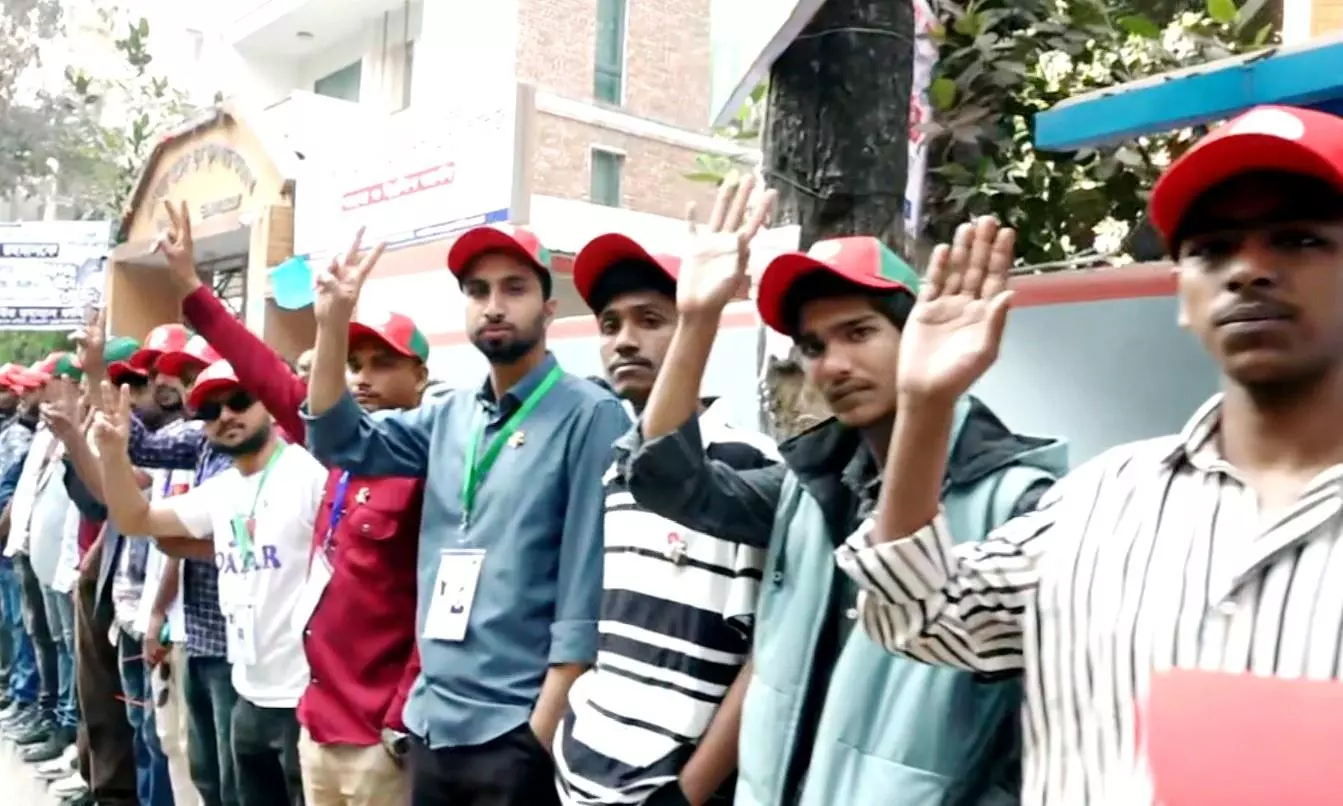
The landslide win for the Bangladesh Nationalist Party (BNP) can be seen as a public mandate against a complete break with the past that the interim government's Chief Adviser, Muhammad Yunus, and his student-youth brigade were looking for.
One can say this mandate is a decisive vote against a determined effort to turn Bangladesh into a Bengali Pakistan. The humiliating defeat of the student-youth leaders of the National Citizen Party (NCP), a party masterminded by Yunus, also represents a complete rejection of the post-Hasina politics that sought to project mobocracy as democracy and regime change as revolution.
Also read: Tarique Rahman leads BNP to historic win in Bangladesh elections
The young voters have clearly not been swayed by Yunus's promise of a "New Dawn" that the Nobel laureate so euphorically highlighted after voting on Thursday (February 12).
Gen Z unimpressed
Bangladesh's Gen Z, a crucial demographic in the country's electorate, surely wanted an end to corruption and extortion and a sustainable path towards economic growth. But the disruptive agenda pursued by the NCP leaders with Yunus's blessings was not seen as the right path.
When they tied up with the Jamaat-e-Islami, young voters saw this as an unacceptable compromise with the spirit of the 2024 July-August revolution. Young women leaders, who led the July-August agitation, broke away from the NCP after it announced an alliance with Jamaat.
When the Jamaat chief pandered to Islamist orthodoxy and described working women as "loose", a gender blowback against the Jamaat-NCP alliance was inevitable, considering women outnumbered men in the electorate and the long history of women empowerment in Bangladesh from the days of undivided Bengal.
Back to 1971 ethos
In the past, the BNP has been in coalition with the Jamaat to fight the Awami League (AL), which projected itself as the sole repository of the 1971 Liberation War ethos. The Jamaat's support came at a price — the BNP had to drift towards a hardline Islamist agenda, much to the chagrin of the committed Bengali nationalist elements in the party.
Also read: Bangladesh poll body claims 55-60pc turnout, but ground reports tell different tale
In this election, with the ban on the AL put in place by Yunus, the BNP effected a return to its roots and pitched strongly for upholding the 1971 Liberation War ethos. At the end of the day, the BNP is a party founded by a Liberation War hero, Ziaur Rahman, and it has always sought to hold him up as the first to declare Bangladesh's independence.
The huge victory margins of freedom fighter Fazlur Rahman on a BNP ticket and of the powerful woman leader Barrister Rumin Farhana, even when denied a party ticket, prove the point.
Those in BNP like Fazlur and Rumin, who consistently and unapologetically upheld the Liberation War ethos, won handsomely. That Rumin won after contesting as an independent following her expulsion from the BNP against an Islamist cleric officially backed by the party proves how much Bangladeshis value their independence.
Good news for Delhi
That comes as good news for New Delhi. 1971 connects India to Bangladesh, and the special relationship between the two countries owes itself to the Liberation War narrative that is incomplete without India's role in both hosting millions of refugees fleeing Pakistani genocide and in backing the Bengali freedom-fighters.
Also read: Bangladesh election outcome unlikely to ease ties with India
Prime Minister-designate Tarique Rahman and his team have clearly pitched for good relations with India, realising India's favourite AL was not in the race and that India would not want an Islamist takeover in Dhaka with Jamaat leading the charge.
Prime Minister Narendra Modi was quick to reach out to Tarique, first when his mother Khaleda Zia died, and now after the BNP's landslide win. India should be happy to see the BNP win decisively because it was worried about Jamaat's surge of influence with backing from the Yunus-led interim government, which was giving rise to an unacceptable spurt in anti-minority violence and attacks on liberals.
Yunus, backed by the Jamaat, was clearly enforcing the Pakistani agenda in Bangladesh. Tarique is widely expected, in view of his interaction with Indian officials in both London and Dhaka, to settle for a policy of normal relations with India.
Also read: Sheikh Hasina slams Bangladesh polls as 'well-planned farce'
It is too early to say whether he will press for Hasina's return to stand trial in Bangladesh. There are expectations that he may lift the ban on the AL. Tarique has said he will pursue reconciliation, so some hope he will avoid the vendetta politics that Yunus was pursuing. He cannot clearly afford a two-front Opposition — Awami League and Jamaat-e-Islami.
BNP will be under pressure
But it would be too much to pretend all will be hunky-dory. The BNP will be under much pressure from Jamaat to avoid an India-friendly policy and push hard on issues such as Hasina's extradition or river water-sharing. To blunt the rising tide of anti-India feelings that was boosted by the Yunus brigade, India can extend help with the supply of essential commodities like rice and onions and also ease the visa regime, especially for medical treatment.
Also read: India to get zero-tariff textile access to US similar to Bangladesh, says Goyal
Tarique also has to ensure there is no pandering of anti-Indian elements in the BNP, like the former junior home minister Luftozzaman Babar, who was the mastermind behind the massive 2004 Chittagong arms haul.
Controlling anti-India elements promoted in both civil and military bureaucracy will also pose a challenge for Tarique. For India, his BNP is what they say in Bengali, "Monder Bhalo" (better than worse).