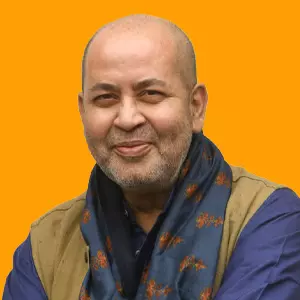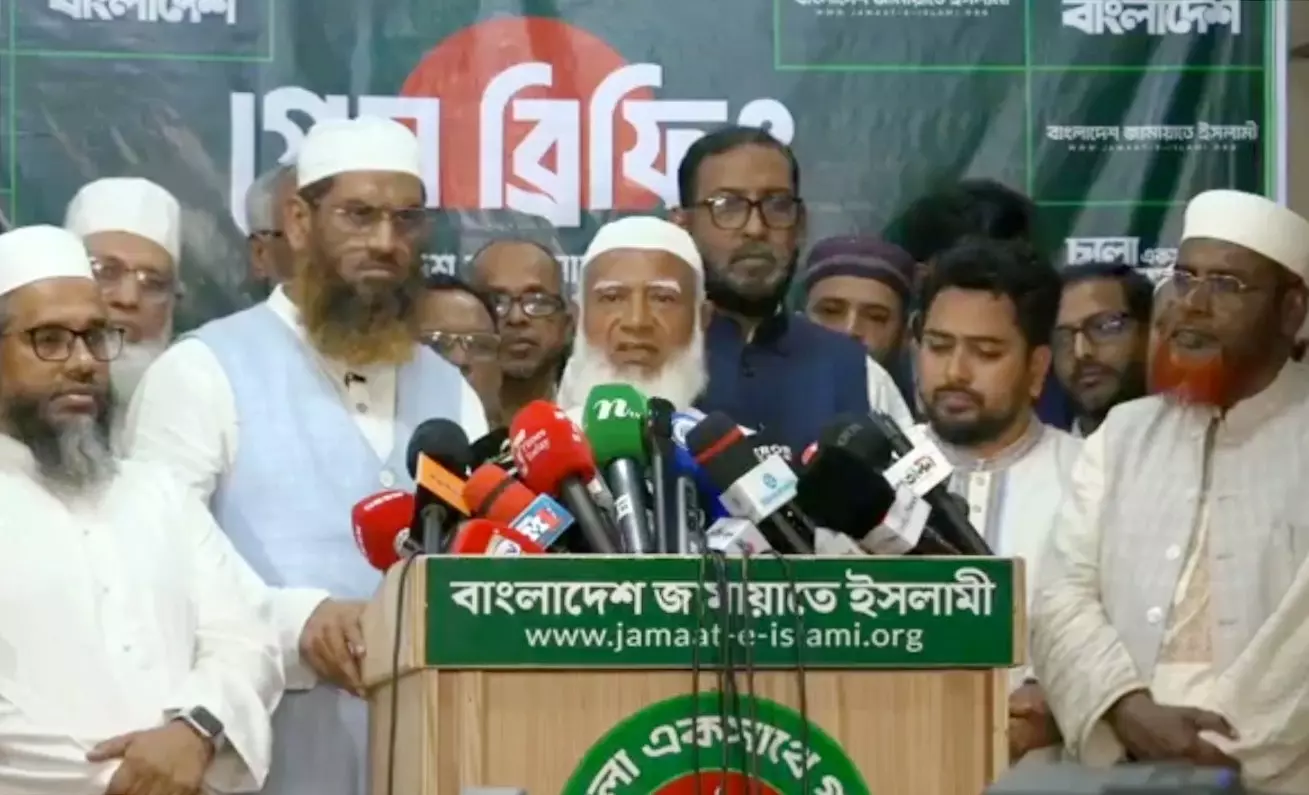
Bangladesh Jamaat-e-Islami chief Shafiqur Rahman addresses a press conference in Dhaka, Bangladesh, on February 14, 2026. Photo: PTI
Even in loss, why Jamaat-e-Islami is a key player in Bangladesh politics
While the Islamist may not want to play the role of a spoilsport under the BNP rule, it is likely to keep a hawk eye on future deals and agreements, especially with India

An Islamist takeover of Bangladesh has been thwarted by the Bangladesh Nationalist Party’s (BNP) emphatic win in the country’s much-anticipated parliamentary elections held on February 12. But the historic emergence of Jamaat-e-Islami from the margins of politics to the centre stage as the main Opposition party is likely to have an impact in Bangladesh in the near future.
Also read: New Bangladesh govt seeks national unity, plans to invite Modi to Tarique swearing-in
The BNP and the Jamaat were in direct contest in most seats in the absence of the country’s biggest party, the Awami League of former prime minister Sheikh Hasina, who fell in August 2024.
BNP's win not unexpected
In the past three decades, political power in Bangladesh has alternated between the BNP and the Awami League. Since Hasina was forced out of power and the country, and her party was banned from participating in this election, the BNP’s victory was not unexpected.
Jamaat's shift from fringes to the centre
- BNP wins but Islamists rise as main Opposition: In Bangladesh’s Feb 12 parliamentary elections, the Bangladesh Nationalist Party (BNP) won, but the surprise element was the strong performance of Jamaat-e-Islami Bangladesh, which emerged as the main Opposition with 70 seats.
- Jamaat’s political comeback: Once banned after Bangladesh’s 1971 Liberation War for collaborating with Pakistan’s army, Jamaat was revived in 1979 under Ziaur Rahman. It faced another ban and war crimes trials during Hasina’s rule but reorganised after the ban was lifted in 2024. Its student wing played a visible role in protests that eventually led to Hasina’s ouster.
- Why Jamaat fell short of power: Despite dominating social media and projecting momentum, Jamaat misread public sentiment. Its attempt to downplay the importance of the 1971 Liberation War and project the 2024 student protests as a “second independence” triggered backlash. Attacks on media houses and cultural centres, along with conservative remarks on women’s roles, alienated moderate and female voters.
- BNP benefits from nationalist sentiment: The backlash strengthened the BNP’s narrative defending the legacy of 1971 and the role of freedom fighters. With the Awami League absent, the BNP consolidated support across urban and rural voters, capitalising on dissatisfaction with past governance while positioning itself as a stable alternative.
- Jamaat’s future role in politics: Now the main Opposition, Jamaat holds unprecedented parliamentary influence. While unlikely to destabilise the BNP government immediately, it is expected to scrutinise major policies — especially ties with India — and attempt to position itself as a long-term alternative if the Awami League seeks a comeback.
While its coalition won 212 of the 297 seats contested, the BNP on its own secured a two-thirds majority and is set to form the next government in Dhaka.
What, however, came as a surprise is the phenomenal rise of the Jamaat in post-Hasina Bangladesh.
The Jamaat-led coalition won 77 seats, 70 of which went to the leading outfit, while the students’ National Citizen Party (NCP) won six, and a smaller Islamist party, one.
Jamaat's roller-coaster ride
The Jamaat was an important party in undivided Pakistan and enjoyed close links with the country’s army. It opposed the idea of Bangladesh, and during the 1971 Liberation Struggle, was responsible, along with the Pakistani army, for killing hundreds of Bengali nationalist leaders, intellectuals, and ordinary civilians, besides raping, assaulting and killing a large number of women.
Also read: Bangladesh election delivers a vote for 1971 values over Islamist agenda
After the creation of Bangladesh, the party was banned by Awami League leader and the country’s founding father and a former president and prime minister, Sheikh Mujibur Rahman. The ban was lifted by General (retd) Ziaur Rahman, the founder of the BNP and a former president, in 1979.
The Jamaat re-invented itself as the Jamaat-e-Islami Bangladesh and took part in protests during former army dictator Hussain Muhammad Ershad’s rule and later against the army-led caretaker government.
In 1991, it participated in the general elections and won 18 seats. But in the June 1996 polls, its tally came down to just three seats. In 2001, in the BNP coalition, it managed 17 seats, which again came down to just two in the 2008 elections.
During Hasina’s second term as the prime minister in 2008, the Jamaat leaders were tried for war crimes of 1971 by a tribunal established by the government, following a popular demand from the electorate.
Several Jamaat leaders were executed, while others fled the country, after they were found guilty by the tribunal. The party was banned once more and was in disarray for a while. But it reorganised itself and carried out its activities under the radar until the ban was lifted in 2024 by the interim administration of Muhammad Yunus.
The Jamaat came into the limelight and political centre stage when, during the students' protest against Hasina, its student wing Chhatra Shibir took the lead. After the former prime minister's ouster from power and forced exile in India in August 2024, the Shibir members and other affiliated Islamist organisations joined the Yunus-led government as advisers.
Also read: A new trade game in South Asia, where 'reciprocal' means 'unequal'
It was during this period, and until the return of BNP leader Tarique Rahman from his 17-year self-imposed exile in London, following the announcement of the February election results, that the Jamaat dominated Bangladesh’s political narrative. This led many within and outside Bangladesh to believe, with both interest and concern, that the Jamaat-led Islamists were set to take control of the country.
Why Jamaat faltered
The hype that the Jamaat managed to create in the post-Hasina vacuum, especially on social media, did not match the outcome of the election for a number of reasons, say observers.
The first mistake they made, both their student and youth leaders, as well as the veterans in the leadership, was to start believing their own publicity and propaganda.
Observers noted that the Jamaat dominated social media platforms, including Facebook, X, Telegram, and TikTok, through targeted posts, videos, and memes to attract voters. But soon it started using the platforms to abuse its political opponents and ran a campaign against the national narrative of the 1971 Liberation War, attacking freedom fighters and established Bengali nationalist leaders and intellectuals.
The legacy of 1971 war
The Jamaat’s attempt to launch what was popularly called a “cultural war” against the legacy and sacrifices made by people in the 1971 war in their attempt to obliterate it from Bangladesh’s history proved counterproductive.
Jamaat leaders mistook the anger against Hasina and the Awami League’s misrule as people’s disdain and frustration with the 1971 Liberation movement.
Also read: Budget 2026-27: India slashes aid to Bangladesh, skips Chabahar port funding
It sought to construct a narrative that, after the 1947 independence, only the July 2024 student movement against Hasina’s regime should be seen as the second independence, thereby completely ignoring the contribution of the 1971 liberation, which played a key role in creating and shaping Bangladesh.
This created backlash among many people for whom the 1971 liberation struggle remains a defining period in the country’s history. This also rejuvenated the BNP’s support base.
That party has long fought Hasina and the Awami League to accord a similar status to Ziaur, a respected army general of the freedom struggle, alongside Mujib.
Jamaat's aggression left BNP concerned
Therefore, Jamaat’s attempt to wipe out the role of freedom fighters in the 1971 liberation struggle also caused serious concern in the BNP, and its success in getting the voters to rally behind it for a resounding victory was an emphatic verdict on the importance of 1971 in Bangladesh’s history.
One of its biggest mistakes, however, was to unleash its cadres to attack the two most prominent media houses in the country — Prothom Alo and the Daily Star and vandalise eminent cultural centres such as Chhayanaut and Udichi Shilpigosthi.
This adversely impacted not only the liberal and secular sections of the society but also the larger moderate and peace-loving people of Bangladesh.
Also read: BNP's Tarique Rahman to be sworn in as Bangladesh PM on Feb 17; Modi invited
Two other factors were also key in turning away several voters from the Jamaat in this election. One was the failure to realise that access to the internet and social media was still limited among the country’s electorate, especially outside urban centres such as Dhaka and other cities.
Criticism of women
The second factor was Jamaat’s conservative view on women. The party not only failed to nominate a single woman candidate but also regularly highlighted their role in looking after children and the family, instead of spending time at the workplace.
The allegedly derogatory remarks made by the party leader, Shafiqur Rahman, against the working women fuelled the fire, alienating a large number of women voters who make up more than 50 per cent of the country’s electorate, especially at a time when many of them have got used to enjoying their economic freedom and a heightened status in family and society.
Jamaat’s future role
Despite these weaknesses and the political setback, the Jamaat is now the main Opposition in Parliament, a historic milestone for it. The party is extremely disciplined and has shown its ability of learning from its past mistakes and re-invent itself.
Tarique, who is set to take up the mantle of the prime minister soon, has already held a meeting with the Jamaat and NCP leaders for a more cooperative relationship between the ruling party and the Opposition.
The Jamaat may not want to play the role of a spoilsport, but it is unlikely to miss any opportunity to keep a hawk eye on future deals and agreements, especially with India, to which it has been hostile. It will ensure there is no undue concession or “sell-out” under pressure from New Delhi, and there is no corruption while doling out contracts to “favourite” contractors for future projects.
At the moment, Jamaat is waiting to pose itself as the third alternative in Bangladesh and block its existential threat — the Awami League, from returning and reclaiming the political space.