



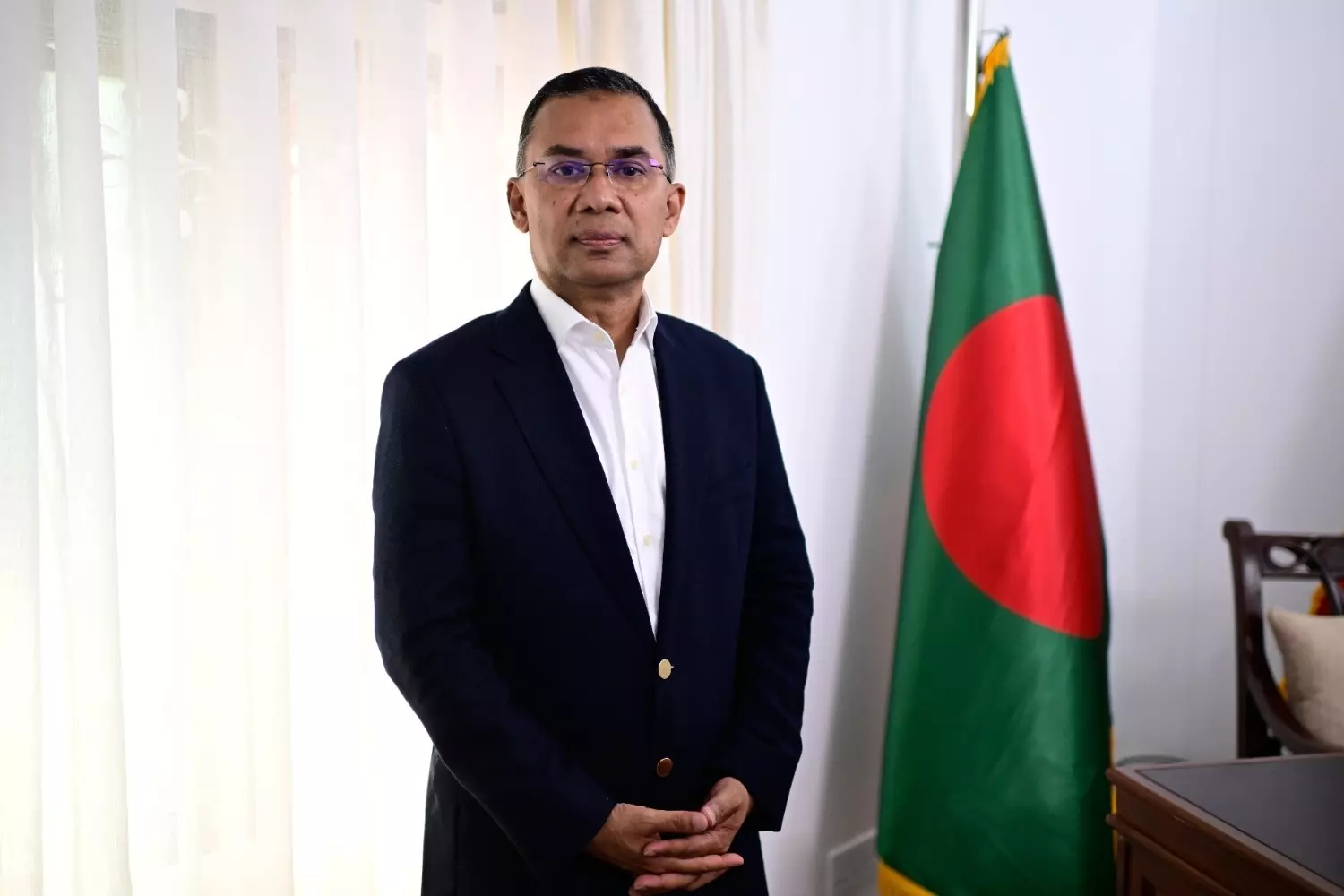
The incoming Bangladesh government of Prime Minister-designate Tarique Rahman has taken a reconciliatory approach both at home and with key neighbour India. Photo: PTI
New Bangladesh govt seeks national unity, plans to invite Modi to Tarique swearing-in
Following a landslide election win, the BNP aims to preserve national harmony and reset ties with India and move past the turmoil of the recent past

The Bangladesh Nationalist Party (BNP), which swept the much-anticipated national elections in the country on February 12, is seeking unity both at home and beyond the nation’s borders.
While party chief Tariq Rahman, who will take over as Bangladesh’s next prime minister next week, called for unity among the people in a country that has seen deep polarisation in recent years, a top functionary of the party said they have plans to invite Prime Minister Narendra Modi for Rahman’s oath-taking ceremony.
Also read: Bangladesh election delivers a vote for 1971 values over Islamist agenda
India, which made a major contribution towards Bangladesh’s independence in 1971, saw its ties with the eastern neighbour plummeting since August 2024, when former prime minister Sheikh Hasina was toppled, and she took shelter on Indian soil.
PM-designate seeks national unity
Rahman, who returned to Bangladesh in the end of December 2025 after 17 years of exile in the UK and just before the death of his mother, Khaleda Zia, a former PM, sought national unity in his first remarks after the BNP’s thumping win. He dedicated the victory to those who “sacrificed for democracy”.
In a press conference in Dhaka on Saturday (February 14), the 60-year-old leader said, “This victory belongs to Bangladesh. This victory belongs to democracy. This victory belongs to the people who aspire to and have sacrificed for democracy. From today, we are all free, with the true essence of freedom and rights restored.”
“With your spontaneous participation, after more than one and a half decades, a parliament and government accountable to the people through direct voting are being re-established in the country,” Rahman added. He urged the people to remain united “to ensure that no evil force can re-establish autocracy in the country, and that the nation is not turned into a subservient state”.
Also read: A new trade game in South Asia, where 'reciprocal' means 'unequal'
The BNP secured a landslide victory in the 13th parliamentary elections, bagging 212 seats out of 299, with Rahman winning from Dhaka-17 and Bogura-6 constituencies. The opponent alliance, led by the Jamaat-e-Islami, won 77.
Rahman will be Bangladesh’s first elected male prime minister after 1991, when his mother became the prime minister for the first time.
Rahman administration to focus on regional cooperation
Speaking about the new government’s plan to invite Modi to the swearing-in, Rahman’s foreign-policy adviser Humayun Kabir told WION that Dhaka considers the (South Asian) region to be key and the incoming administration would try to make it an influential one.
“Region is important to us. An important part of the foreign policy of Tarique Rahman. Making this region an influential region. Sense of priority in sending out invitations for the inauguration. Time frame is short, gesture is there,” he was quoted as saying in the interview.
Also read: India-US trade deal: Rahul slams govt over tariff exemptions to Bangladesh and India
Kabir also described the invitation as a goodwill gesture aimed at improving ties between India and Bangladesh, something that soured during the time of Muhammad Yunus, who led the country as its chief adviser after Hasina’s fall.
He said the new government seeks to have a balanced approach to regional cooperation, adding that multilateral platforms in South Asia, such as the South Asian Association for Regional Cooperation or SAARC (which was envisioned by his late father and former Bangladeshi president Ziaur Rahman) and the Bay of Bengal Initiative for Multi-Sectoral Technical and Economic Cooperation or BIMSTEC, could be utilised.
Modi reached out to Rahman after his victory, holding a phone conversation with the latter to congratulate him on the “remarkable victory” and expressing New Delhi’s support for a democratic and progressive Bangladesh.
However, despite the effort to ‘reset’ the ties, the issue of extraditing Hasina would continue to be a concern in the bilateral ties. The BNP has already renewed its demand for the ex-PM’s extradition from India to face trial with senior leader Salahuddin Ahmed saying the Bangladeshi foreign ministry has taken up the matter.