Should Sri Lankan Tamils in TN get Indian citizenship? Tamils are split
Stalin presses Modi to resolve decades-long refugee limbo, citing 89,000 Tamils, many born in India, who remain without legal clarity despite deep social roots

Tamil Nadu Chief Minister MK Stalin has waded into unexplored territory by urging Prime Minister Narendra Modi to grant Indian citizenship to thousands of Sri Lankan Tamils who have lived in the Indian state for decades but still lack legal clarity.
Citing humanitarian concerns among others, Stalin told Modi in a letter made public on Sunday (February 15) that an estimated 89,000 Tamils have been living in Tamil Nadu for too long and that 40 per cent of them have been born in India.
He pointed out that while successive Tamil Nadu governments with the backing of the central government have provided them shelter, education, and health care, the Tamils are hungry for Indian citizenship or long-term visa.
Thousands fled to India
Sri Lankan Tamils fled to India by the sea in tens of thousands following the horrific anti-Tamil riots in Colombo in 1983 and in another wave after fighting resumed between the military and the Tamil Tigers in 1990.
While a large number of those who reached Tamil Nadu later made their way to the West, eventually forming a powerful Tamil diaspora, those at the bottom of the economic ladder and minus enough resources remained in Tamil Nadu.
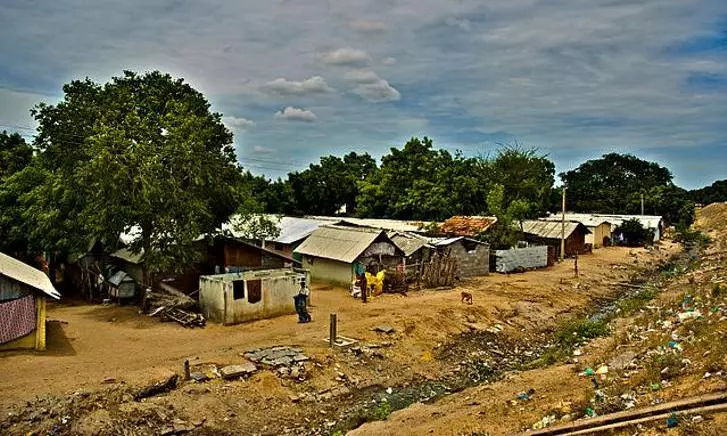
They were housed in scores of refugee camps in the state. In later years, they were allowed to take up petty employment to add to the meagre financial doles they receive from the Tamil Nadu authorities.
Also Read: Sri Lanka placing roadblocks on Tamil refugees’ return from India
Over the decades, thousands of children were born to the refugees and raised and educated in Tamil Nadu. They form a huge chunk and they have known no country other than India.
Tamil leaders say this is the group most reluctant to return to Sri Lanka, citing uncertain conditions and lack of economic opportunities in the island’s north and east – the war theatre their parents quit long ago in search of safer and greener pastures.
A section of Tamil leaders in Sri Lanka and members of the Tamil diaspora have argued for the return of the Tamil refugees in the face of the demographic erosion of the Tamil community in their island nation.
‘Indira Gandhi rejected plea for citizenship’
Indeed, a similar demand to accord Indian citizenship to the fleeing Tamils was reportedly politely rejected by then Prime Minister Indira Gandhi in 1983, a former Sri Lankan Tamil MP said.
“Mrs Gandhi told Tamil leaders that the Tamils can take shelter in India but should go back as they belong to Sri Lanka,” said Dr K Vigneswaran over telephone from Jaffna. According to Vigneswaran, who heads the small Tamil Mahasabha, Indira Gandhi did not want Sri Lanka’s demography to get derailed.
‘Living in limbo is not a good thing’
Tamil leader and MP Mano Ganesan underlined that the younger refugees in Tamil Nadu who have fully integrated into the socio-economic fabric of India should get Indian citizenship.
Others, he said, can be offered a choice: acquire Indian citizenship or remain Sri Lankan till conditions allow them to return home safely.
Also Read: Sri Lanka’s ruling JVP party says it is no longer anti-India as Silva courts Tamil diaspora
“This is a matter of social justice and human consideration for a long-standing, unresolved issue,” said Ganesan.
Chandrahasan Ilangovan, who heads a NGO working among the Tamil refugees, said living in a limbo was not a good thing, and a permanent solution must follow – after consultations with the people as well as the Indian and Sri Lankan governments.
Fall in Tamil population in Sri Lanka
The Tamil population has seriously fallen in Sri Lanka, most acutely in Jaffna, the community’s cultural heartland, due to the unending exodus of Tamils to other countries – even after the war.
Jaffna district’s 1971 population of 701,600 plunged to 583,400 in 2012. There was a marginal recovery in the 2024 census (preliminary assessment) at 594,333. Naturally, the Tamil representation in Sri Lanka’s parliament has slid.
Also Read: 'India not a dharamshala': SC junks Sri Lankan's plea for refuge
Some Tamils allege that successive Sri Lankan governments dominated by the majority Sinhalese community are happy over the development, including that Tamils are no more the largest community in two of the three districts in the country’s east: Trincomalee and Amparai.
This is one reason the Tamil refugees in India must go back to Sri Lanka since Tamils settled in prosperous Western countries are unlikely to return to their original country, said a Tamil leader who did not want to be quoted by name.
The case for Indian citizenship
Others argue that many second-generation Sri Lankan Tamils born and raised in India have developed deep social, cultural, and economic roots there, and that returning can be meaningful only when there were genuine pathways to reintegration, including a sense of belonging.
“In practical terms, India is the only country they know – even though life in refugee camps has often been harsh and difficult,” Aruliniyan Mahalingam, editor of the monthly Jaffna Monitor, said. “Insisting on repatriation as a matter of political symbolism would not serve their interests.”
Shanthan K Thambiah, a Sri Lankan Tamil political commentator in London, agreed.
He said that while ideally the second generation and educated Tamil refugees in Tamil Nadu should contribute to the development of Sri Lanka’s northeast along with diaspora members, “the reality is nowhere near such a situation due to many reasons”.
“From a pragmatic point of view, they should be given Indian citizenship,” he argued. “Tamil refugees in Europe and North America got citizenship roughly within 10 years. It is not acceptable that people should be without citizenship for more than 30 years.”
Also Read: Sri Lanka’s Tamil voters create history as Dissanayake’s NPP sweeps polls
An estimated 80,000 to 100,000 Tamils were killed during the more than a quarter century of the Tamil separatist war that ended in 2009. Also killed in the conflict were Sinhalese and Muslims, but much fewer in numbers. Thousands of Tamils also quit the north and east during the war and settled down in other parts of Sri Lanka, particularly in the Western Province which includes Colombo. None of them want to uproot themselves again.
A Tamil academic in Jaffna said that while it was politically correct to lament over the declining Tamil population and political representation, no one was asking the Tamil diaspora to return to Sri Lanka.
“Those who made the West their home have no intention of coming back,” he said. “Indeed, they and their children have struck deep roots in the West. But people want Tamil refugees in Tamil Nadu to live in Sri Lanka again. Why?”
According to published reports, only 11 Sri Lankan refugees in Tamil Nadu have got Indian citizenship. Of them, only one has voting rights. The remaining ten have sought to be included in India’s electoral rolls.
Tough life in India
On his part, Stalin wants that Sri Lankan Tamils registered in Tamil Nadu up to January 9, 2015 should not be treated as “illegal migrants”.
In general, due to their unsettled legal status, the Tamil refugees lead a tough life in India. Some with diplomas do jobs such as painting as they find it difficult to get government jobs while private firms are wary of hiring them.
Also Read: Watch: Sri Lankan Tamils seek political strength for autonomy
Their difficulties came under sharp focus in 2013 when the State Bank of India dismissed an employee who was a Tamil refugee even after she had put in 17 years of service. Fortunately, the Madras High Court came to her rescue.