Meant for experts, Rajya Sabha now a marketplace for the rich
Indirect election, open ballot make RS a ‘seat bazaar’ to which millionaires can buy entry and run their businesses sitting on panels that touch their trade

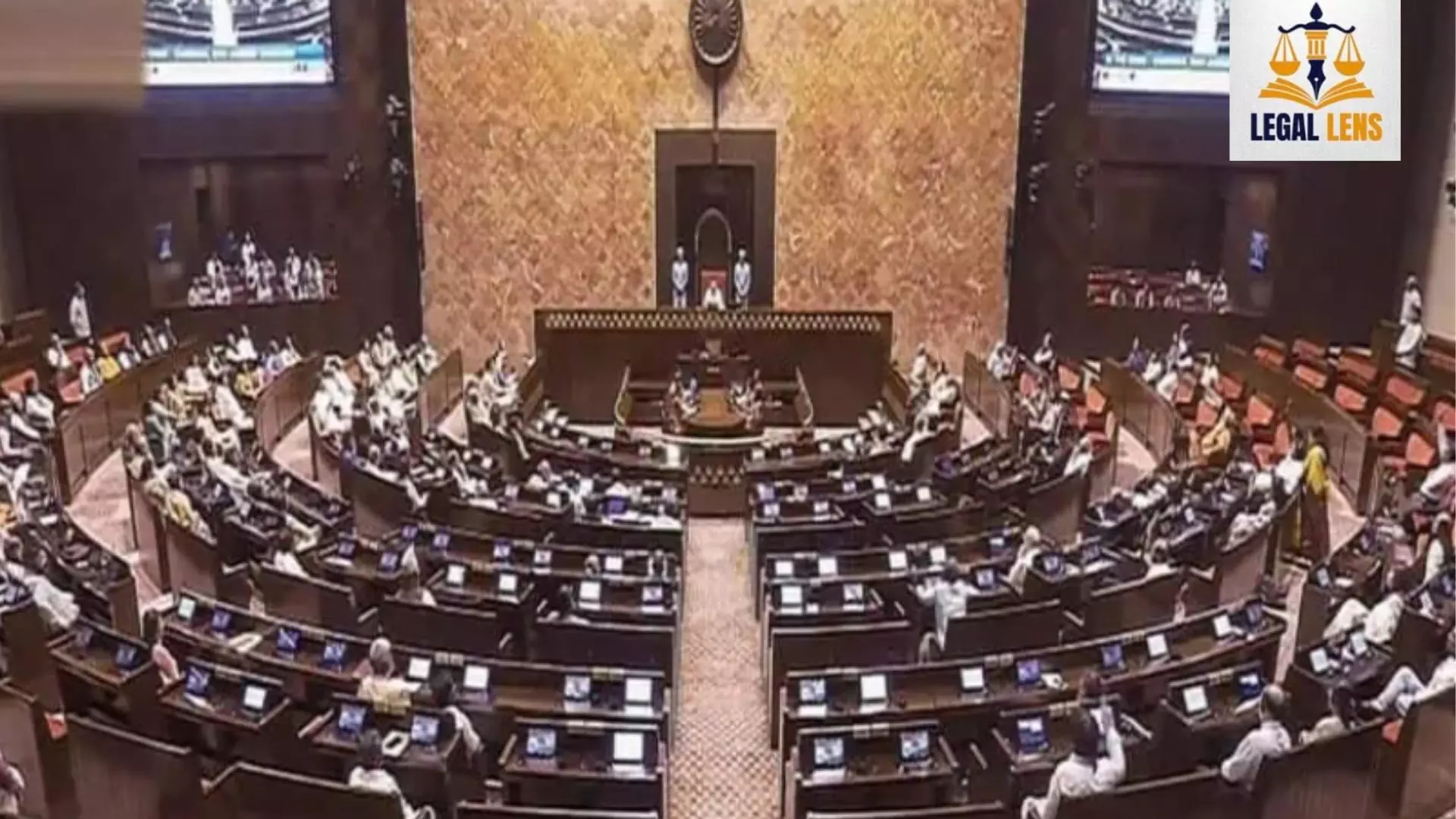
On June 18, members of state assemblies will vote to fill 24 Rajya Sabha seats across 10 states. Members serve six-year terms, and a third of the House retires every two years. The latest polls have been necessitated by such regular retirements. By-elections for three seats – one each in Maharashtra, Tamil Nadu and Odisha – will fill seats vacated mid-term, each for the unexpired part of a six-year term. The Election Commission (EC) has set the schedule. The exercise is, by design, free of any popular mandate. Voters have no part in it. Legislators do the choosing, and they vote as their parties instruct. However, the house that was meant to be a chamber of the states and of expertise is increasingly behaving like a market.
Also read: Rajya Sabha polls: Cross-voting concerns put Congress on edge in MP, Jharkhand
Open ballot counterproductive
The mechanics explain how. A Rajya Sabha member is elected indirectly, by the elected members of a state assembly, through a single transferable vote in which each legislator ranks the candidates. Since 2003, the ballot has been open. An MLA must show the marked paper to the party’s authorised agent before dropping it in the box. The open ballot was sold as a cure for cross-voting. It did the opposite. An open ballot allows a party to watch and weigh the loyalty of each legislator. Secrecy once shielded the voter, but its removal exposed him to discipline and to inducement alike.
An open ballot allows a party to watch and weigh the loyalty of each legislator. Secrecy once shielded the voter, but its removal exposed him to discipline and to inducement alike.
Gujarat in 2017 showed the mechanism at work. The Congress feared losing then party president Sonia Gandhi’s political advisor, Ahmed Patel’s seat after six of its MLAs resigned and a former chief minister, Shankarsinh Vaghela, turned against it. It flew 44 of its 51 legislators to a resort near Bengaluru, then to one in Anand (Gujarat), to keep them from the BJP. On polling day, two of its MLAs, Bholabhai Gohil and Raghavji Patel, showed their marked ballots to someone (the then BJP chief, Amit Shah) other than the party’s authorised agent. After viewing the video, the EC ordered both votes rejected, and Patel held the seat by just securing 44 votes needed for victory. This is the open ballot in miniature. Because the vote must be shown, every glance becomes evidence, and the result can turn on who looked where.
Uneven EC response to cross-voting
The law against defection does not reach this transaction. The Tenth Schedule disqualifies a legislator who deserts his party, but it governs membership of the assembly and the survival of governments. It does not govern how an MLA marks a Rajya Sabha ballot. A legislator who sells his vote here risks his party’s wrath, not disqualification. The deterrent that bites elsewhere is absent.
The objection is not to the presence of wealthy individuals in Parliament. It is buying into a law-making body and then helping to frame laws that serve one’s own business.
Also read: Why BJP snubbed Deve Gowda, picked new NDA face from Karnataka for RS polls
The record bears this out. In 2012, the commission countermanded the Rajya Sabha poll in Jharkhand, after unaccounted cash amounting to ₹2 crore was seized from the relative of a candidate. In 2016, Zee group founder Subhash Chandra won from Haryana as an independent after 12 Congress votes were rejected for the use of the wrong pen. In 2022, media businessman Kartikeya Sharma won the Rajya Sabha seat from Haryana. He defeated Congress’s Ajay Maken after the party legislator Kuldeep Bishnoi cross-voted, amid charges of horse-trading. In 2024, six Congress rebels in Himachal, lodged in hotels outside the state, cross-voted for the BJP’s Harsh Mahajan, who beat the Congress nominee Abhishek Manu Singhvi after a tie was broken by lot. In March this year, cross-voting recurred in Bihar, Odisha, and Haryana, and the Congress suspended three of its Odisha MLAs over it.
The Commission’s response has been uneven. It countermanded the Jharkhand poll in 2012, and it invalidated votes in Haryana in 2016 and in Gujarat in 2017. Yet it did not intervene in Himachal in 2024, or in Bihar and Odisha this year, though similar charges were aired. That inconsistency is its problem.
Also read: Can BJP-JD(S) alliance survive Deve Gowda's Rajya Sabha snub?
Tycoons pull the strings from RS
Behind the episodes lies a deeper pull. In states with three or more strong parties, surplus and shortfall votes can be traded, and a market in seats forms. The buyers are often businessmen, for whom the route is attractive. It spares them a contested election, yet it can hand them committee seats over the very ministries that touch their trade. Vijay Mallya, the Kingfisher founder, sat on the aviation and commerce panels; Congress leader Jairam Ramesh called it a “serious conflict of interest”. Kupendra Reddy, a real-estate businessman from Karnataka, sat on the select committee scrutinising the bill to regulate real estate. The objection is not to the presence of wealthy individuals in Parliament. It is buying into a law-making body and then helping to frame laws that serve one’s own business.
Law makes entry easier, aids ‘trade’
A 2003 amendment made the trade easier. Until then, a candidate had to be a voter in the state he sought to represent. The Representation of the People Act, 1951, was altered to require only that he be a voter in India. The Supreme Court upheld the change in Kuldip Nayar vs Union of India (2006), rejecting the argument that residence was a federal principle. Scholars argue the amendment hollowed out the chamber’s purpose. Once residence falls away, the seat detaches from any state and attaches to wherever the arithmetic is cheapest. A candidate with no tie to Punjab or Telangana can be parked in whichever assembly his party controls.
Watch: Can the INDIA bloc stay united? Five-point consensus masks fault lines | Capital Beat
The composition of the house tracks the trade. The Association for Democratic Reforms (ADR), which studies members’ sworn asset declarations, found the average sitting member worth about Rs 20 crore in 2013. By March this year, the average had reached Rs 120.69 crore, with 31 members worth more than Rs 100 crore each. That is a six-fold rise in nominal terms. Over the same years, consumer prices roughly doubled, so the real climb is about threefold.
Entrants grow richer
Asset values rise on their own, through property and shares, and that is the obvious objection. It does not hold. An ADR study tracked the same members elected to the Lok Sabha at three successive polls. Their average assets rose 110 per cent over a decade, broadly tracking inflation. The upper house’s far steeper jump cannot be appreciated alone. It reflects who is entering: each cohort richer than the last. A caveat is fair here. The Rajya Sabha averages compare a changing set of members, in rupees not adjusted for inflation; they show a direction, not a precise figure. The Lok Sabha study is the firmer comparison, because it follows the same members over time. It is what lets the rise be attributed to richer entrants rather than to rising asset values.
The chamber of the states has become a chamber of parties, and of those who can meet a party’s price.
Also read: Congress emerges as INDIA bloc’s fulcrum amid criticism and fragile unity
This is where the design fails on its own terms. The Council of States was meant to represent the states. It no longer does. Its members are chosen by state legislators yet vote on party lines, and since 2003, they need not even belong to the state they represent. The chamber of the states has become a chamber of parties, and of those who can meet a party’s price.
Restore secret ballot, residence
The remedies are known and modest. Restore the secret ballot, so loyalty cannot be policed. Restore residence, so a seat belongs to a state again. The deeper cure lies in how parties choose their candidates, a question Indian reform has long avoided. Until it is faced, the price of a Rajya Sabha seat will keep rising, and the states will keep paying it.