



One protest, two probes: Why the 2,873-person FIR raises questions
SC allowed a fresh FIR against 2,873 people; an Indian Express check found 25 of 205 examined were in prison when facial recognition spotted them at Jantar Mantar

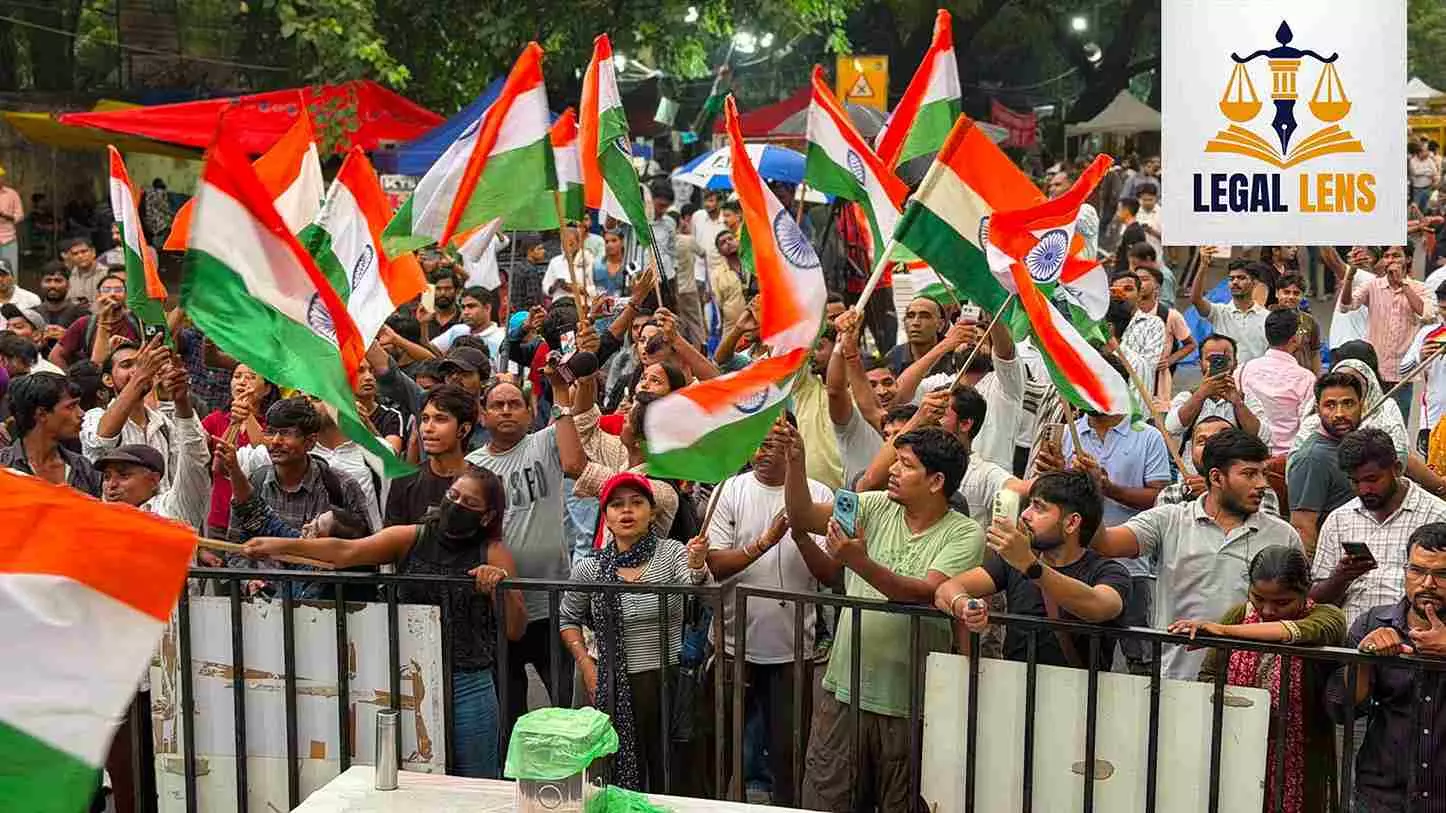
At 4.24 pm on July 25, Delhi Police’s facial-recognition system purportedly spotted Yogesh, alias Raju, at the Jantar Mantar protest. Prison records examined by The Indian Express as reported on September 4 placed him inside Tihar Jail. He was one of at least 25 people whom the software appeared to place in two locations at the same time.
The newspaper selected 205 people from categories involving murder, attempted murder, rape and child sexual offences. Delhi Police told it that verification of all 2,873 identifications was pending. The police affidavit said no action would rest solely on a facial-recognition result.
That discovery sharpens questions raised by the Supreme Court’s September 1 order. Using Article 142 of the Constitution, which allows it to pass orders necessary to do complete justice, the Court quashed the first information reports reproduced in its order from Delhi, Bihar, West Bengal, Assam and Maharashtra over the July NEET-UG protests.
Also read | Activist's claim of 'cracking skull' at CJP protest sparks Oppn attack on Delhi Police
It went further. Any other FIR in India concerning the protests from July 20 to July 25, 2026 was not to be investigated and was to be treated as closed. The Court referred to the future prospects of young protesters. Even without conviction, a criminal case can affect education and employment.
But the clean slate contained a striking exception. Delhi Police was given permission to register one fresh FIR concerning 2,873 people alleged to have serious criminal antecedents and initially reported to have been present at Jantar Mantar.
What the Court did, and did not, decide
The Court did not find that the 2,873 were present, had qualifying criminal records or committed violence. It gave Delhi Police liberty to register an FIR “with respect to” people described as allegedly having serious antecedents and initially reported at the site. That was neither a finding of guilt nor an instruction to arrest everyone on the list.
Shailendra Mani Tripathi’s public interest petition did not seek an FIR against protesters. It alleged police excesses during the July 20 “Chalo Sansad” march and sought an independent inquiry, an FIR against accused police personnel, visible nameplates and guidelines on crowd control and restrictions on public gatherings.
In its August 18 order, the Court constituted a five-member High-Powered Enquiry Committee headed by former Supreme Court judge Justice R Subhash Reddy. Its terms cover both sides: alleged excessive police force, including violence against women, and the government’s allegations of violence by protesters, injuries to police and property damage.
The committee will examine the chain of command, rule breaches, surveillance, possible interim compensation for injured protesters and police personnel, and whether police action was proportionate. It may use technical experts and receive material anonymously. The Court found grounds for an inquiry, not that the allegations against either side were proved. It also reserved the broader constitutional questions for itself.
Any investigation under the proposed FIR would therefore run alongside an independent inquiry already examining protester violence and property damage. The September 1 order does not explain how the two processes would relate to each other.
The list fails its first verification
The September 1 order refers to alleged serious antecedents in the National Crime Records Bureau database. The police’s August 17 affidavit gave a more specific account. According to The Indian Express, the affidavit said facial recognition produced 2,402 matches through Crime Kundli, Delhi Police’s biometric database, and the remaining 471 through other police records. The order does not explain how its reference to the NCRB relates to this breakdown.
The Indian Express checked 205 names selected from serious-offence categories, so its findings cannot yield an error rate for all 2,873. But finding 25 of them in prison establishes that some claimed sightings were impossible and that the list before the Court had not been fully verified.
Responding on X to the report, CJP counsel Vrinda Grover called facial-recognition technology “deeply flawed” and accused the government and Delhi Police of using it to “demonise” the protests. She said the findings should make courts more sceptical of technological claims presented by the state.
Also read | Delhi Police AI facial recognition vans spark Aadhaar link questions
A facial-recognition result is a possible match, not proof of identity. Image quality, lighting, camera angle, masks, the matching threshold and the comparison database can affect reliability. Although the affidavit assured “field verification”, the order prescribed no method or express requirement that checks precede arrest or other action. Section 35 of the Bharatiya Nagarik Suraksha Sanhita still requires individual grounds for arrest.
Even a correct match would establish only presence. It would not show that the person caused bodily harm or damaged property. A previous case cannot prove a later offence, and attendance at a demonstration is not itself an offence.
“Criminal antecedent” is also a broad label. It may mean a conviction, a pending trial or an earlier FIR. An August 3 clarification withheld protection from people with antecedents involving “grave and heinous offences”. The September 1 order uses the wider expression “serious criminal antecedents” without explaining whether all 2,873 meet the earlier description.
Can one FIR cover 2,873 people?
An FIR begins an investigation and need not contain conclusive proof. The impossible matches therefore do not prevent police from registering a case about an identifiable act of violence, including initially against unknown participants. They do undermine reliance on this unverified list for naming suspects or taking action against them.
One FIR may name many accused when it concerns one occurrence or connected conduct. But investigators must still connect each person to an identifiable offence through reliable material.
The order says an investigation is needed to ascertain offences involving bodily harm or destruction of public property. This wording suggests that the proposed case begins with a list of people while each person’s presence and role remain to be established.
There is also a second-FIR question. Ordinarily, police cannot register another FIR based on substantially the same account of the same occurrence merely to restart or improve an investigation. Here, however, the Supreme Court itself quashed the earlier FIRs and used Article 142 to permit a fresh one. This falls outside the usual pattern, but the order does not explain whether the new case would combine the same incidents or concern distinct violence. That distinction will determine whether police are pursuing new conduct or reviving quashed cases for selected protesters.
Two inquiries, no bridge
The September 1 order followed commitments made by the Union and state governments and the Cockroach Janta Party. The CJP withdrew a proposed September 5 march after assurances that included a pan-India compensation policy within 90 days for families of students who died by suicide in connection with NEET-UG 2026. The Court called the closure of cases a government “gesture of goodwill” and said its directions arose from unusual circumstances and would not bind future cases.
Also read | CJP hails SC order quashing protest FIRs , says compensation policy must reach NEET victims' kin
That explains the search for a practical settlement. It does not remove the need for safeguards when a large group remains exposed to criminal process.
The August 18 order requires investigating agencies to give the committee protest records, including CCTV, drone and body-camera footage, potentially allowing it to examine the facial-recognition exercise. But the orders do not expressly require the match list, software scores or records showing how each result was produced and checked, or committee scrutiny before the police investigation proceeds.
MP AA Rahim has challenged the use of facial recognition at the protest in a related petition. The Court has yet to decide whether it was lawful, and the September 1 order did not resolve that question.
Delhi Police must verify each identification and alleged antecedent, then establish any link to bodily harm or property damage. The unresolved problem is whether an investigation built around a list containing impossible matches could prejudge facts that the independent committee has yet to examine.
