Govt says AFSPA will go from the Northeast. It has been going, bit by bit, since 2022
While the map of disturbed areas keeps shrinking, the law and the shield it gives soldiers stand

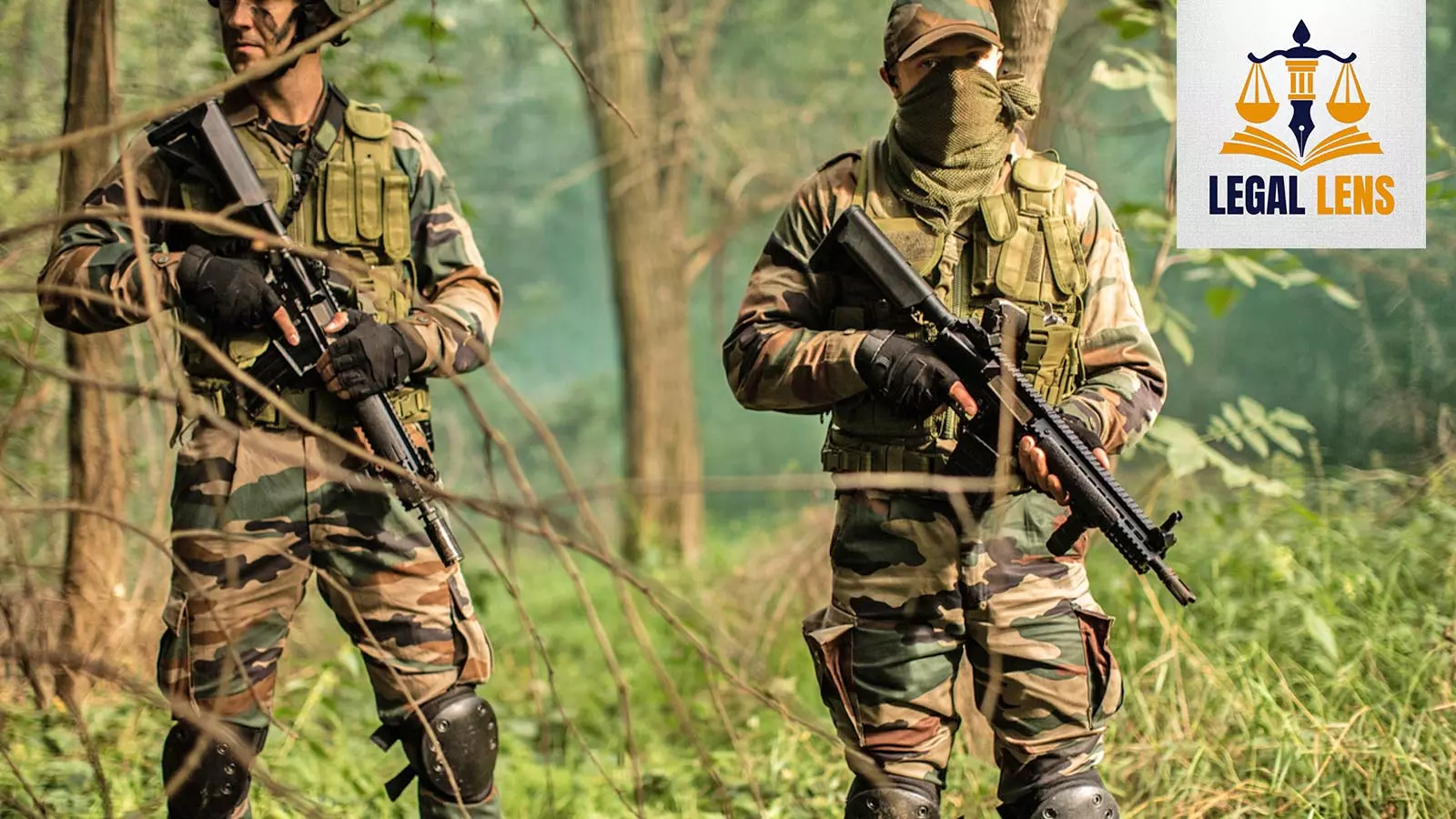
The continuation of the AFSPA law in the northeast has often been accused as draconian by human rights organisations. Representative Photo: iStock
Union Home Minister Amit Shah has promised, once more, that the Armed Forces (Special Powers) Act will leave the Northeast. On Thursday (June 11), he told a gathering in the region that AFSPA would leave the entire region next year. He set aside one or two states he did not name.
AFSPA still covers parts of Manipur, Nagaland and Arunachal Pradesh. Manipur, racked by conflict since 2023, is the hardest to clear.
Also read: NHRC defends AFSPA, says it is wrong to generalise it leads to rights violations
He spoke at the signing of a tripartite accord between the Centre, Assam and Nagaland on oil exploration along their disputed border. More than 80 per cent of the Northeast, he said, is already free of the law. The claim is accurate. So is the pattern behind it. The government first cut the map of “disturbed areas” in 2022.
Campaigning in Nagaland in 2023, Shah hoped the law would go in three to four years. Each cut has shrunk the map further. The statute itself has stayed whole. A smaller map is not the same as a repealed law. That distinction sits at the centre of this story.
A law older than the Republic’s troubles
AFSPA was enacted in 1958. Its ancestor is a 1942 ordinance the colonial government used to break the Quit India movement. Parliament first turned the new version on the Naga Hills and the Assam-Manipur belt. A 1972 amendment carried it across the Northeast.
The mechanism is simple. Under Section 3, the Centre or a governor declares an area disturbed, and the special powers switch on. Section 4 then lets even a junior officer open fire to the point of death, on suspicion alone. The powers are exceptional by design. Within a notified zone, they suspend the ordinary checks on lethal force. Section 6 bars any prosecution of armed forces personnel without the Centre’s prior sanction.
Critics note that policing is a state subject, yet this law hands it to the Union’s forces. The first clause produces the killings. The last clause buries them.
The promises and their shelf-life
In March 2022, Shah announced the first large cut in disturbed areas across Nagaland, Assam and Manipur. Assam had carried the tag since 1990. Manipur had declared its whole territory disturbed in 2004, sparing only the Imphal municipal area. Nagaland had lived under it since 1995.
Violence across the Northeast has fallen sharply. The disturbed-area map is the smallest in decades. The exit from AFSPA, though, is not measured by the map. It is measured in the statute book and the prosecutor’s file.
In March 2023, the Union home minister trimmed the areas again, leaving Assam with eight districts. Campaigning in Tuensang, he hoped for full removal in three to four years. Union Defence Minister Rajnath Singh has said all three services would welcome the change. Meghalaya and Arunachal Pradesh had already shed the law almost entirely.
Also read: AFSPA extended in Manipur, parts of Nagaland and Arunachal
Those removals proved the executive route can work. They also proved that what one notification gives, another can take back. The footprint has truly narrowed. Its meaning is the real question. A disturbed-area notification is an executive instrument. A later notification can restore it overnight. Repeal is a different act, and it has not come.
Manipur’s collapse since 2023 has made a quick exit there implausible.
The story of the dead
The argument against AFSPA is built on its dead. On November 2, 2000, soldiers shot 10 civilians at a bus stop in Malom, near Imphal. Irom Sharmila answered with a hunger strike that continued for 16 years. In July 2004, the Assam Rifles took Thangjam Manorama, aged 32, from her home. Her body was found within hours, bearing marks of torture and sexual assault.
Women of the Meira Paibi stripped before an Assam Rifles camp in Imphal. Their banner read, “Indian Army Rape Us.” The image travelled the world. A state judicial enquiry into the killing was completed in 2004. Its report was never made public, and the Assam Rifles secured a stay shielding its men. These were not the only deaths. They became the faces of a far longer list.
A report the state buried
The protests forced a review. In November 2004, the government appointed a committee under Justice B P Jeevan Reddy. Sanjoy Hazarika, the Assam journalist who later led the Commonwealth Human Rights Initiative, was a member. The committee recommended repeal and branded the Act an instrument of oppression. The report was never placed before Parliament.
By 2015, the home ministry was preparing to reject it in full. Hazarika’s verdict on such laws is blunt. “These laws defy logic and need to go,” he has said. Pradip Phanjoubam, the veteran Manipur editor, has long argued that each fresh ambush hardens official anxiety and extends the law’s life.
What the top court could not undo
The judiciary has tested the Act and left it standing. In 1997, a five-judge Constitution Bench of the Supreme Court upheld AFSPA in Naga People’s Movement of Human Rights v Union of India case. It prescribed a code of “dos and don’ts” and asked for periodic review of disturbed-area orders. That ruling now binds smaller benches. The petitioners returned to the fight through a different door.
Also read: Hostage logic, killing fields: How horizontal ethnic conflicts eclipse Northeast vertical struggles
In 2012, the Extra Judicial Execution Victim Families Association moved the Court over 1,528 alleged extrajudicial killings in Manipur between 1979 and 2012. A commission appointed by the Court examined six sample cases in 2013 and found them to be fake encounters. In 2016, Justices Madan Lokur and U U Lalit ruled that the forces enjoy no blanket immunity. Every death at state hands, they held, must be examined.
A CBI special team followed in 2017 and registered 39 FIRs. Where the accused were policemen, trials advanced. Where they were soldiers, the Centre withheld sanction under Section 6. The team filed final reports in most cases.
The soldiers stayed beyond reach all the same. The cases froze at the prosecution gate. The litigation has dragged.
In 2018, the government even sought the recusal of the two judges. In 2024, the Manipur High Court was still wrestling with the pending sanction questions. The victims’ families remain in court, more than a decade on.
Oting, and the wall of sanction
Oting laid the gap bare. On December 4, 2021, Para commandos killed 13 civilians in the village in Nagaland’s Mon district. Six coal miners died first. Seven villagers and one soldier died in the clash that followed. The Army called it a case of mistaken identity. The outrage across Nagaland was immediate and wide. A state team charged 30 personnel, including a Major. In 2023, the Ministry of Defence refused any sanction to prosecute them.
On September 17, 2024, the Supreme Court closed the FIRs for want of that sanction. It kept the door open, should the Centre ever relent. It has not relented. Investigation reached its ceiling. Prosecution never began.
The Kashmir front
Kashmir repeats the story in another key. The Armed Forces (Jammu and Kashmir) Special Powers Act arrived in 1990. The Valley was declared disturbed first. The Jammu province was brought under it in 2001. The demand to lift it is old. Omar Abdullah, who was the chief minister then as well, pressed between 2009 and 2014 for withdrawal from peaceful districts. In 2011, he sounded confident it would happen on his watch. The Army declined, and the law held.
Also read: Why India keeps removing cartoons from textbooks, and getting it all wrong
The end of Article 370’s special status in 2019 changed the rhetoric, not the statute. Singh said the time had come to consider removal. Shah told a Kashmiri channel the government was weighing revocation, with a roadmap to thin the troops. Elections were held in 2024. The Act still governs the Union Territory. Rights groups fault the law’s loose terms, which make a disturbed area easy to declare and hard to challenge. There too, prosecuting a soldier needs the same central sanction, which is rarely given.
The Kashmir pledge carries the Northeast’s flaw. It promises fewer soldiers and a smaller map. It is silent on repeal.
The distance left
Shah’s defenders have a fair case. Violence across the Northeast has fallen sharply. The disturbed-area map is the smallest in decades. Twelve accords since 2019 have steadied the region. That progress is real and measurable. The exit from AFSPA, though, is not measured by the map. It is measured in the statute book and the prosecutor’s file.
While the Act survives, and while Section 6 stands, every withdrawal sits one notification away from reversal.
Shah framed the law’s retreat as the gateway to the region’s buried wealth. The accord he signed promises a tenfold rise in oil output.
Also read: Budget 2026–27 offers continuity, misses new push for North East
The families waiting on sanctions are not asking for fewer notifications. They want a soldier who kills a civilian to be tried like anyone else. That requires Parliament to act. The families of Malom, of Manorama and of Oting have learned this through long waiting.
A promise to shrink the map is not a promise to end impunity. The first has been kept many times. The second has not been kept once.