Karnataka's age relaxation for govt jobs: A lifeline too little, too late?
The government’s decision to relax the age limit has effectively given aspirants one last opportunity to apply, but roster restrictions and other factors raise doubts over how many will actually benefit. Fifth in our Job Distress series

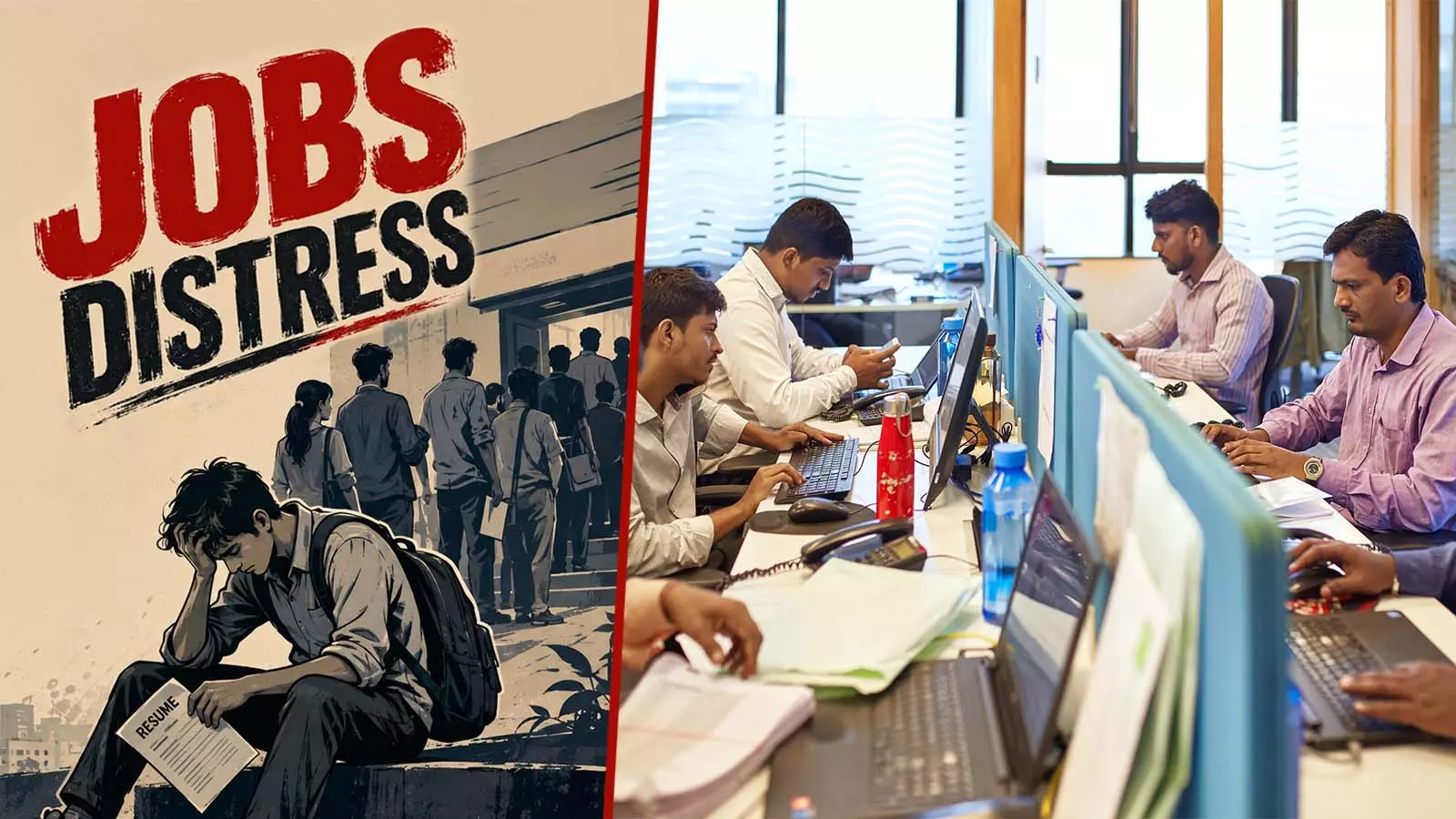
Across India, job aspirants are stuck waiting, and there is perceptible anger on the ground, as our ongoing series (Parts 1, 2, 3 and 4) has shown.
Despite huge distress, recruitment drives get delayed for years, and eligibility windows shrink before opportunities even arrive. Karnataka is a clear example: recruitments there stalled for years, first because of COVID-19, then over unresolved questions around internal reservation. Aspirants remained frustrated as they neared the upper age limit with no recruitment notifications in sight.
The state government has now stepped in with a one-time, five-year relaxation in the upper age limit for recruitment, covering all notifications issued up to December 31, 2027, raising new hopes among candidates who are on the verge of crossing the upper age limit as well as those who have already crossed it. However, questions are now being raised over how many candidates will actually benefit from the move.
How will it help aspirants?
The government’s decision to relax the age limit has effectively given aspirants one last opportunity to apply for Group A, B, C and D posts under the Karnataka Civil Services.
Also read: Cauvery row: Karnataka bandh largely peaceful
With the state government having initiated the process to fill more than 72,186 vacant posts, candidates who benefit from the age relaxation will be able to participate in this massive recruitment drive.
The move is expected to help candidates from rural and economically weaker families who spent years preparing at coaching hubs such as Dharwad, Vijayapura, Kalaburagi and Bengaluru, only to lose out on opportunities because of their age. However, recently, primary and secondary school teachers had alleged that the age relaxation did not apply to them.
The government issued a statewide notification on Tuesday (August 11) and district-wise notifications on Wednesday. Whether the age relaxation has actually been extended to them will become clear only when applications are invited, Karnataka Primary School Teachers’ Association leader Chandrashekhar told The Federal Karnataka.
“The age-relaxation order must be mandatorily taken into account while recruiting primary school teachers, lower primary school teachers and secondary school teachers. If the order is not considered, eligible candidates will be treated unfairly. If discrimination continues in teacher recruitment, we will have to approach the court again and seek a stay on the recruitment process,” Yallapur-based job aspirant Prasanna Bhat told The Federal Karnataka.
How many people will benefit?
An estimated 3 to 5 lakh job aspirants across the state are likely to directly benefit from the age relaxation. The upper age limit for candidates from the general category will increase from 35 to 40 years; for backward classes (OBC, 2A, 2B, 3A and 3B), it will increase from 38 to 43 years; and for Scheduled Caste and Scheduled Tribe candidates, it will rise from 40 to 45 years.
Also read: Karnataka imposes one-year ban on gutkha and tobacco-based pan masala
Although all communities have welcomed the age relaxation, questions remain over how many people will actually benefit and whether the state government is extending the relaxation in full to all types of jobs.
“Recruitment was delayed by two years each due to COVID and the issue of internal reservation. That is why the state government has granted a five-year age relaxation to all job aspirants. However, most organisations specify an age limit when they conduct recruitment. If the age limit is fixed in this manner, unemployed candidates will not be able to avail themselves of the relaxation. In that case, the government’s announcement will serve no purpose. Whenever the state government issues a recruitment notification, priority should first be given to those on the verge of crossing the age limit. They should be considered for jobs by awarding them additional marks,” Madiga Organisations Federation convenor BA Keshavamurthy told The Federal Karnataka.
He said the relaxation would not be of much help to candidates who had already prepared extensively for examinations but crossed the upper age limit. “Once they cross the age limit, they lose the motivation to compete. Since they have taken up other jobs, they may not have the time to prepare again, write the examination and clear it. Therefore, this age relaxation announced by the government may not prove particularly useful,” he said.
Disheartened among those who have crossed the age limit
Many who began preparing for competitive examinations after graduation have already joined jobs as security guards, delivery workers or employees in private companies because of the government’s delays. Even if the state government gives such candidates the benefit of age relaxation, they may not be motivated to return to the examination process or compete with new aspirants. The steadily increasing number of candidates appearing for competitive examinations has also emerged as a major challenge.
Merely increasing the upper age limit will not be enough. Another major challenge before the government is to complete the recruitment process within six to eight months after issuing a notification, without taking excessive time to conduct examinations, announce results and issue appointment orders.
Injustice through roster points too
Even with an age relaxation in government recruitment, candidates from reserved categories may find it difficult to secure jobs because of the prescribed roster-point system and what many describe as an unscientific distribution of posts.
For instance, candidates from the general category are not considered against merit points. Under the recruitment rules, when an SC, ST or OBC candidate applies using the age-relaxation benefit, the candidate is restricted to their respective reserved category. Even if the candidate scores higher than the general-category cut-off, they are not considered against a general merit roster point.
Moreover, even when the total number of vacancies is high, the number of points allocated to each category under the roster cycle remains limited. For example, if there are 100 vacancies in total, only two or three roster points may be available for a particular category. In such a situation, among hundreds of aspirants, only a few will be able to benefit from the age relaxation.
The roster also includes points for women, rural candidates, Kannada medium candidates, ex-servicemen and project-displaced persons, in addition to SC, ST and OBC reservations. When such reserved posts have to be mandatorily filled, a general category candidate who has availed themselves of the age relaxation and is ahead in the merit list may still not get an opportunity.
You can read part 1 here: Legal twists, endless wait: How Bengal failed a generation of job seekers
Part 2: Scandal after scandal: Is this the end for Karnataka PSC?
Part 3: Kerala PSC faces credibility test over recruitment, exam lapses
Part 4: Telangana's police aspirants fume: Age is catching up, jobs aren't