Inquiry panel finds Justice Varma guilty, leaves crucial witnesses unheard
Presence of Justice Varma’s aide Karki, household attendant Rahil near storeroom where burnt cash was discovered, and later interaction with them on phone could have addressed crucial questions

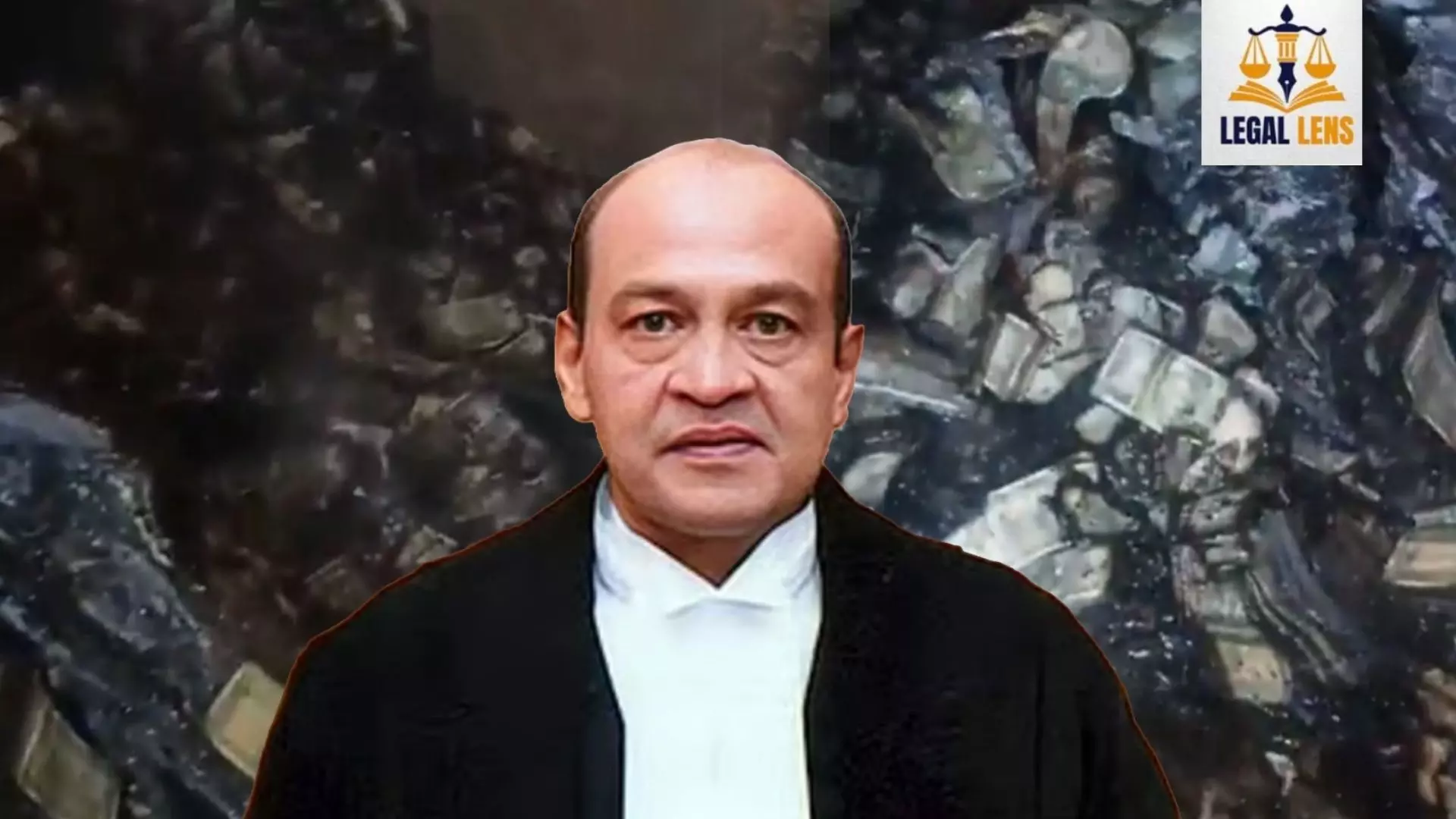
The statutory inquiry committee probing the Justice Yashwant Varma cash controversy has found all three charges against him proved. But a close reading of the 126-page inquiry report, along with the 64-page second volume recording the proceedings, shows that its findings are more carefully qualified than the headline conclusion suggests.
The committee found that substantial unexplained ₹500 notes were present in a storeroom at Justice Varma’s official Delhi residence, that material evidence was not preserved and the scene was disturbed, and that his explanations were evasive and unsatisfactory. But it did not establish exactly how much money was there, that the cash belonged personally to Justice Varma, or that he himself removed it after the fire.
The report also leaves one significant question unanswered. Justice Varma’s private secretary Rajinder Singh Karki and household attendant Mohd. Rahil were placed by a witness near the storeroom after the fire. Their conduct became important to the committee’s finding about the disturbance of the scene. Yet neither was examined by the committee.
What was Justice Varma accused of?
The case began with a fire on the intervening night of March 14 and March 15, 2025, in a storeroom at 30 Tughlak Crescent, Justice Varma’s government residence, when he was a Delhi High Court judge.
Firefighters and police personnel who entered the room said they saw large quantities of burnt, half-burnt or wet ₹500 notes.
Also read: Justice Varma cash recovery case: Parliament-appointed panel finds all charges proven
The inquiry was conducted under the Judges (Inquiry) Act, 1968, which provides the mechanism for investigating allegations of misbehaviour or incapacity against a Supreme Court or high court judge when a motion seeking removal is admitted in Parliament.
The first responders failed to take elementary steps to preserve the evidence. The notes were not seized or counted. No inventory was prepared, and not even sample notes were retained for verification.
The committee examined three formal allegations, described as “Articles of Charge”. The first concerned substantial unexplained currency within Justice Varma’s official premises and his failure to satisfactorily account for it. The second concerned failure to secure evidence and interference with the scene. The third concerned allegedly evasive and misleading explanations.
All three were found proved.
How much cash was found? No one knows
On the presence of currency, the committee found the evidence convincing.
Several fire and police personnel independently described bundles, heaps or stacks of ₹500 notes. Fire officer Ankit Sehwag said bundles were spread over an area of about seven to eight feet from the entrance. Others described burnt and partly burnt bundles across the floor and on a ledge. Photographs and videos supported their accounts.
But the first responders failed to take elementary steps to preserve the evidence. The notes were not seized or counted. No inventory was prepared, and not even sample notes were retained for verification.
Also read: 'Cash in storeroom not mine,' claims Justice Varma as SC shares probe details
Nor was a “panchnama” prepared. A panchnama is an official contemporaneous record of what investigators find or seize at a scene.
The committee described the failure to preserve the currency as a serious lapse. It meant that the exact amount could not be determined and the notes could not subsequently be scientifically verified. The committee nevertheless concluded from the eyewitness and electronic evidence that the quantity was substantial.
Did the money belong to Justice Varma?
The committee did not make that finding.
Justice Varma argued that the storeroom was separate from the main living quarters and could be accessed by domestic staff, security personnel, gardeners and maintenance workers.
The committee accepted that it was not part of the family’s inner living space. But it found that the room remained within the government bungalow allotted to Justice Varma and under his “effective control”. It relied partly on Justice Varma’s own statement that a locked liquor cabinet containing personal articles was kept there. The committee said this did not establish ownership of the cash. It merely weakened the contention that the room was completely beyond his use or control.
Also read: Justice Yashwant Varma resigns amid impeachment proceedings over cash row
This was also where the committee distinguished its inquiry from a criminal trial. It said it was examining the institutional responsibility of a constitutional office-holder for unexplained currency found within official premises under his control, rather than deciding criminal possession or ownership.
On that basis, it found the first charge proved.
What happened after the fire?
Justice Varma was away when the fire occurred. But the committee found that he was in communication that night with his daughter, private secretary Karki and household attendant Rahil.
The evidence of CRPF officer CG Rawat became crucial. Rawat said that after the fire was extinguished, he saw Karki and Rahil near the storeroom. When he offered to help, Rahil asked him to return to duty at the gate.
Under Section 5 of the Judges (Inquiry) Act, the committee has powers to summon a person, compel attendance and examine that person on oath. The report does not explain why it did not use that power to examine Karki or Rahil.
When Rawat passed the room later, he said the two were still engaged in cleaning. By morning, burnt household material had been moved outside and the cleaning was complete.
Also read: Who is Justice Yashwant Varma, the Delhi HC judge embroiled in cash-in-home row?
Rawat did not say that he saw either man removing cash.
The committee nevertheless concluded that the evidentiary condition of the room had been disturbed before it was properly sealed and inspected, while the currency seen earlier was subsequently unavailable. It inferred from Justice Varma’s communications with Karki and Rahil and Rawat’s evidence that they had acted under his instructions.
The second charge was therefore found proved based on failure to preserve evidence and acquiescence in the disturbance of the scene.
Witnesses the committee did not call
This is where an important evidentiary question arises. Neither Karki nor Rahil was examined by the statutory committee.
Their evidence could have addressed some of the central factual questions. What were they cleaning? What, if anything, was removed from the storeroom? What did they see after the firefighters left? And what did Justice Varma tell them when he spoke to them that night?
Their absence cannot be explained solely by saying that Justice Varma did not call them in his defence.
Also read: SC panel finds 'undeniable' proof of cash found in Justice Varma's home; seeks his removal
Under Section 5 of the Judges (Inquiry) Act, the committee itself has powers similar to those of a civil court, including the power to summon a person, compel attendance and examine that person on oath.
The report does not specifically explain why it did not use that power to examine Karki or Rahil.
That is significant because the committee itself said this was not an ordinary dispute between two parties. It described its function as investigating the charges under a statutory process that was “judicial in method” and “constitutional in consequence”.
How were the witnesses chosen?
The second volume shows that lawyers appointed under the Act presented the case supporting the charges.
On March 15, they informed the committee that four people originally included on their witness list would not be examined. The committee accepted this, observing that the presenting side could regulate the evidence it wished to lead, subject to the committee’s control and the requirement that the inquiry remain complete and fair.
The committee found enough other evidence to hold all three charges proved. But its own reasoning makes Karki and Rahil important to what happened after the fire, while leaving their first-hand accounts unheard.
On March 17, the presenting lawyers said they would examine only one further witness, Rawat, and give up the remaining witnesses. Their evidence eventually closed after nine witnesses had testified.
Also read: Recalling 2016 case where Justices Varma, Chandrachud took exception to recusal petition
When Justice Varma subsequently complained about the non-examination of witnesses, the response recorded in the report was that he could have applied to the committee to summon any witness he wanted. He did not do so. Nor did he file a list of defence witnesses before withdrawing from the proceedings.
That explains why additional witnesses were not produced on his behalf. It leaves open the separate question of whether the committee itself should have called witnesses necessary to complete its investigation.
Why were Varma’s explanations rejected?
Justice Varma initially denied knowledge of the money. His defence later questioned the failure to seize or verify the notes and raised possibilities including fake currency, removal by first responders, planting, conspiracy and staff involvement.
The committee said these remained unsupported possibilities.
Watch: Justice Yashwant Varma case: 'It's a litmus test for judiciary'
After the presenting side completed its evidence and Justice Varma’s lawyers cross-examined its witnesses, the proceedings reached the stage at which he could produce defence evidence. Instead, he withdrew from the inquiry.
The committee expressly said his withdrawal was not proof of any charge. But it considered the absence of evidence supporting the alternative explanations relevant when assessing them.
It consequently found the third charge, concerning evasive and misleading explanations, proved.
What remains unresolved?
The inquiry began with a serious evidentiary handicap. Police and fire officials failed to seize and preserve the currency. As a result, neither its exact amount nor its subsequent disappearance could ever be reconstructed with certainty.
The committee found enough other evidence to hold all three charges proved. But its own reasoning makes Karki and Rahil important to what happened after the fire, while leaving their first-hand accounts unheard.
That does not negate the committee’s findings. It does raise a legitimate question about the completeness of the inquiry: when the panel had the statutory power to summon two witnesses who could have directly illuminated what happened to the central piece of evidence, why did it not examine them? This untold story makes the committee’s report incomplete in the eyes of many observers, as the truth regarding what happened subsequent to the discovery of cash remains elusive.