How migrant EBC and OBC populations helped BJP win ‘caste-less’ Bengal
Long ignored by Bengal’s class‑centric parties, OBC and EBC migrants from Bihar and UP have found a platform in BJP, challenging the myth of a caste‑less Bengal

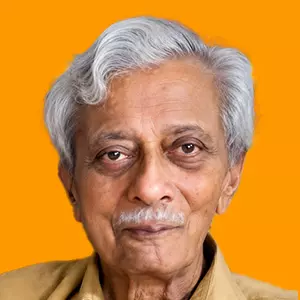
Kameshwar Yadav was only eight when his father, Jugeshar Ahir, a daily wage labourer at a brick depot near the Alipore zoo, brought him to Kolkata to work as an additional workhand way back in the 1960s. However, under pressure from his co-workers, Jugeshar had to admit Kameshwar, who had been studying in Class 4 in a school at his native village Gaura in Bihar’s Bhojpur, in a local Hindi-medium school in Kidderpore.
The urban environment and social relations enamoured the boy. He became deeply captivated by his fresh surroundings and the people he met. He was filled with an intense feeling of admiration for the city and also the community. The new friendships and connections formed within a short period completely changed him. Rather than feeling homesick or alienated, he found the city’s lifestyle and social contour mesmerising. The societal milieu, choices, comforts, and cultural activities had a strong bearing on his life. A different standard of living often looks mysterious to an outsider.
The disenchantment
Soon, he had a good number of friends. Kameshwar was attracted to local political activities and got involved in party politics. After taking admission to the local college at the suggestion of his Leftist friends, he joined the CPI(M). He was projected as the young backward caste face. But even after spending a long time with party cadres, he did not find a place in it. He remained a part of the milieu.
The sense of “being utilised” made him shift to the Congress. But here, too, he remained a flag bearer for years. He would mobilise local students and youths to rallies and become part of the crowd of the public meetings.
Also read: SIR didn't cost Mamata Bengal, women's anger did, says Yashwant Deshmukh | AI With Sanket
Young Kameshwar started feeling alienated and eventually, after the BJP came to power at the Centre, he switched over to the saffron party in Kolkata. He was a gift for the party, as it did not have a non-Bengali youth leader in Kidderpore area. The saffron leadership gave him the opportunity and he is now a visible face at the state level and an inspiration for other non-Bengali youths of Kidderpore.
Focus on class rather than caste
Historically, none of the major political parties in Bengal—the Congress, the CPI(M), or the Trinamool Congress (TMC)—embraced the Economically Backward Classes (EBC) or the Other Backward Classes (OBC) with open arms. It would be improper to deny that they promoted some individual EBC and OBC leaders, but they were projected as centrepieces rather than a part of their broader policy approach.
Political parties’ approaches to OBCs and EBCs in West Bengal were historically centred on class-based or broad welfare politics rather than distinct caste-based mobilization. The Left Front, which governed Bengal from 1977 to 2011, focused on agrarian reforms and class identity. Unlike the Hindi heartland, OBC and EBC political mobilization in West Bengal took a back seat to class-based politics under the Left. Their share in government jobs is virtually zero. They are mainly in the MSME sector doing menial jobs.
The CPI(M)-led government introduced basic OBC reservations only in 2010, a year before it was dethroned. Even then, it granted OBC status to only 66 castes even as the lists of such castes in other states swelled. The number of Muslim castes among those recognised as backward was merely 12. In fact, the Left got defeated in 2011 as the non-Bengali Dalits and backwards withdrew their support.
Also read: What explains Bengal’s saffron shift? 6 reasons why Mamata was decimated
When TMC’s Mamata Banerjee became chief minister, she built her support through grassroots welfare schemes and localized patron-client networks. Ironically, her actions did not help the non-Bengalis as they expected. Instead, these benefited the Muslims, much to the dislike of the non-Bengali Hindu EBCs and OBCs. Almost all the major parties relied on a coalition of upper castes, Scheduled Castes, and minority communities.
Need for a political platform
But recent political shifts and debates over welfare and identity have challenged these traditional alignments. Political choices are often defined by economic needs and compulsions for empowerment. Ideology, social identity, and cultural issues are the secondary elements in deciding political sympathy and bond. People often vote for the party that fulfils their aspirations. Both rich and poor groups support parties that protect their interests. The birth of regional parties primarily owes to this politico-economic factor.
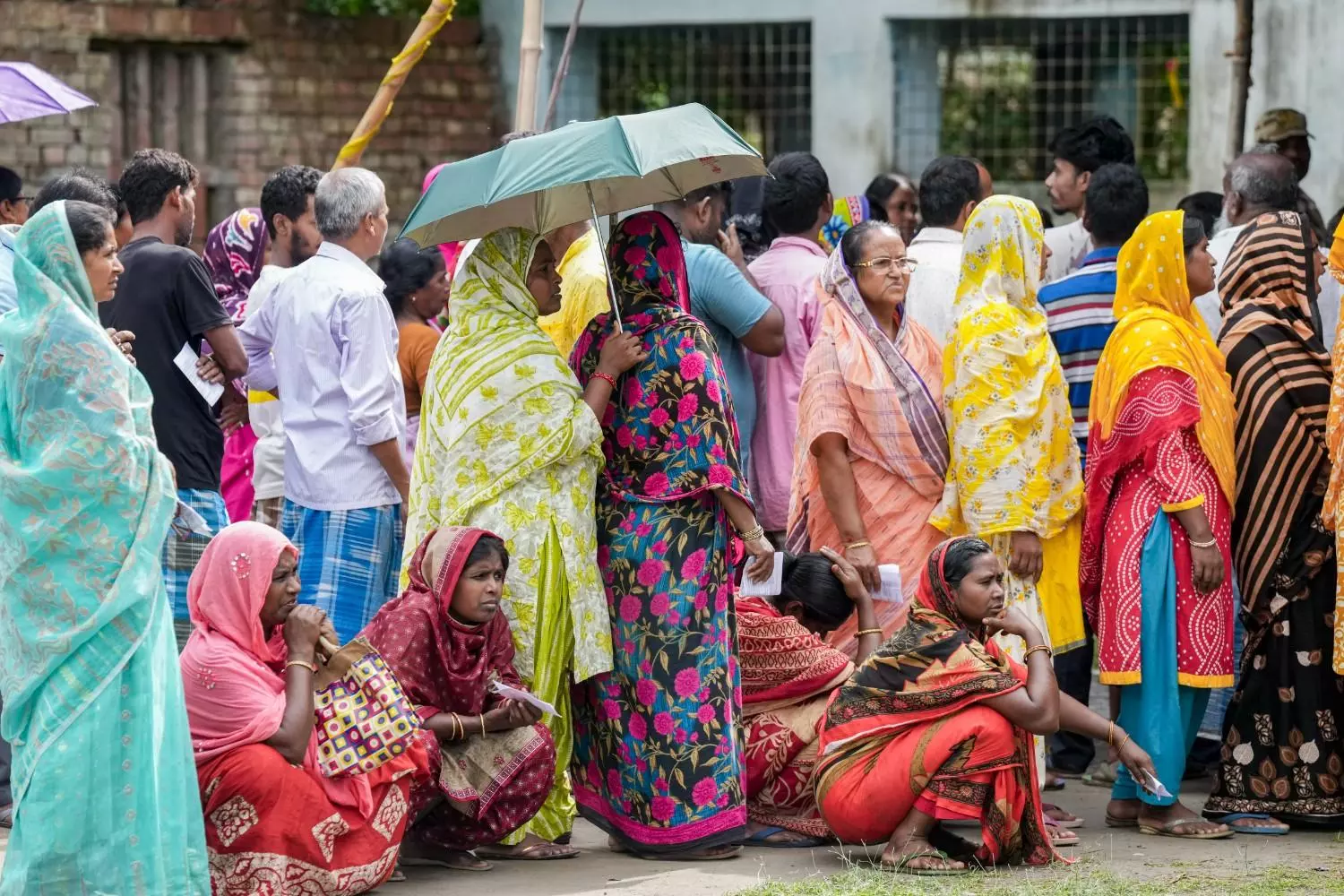
While the political discourse in the state often contrasted regional Bengali identity with national political forces, it affected how non-Bengali communities perceived their representation. And that is how non-Bengali voters, especially migrants from Bihar and UP residing in the urban and industrial hubs of Kolkata, Howrah, and Asansol, and the tea gardens, served as a reliable bedrock for the BJP, helping them counter the TMC’s intense regional “Bengali pride” narrative during the recent Assembly elections.
Since the BJP needed the manpower, it reached out to non-Bengalis. And like Kameshwar, they grabbed the situation, as they needed a political platform to assert their identity and also to have a share in the state which had been denied them so far notwithstanding their population being 15 per cent. Much against the popular perception, they did not adopt the BJP out of their ideological commitment; instead, they echoed the Hindutva slogan simply to gain the BJP’s trust.
An influential swing block
The divide between non-Bengalis living in Bengal and the natives had already been sharpening for years. Non-Bengalis hold a substantial stake in trade, small businesses, and industry. But their share of direct political power is considerably low and largely fragmented. While they act as an influential swing block in 70-80 urban and industrial assembly seats, their direct representation in elected legislative and executive power remains minimal, as mainstream state parties are structurally dominated by ethnic Bengalis.
Also read: Polarisation to anti-incumbency — what helped BJP change the political narrative in West Bengal
Seats in major metropolitan areas of Kolkata like Bhabanipur, Jorasanko, and parts of Howrah feature heavy concentrations of non-Bengali trading and working-class communities. The BJP heavily consolidated these demographics. While the TMC framed the contest sharply around local Bengali identity and culture versus an “outsider” national party, non-Bengali residents were largely unmoved by this rhetoric, focusing instead on national governance, commercial stability, and anti-incumbency.
The non-Bengali communities in West Bengal gravitated towards the BJP as a strategic counterweight to the ruling establishment of decades, seeking greater political representation and a stake in governance. Aligning with the BJP, a party where decision-making and the purse strings are both controlled by non-Bengalis, offered these EBC and OBC populations an avenue to bargain for administrative attention and a share in state power.
Namasudras and Matuas
Apart from these Hindu backward castes, Namasudra and Dalit communities formed the core social coalition that enabled the BJP’s electoral rise in Bengal. The Namasudra community, largely part of the Matua sect, migrated over decades, first from East Pakistan (which later became Bangladesh) and later from the independent country. Therefore, the BJP-RSS’s focus on the plight of Hindus in Bangladesh serves both ideological goals and strategic electoral objectives, particularly regarding refugee and Scheduled Caste communities like the Namasudras and Matuas in West Bengal and Assam.
Highlighting cross-border minority persecution helps the BJP and RSS polarize and consolidate Hindu votes and position the BJP as the primary protector of the community. In Bengal, linking cross-border insecurity with local governance narratives allows the party to challenge regional opponents by framing demographic changes and security threats as a shared political risk.
Also read: Bengal's faded Red: Can CPIM-led front overcome its existential crisis?
Second, Dalits and their issues have been conspicuously absent from mainstream politics in Bengal. To date, the Marxists have not been able to evolve a concrete ideological approach to caste question. They feel that raising the caste issue was a dialectical tactic to defuse the class struggle, which is a skewed notion. “Bengalis have no understanding of caste” has been the firm belief of Leftist intellectuals.
Myth of ‘caste-less’ Bengal
But the idea of a “caste-less Bengal” is a hegemonic notion marketed by the Bengali Bhadralok (genteel class), which comprised a chunk of the Bengal Marxists. It swept the crucial question of Dalit struggle under the carpet. Most of the academics and intellectuals across the country are not willing to subscribe to the view that the caste element has strong roots in Bengali society. The paradox of intellectual and enlightened Bengal has been the constant invisibilisation of Dalits as a political constituency.
Dalits account for 23.5 per cent of Bengal’s population — one of the highest among all states — and the state’s total Dalit population is second only to Uttar Pradesh (according to the 2011 Census). They are dispersed across the state and comprise several sub-castes and communities. The Namasudra and Matua communities are spread across southern Bengal, especially in North 24-Parganas and Nadia. The Rajbanshis, another Dalit group, hold sway in North Bengal. Other Scheduled Caste communities — Bagdi, Bauri, Mochi and Chamar — have a significant presence in Jangalmahal and Midnapur.
Yet the state has failed to produce a single Dalit leader since Independence. Only a negligible percentage of SC candidates of the three major political parties of the state (Congress, CPM, TMC) contested from general seats, reflecting that a caste-based social engineering strategy is still not a political reality in Bengal. Since the social sphere of Bengali society was organised around party politics, Dalit constituencies became fragmented. Even Mamata’s “Maa, Mati, Manush” call failed to bring Dalit issues to the fore.
Also read: The unmaking of the Bengali bhadralok is a shift in power, not culture
Only recent legal battles over quotas have brought backward-class definitions to the forefront of electoral friction in the state. Identity, among other things, remains one of their major struggles. The Matua and Namasudra communities trace their origins to undivided Bengal, and their primary concern to this day is citizenship and refugee status. The BJP won over their loyalty by assuring that it would meet their longstanding demand of citizenship, which, incidentally, has not been met so far.