Are today's teachers ready for Gen Z, Gen Alpha pushback?
As students question authority and parents demand accountability, teachers struggle to adapt to changing classrooms, discipline norms and expectations

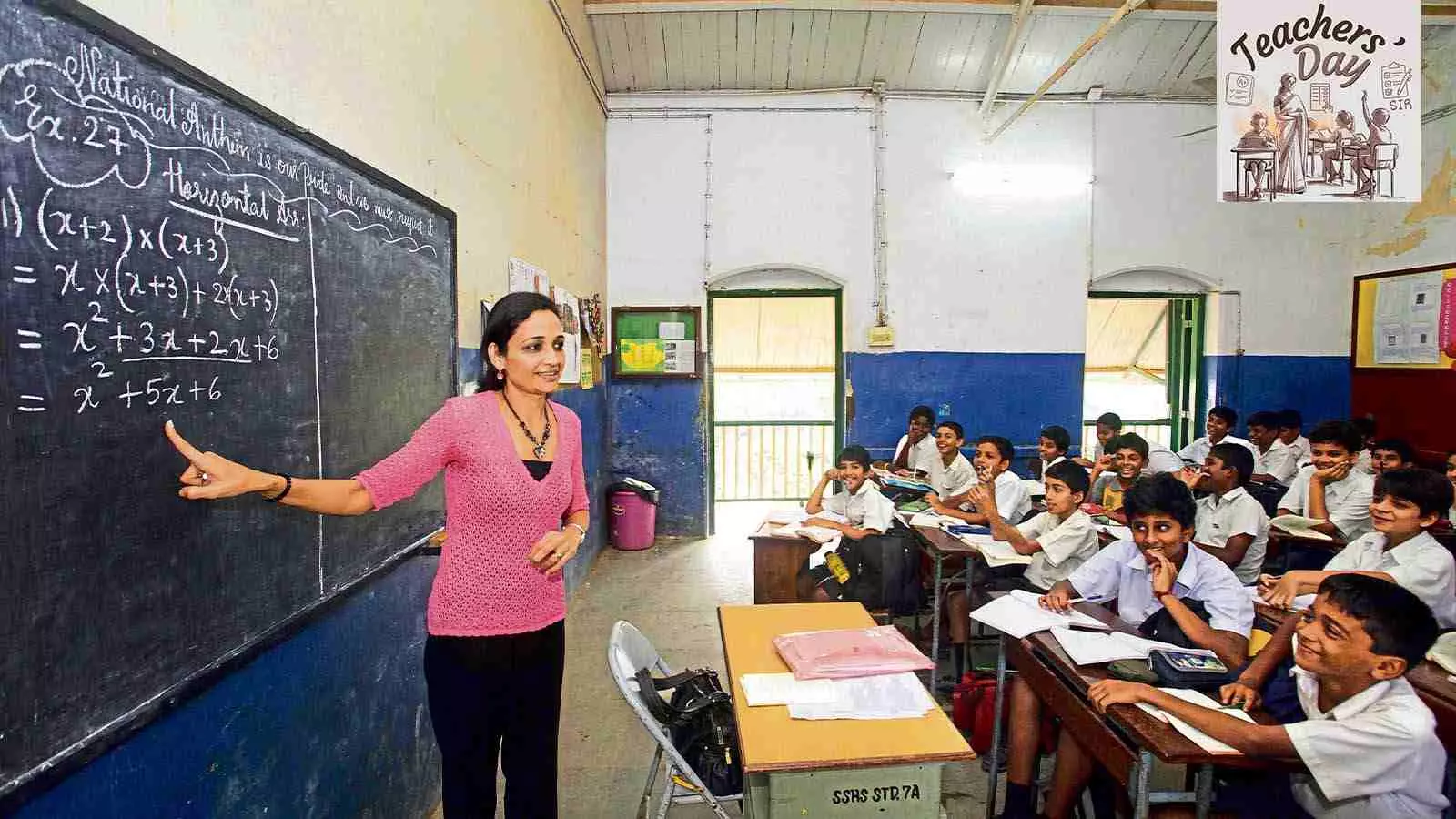
Teachers' Day. It's that time of the year when WhatsApp forwards praise teachers, and institutions honour them. But the rest of the 364 days, what's the plight of today's educator? Despite being the lynchpin of the education system, teachers get neither a say in how things are run, nor adequaltely recognised for actually running the sytem.
The Federal's Teachers' Day series takes a long, deep look at the daily struggle of today's teacher. The first two parts of the series spoke to Rajasthan and Bihar educators struggling with poor infrastructure, low pay and increased work pressure in their respective states. The third and final part asks teachers a pertinent question — how do they cope with Gen Z and Gen Alpha angst?
R Shruthi, 14, felt humiliated when the maths teacher in her Chennai school rebuked her and asked her classmates to give her a round of applause for not completing her homework. The incident stayed with her for days. It upset her not just the next day but throughout the week, and she even began to dread coming to school. Shruthi eventually told her school principal and parents and sought their support.
The teacher was asked to apologise to Shruthi. “We noticed that Shruthi was not interested in studies and wanted to stay back home for a week. When she shared the issue, we did not hesitate like in the olden days. We wanted to be supportive of our child,” L Deepa, her mother, told The Federal.
Read Part 1| CJP put Rajasthan students’ plight in the spotlight; ‘We Too’, say teachers
For generations, teacher led the classroom, students listened, took notes and, for the most part, did not question the authority of the person holding the chalk. The dynamics are vastly changed now.
A changing classroom dynamic
Gen Z and Gen Alpha students have grown up with smartphones, social media, artificial intelligence and instant access to information. They are more likely to question what they are told, challenge authority and speak up when they feel they have been treated unfairly. For teachers, this has meant navigating a classroom where authority can no longer be taken for granted.
According to Meenatchi, a parent and tuition teacher in Chennai, unlike children of the 1980s and 1990s, today's students are more vocal and willing to seek help. “Not all students are the same, especially academically. But when it comes to harassment or abuse in school, they seek help. This is a good attitude. Sometimes, when they go overboard, teachers are forced to step back from disciplining children,” Meenatchi told The Federal.
But she was quick to note that some parents expect schools and teachers to take almost complete responsibility for their children, while simultaneously questioning teachers when something goes wrong. She has witnessed how friction is increasingly playing out between parents, students and teachers.
“Parents think once they pay the fees and pack their children off to a big school, their responsibility ends. But only when teachers and parents work together and strike a balance can children improve academically and in life,” she added.
Bridging the generational gap
When The Federal spoke to child-rights activist Andrew Jeusraj, who has conducted teacher training sessions across Tamil Nadu and worked with UNICEF, he said children inevitably change with every generation. The question, he says, is whether teachers and schools are prepared to keep pace.
Read Part 2 | Bihar’s teachers caught in schooling system that asks more, gives little
He recalls seeing a notice board at a residential international school in Krishnagiri which explained the generational mismatch: 19th-century classrooms, 20th-century teachers and 21st-century learners.
The physical classroom might not have changed much, but the children occupying it have grown up in a different era. “The problem is not necessarily a lack of academic qualifications. Teachers today may have degrees, postgraduate qualifications and even PhDs. What is missing is continuous professional development to help them understand changing children and changing classrooms,” he said.
He draws a comparison with the medical profession. “Look at the doctors. They have CME — Continuous Medical Education. They have to attend certain seminars at least once a year. They have to spend certain number of hours in learning. But teachers are not provided with any training to understand the generational gap and how to handle children with a difference,” Andrew told The Federal.
Perhaps the biggest change is that children today are more aware of their rights and more willing to express themselves, he noted. “Some teachers struggle with that transition. They teach democracy, participation and freedom of expression. But the problem is, when the the students actually implement these, the teachers are not ready to accept it," he said.
Changing discipline equation
Government-school teacher SR Anandakumar sees the issue differently. He argues that the pendulum may have swung too far in the other direction. Teachers have been repeatedly told not to scold or physically punish children. But, he asks, what happens when a child simply refuses to study?
“I understand that we should not beat or scold a child. But today, you cannot even raise your voice. At the same time, we have to ensure that the child studies. Tell me, how will he study?” he asks.
For teachers of his generation, the classroom was built around a stronger disciplinary structure. Today, teachers have to operate in a far more sensitive environment, where even disciplinary action can lead to complaints from parents. Teachers sometimes feel their authority has been undermined, Anandakumar told The Federal.
Also read | Left confused by all the Gen Z ‘skibidi’? Check out this guide for a quick language ‘glow up’
The relationship between teachers and parents has become another pressure point.
Some teachers resort to completing the syllabus and stay away from disciplining children for fear of complaints against them. “Some parents use the helpline not to seek help but to file complaints against teachers,” said Anandakumar.
Training teachers for Gen Z
Lalitha Devi, principal of a private school in Chennai, says some parents closely monitor teachers and are ready to complain when they believe their children have been treated unfairly.
There are parents who ask why a child was scolded in front of the class. Others challenge teachers over the smallest issues. But she says the picture is not entirely adversarial. “There are parents who analyse, watch you deeply, and, if they have faith in you, they will listen to whatever you say. That trust, however, has to be earned,” she said.
Also read | Teachers’ Day special: Why discourse on coaching institutes seems to ignore plight of faculty
Lalitha Devi says teacher training has also changed. When she was trained to become a teacher, B.Ed programmes included observation classes in schools, where trainees watched how experienced teachers interacted with children and managed classrooms.
“In the past, in B.Ed, they used to give us observation class for five days. Now, several autonomous colleges provide B.Ed and M.Ed degrees to candidates who have never attended the course. I recently encountered a candidate who did not even write the thesis for M.Ed but paid the fees for the degree and completed the course. How can we expect them to work with Gen Z students?” asked Lalitha Devi.
Teacher-training institutes, the syllabus and exam patterns have to be monitored and improved on an ongoing basis, she noted. Till teachers are brought up to speed, both in terms of teaching methods and student-handling skills, the strain in the classroom is likely to continue.