MGNREGA vs VB-G RAM G: What changes for states and workers | Interview
The Modi government has introduced legislation to overhaul the MGNREGA; will unskilled workers benefit from the new scheme?

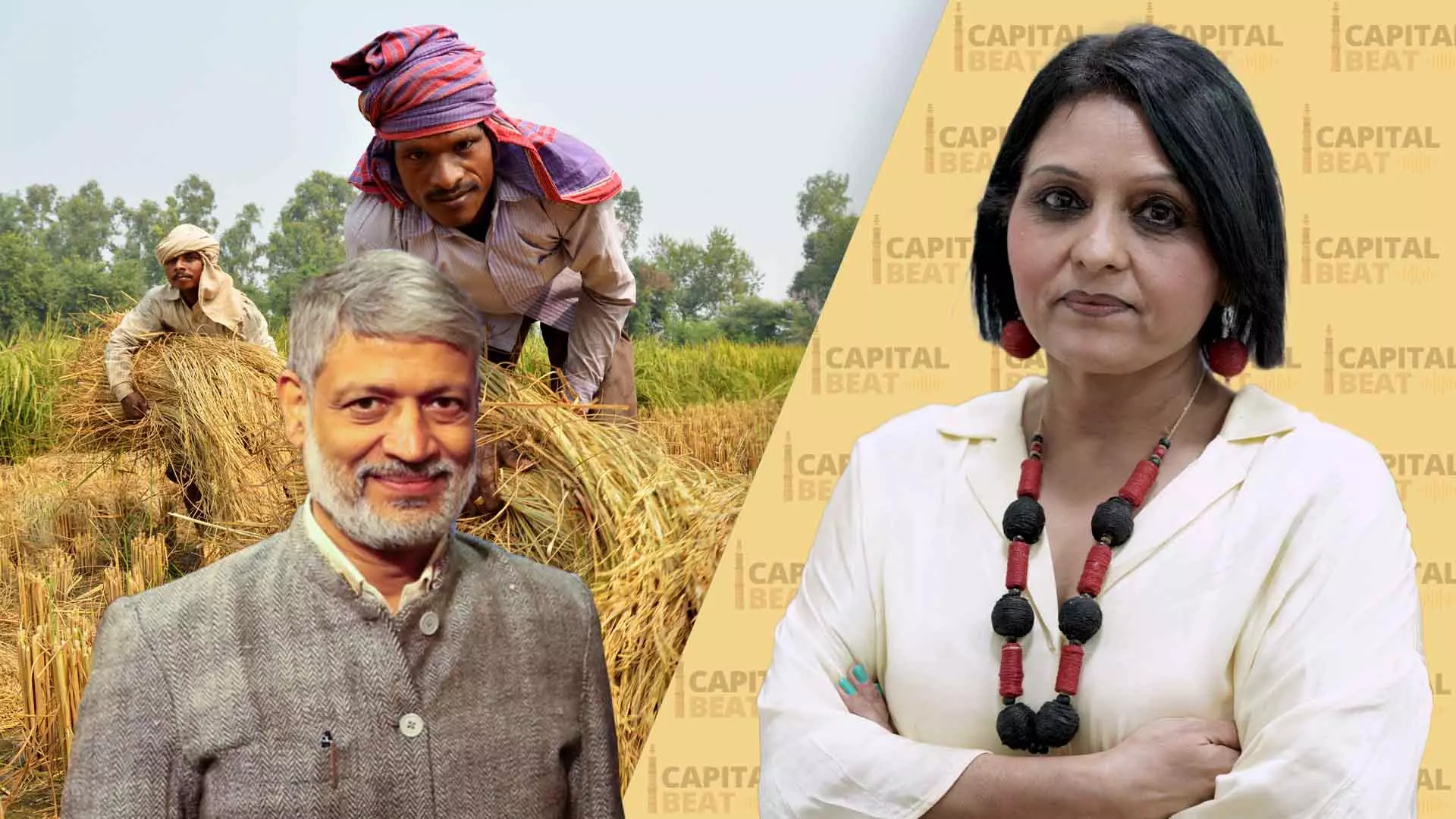
In this Capital Beat episode, The Federal spoke to Nikhil Dey, social activist associated with the Mazdoor Kisan Shakti Sangathan (MKSS), on the government’s move to replace the Mahatma Gandhi National Rural Employment Guarantee Act (MGNREGA) with the proposed Vikas Bharat Guarantee for Rozgar and Ajivika Mission Grameen (VB-G RAM G Bill, 2025).
He explained why he believes the new framework weakens legal entitlements, shifts costs to states, and turns a rights-based law into a discretionary scheme.
MGNREGA is set to be replaced. Why do you think the government is doing this, and what does the “Viksit Bharat framework” actually mean?
I think we first need to read the new bill carefully to understand what the government means by the “Viksit Bharat framework”. This was never a government that was comfortable with MGNREGA. It had to use it. The prime minister himself said early on that this scheme would be preserved as a monument of failure.
The most important part of this move is the repeal. If the government only wanted to increase employment to 125 days, it could have done that within MGNREGA itself. The 125-day promise, when you actually read the law, is a complete sham.
Also read: 'VB-G RAM G Bill undermines MGNREGA spirit', says Shashi Tharoor
There are three critical provisions we need to understand to grasp the political economy behind this change.
What is the most significant structural change in the new bill compared to MGNREGA?
MGNREGA was a law fought for by people, welcomed by people, and used across the country. It was a demand-driven legal guarantee of 100 days per household. Anyone in rural India could demand work. It was a universal entitlement.
The beauty of it was that it was self-selecting. People with better earnings or alternative work would not opt in. Only those who genuinely needed work would come, and even then only up to 100 days.
Now, if you look at the new bill, especially Section 4(5), the central government will decide the “normative amount” to be given to states. Earlier, the Centre had to fund the labour cost fully, and the law made it clear that it was a legal responsibility.
Also read: Those who fear Gandhi still fear his name, says Satheesan on MGNREGA row
This was the one law that was not budget-constrained. Whatever was demanded within 100 days had to be funded. Now the Centre decides how much to give, to whom, and on what basis. That means there is no longer a guarantee.
The government claims the earlier framework lacked a national strategy. Do you accept that argument?
The so-called national strategy is simply that the Centre will decide everything. More importantly, the legal entitlement has been undermined.
A national strategy should mean that anyone who needs work can apply for it. That is no longer guaranteed. The Centre is not legally bound to provide work when demanded.
Whatever strategy they talk about has to be reflected in the law itself. In this law, the guarantee is missing.
You mentioned another provision that worries you. What is it?
The law allows the Centre to decide where the scheme will apply—entire states, parts of states, districts, or blocks. The state then has to enforce it where the Centre chooses.
Also read: 'PM Modi opposed to Gandhi’s ideas', says Rahul on MGNREGA replacement bid
This becomes an on-and-off switch entirely controlled by the Centre. That is the second major problem.
The government says the new law focuses on durable assets, climate adaptation and integrated planning. What is your response?
I have no problem with the four focus areas they talk about. But this was an employment guarantee law. That law has been repealed and replaced with a scheme.
They claim 125 days of work, but nowhere is that guaranteed by law. That is the fundamental issue.
As for bottom-up planning, once the Centre has already decided the priorities, the funds, and the structure, panchayats are reduced to implementing agencies. They are no longer planners.
MGNREGA allowed panchayats to create shelves of projects and prioritise works by law. There were over 260 categories of permissible works, including climate-related ones. The existing framework could have easily been strengthened instead of dismantled.
Why is the 60:40 cost-sharing model a serious concern?
This is a central conception being imposed on states. States are already cash-strapped. As elections approach, states want to reserve money for their own commitments.
Even if states agree in principle, raising 40 per cent will be extremely difficult. Until the Centre receives the state’s share, it will not release its 60 per cent.
Also read: ‘Gandhi not from my family’: Priyanka slams Modi Govt’s 'renaming obsession'
This makes the programme vulnerable to delays and failure. It could easily become a non-starter.
Will workers still be able to use the scheme as leverage, especially during agricultural seasons?
No. MGNREGA gave workers bargaining power. Landless labourers could say, “If we don’t get fair wages, we will go to NREGA.”
That created a de-facto minimum support price for agricultural wages. This new framework does not provide that leverage because it is not demand-driven and not guaranteed.
CPI(M) MP John Brittas says this is cost-shifting by stealth. Do you agree?
Absolutely. His criticism is spot on.
When MGNREGA was passed, Parliament passed it unanimously. It was a historic moment. The country agreed that rural workers needed support with dignity.
This law served India well—in normal years, in droughts, floods, economic crises and during COVID. Even this government had to increase the budget then.
Now, without consulting states, they are being asked to pay 40 per cent. Many states will resist. This will lead to Centre–state conflict and undermine the programme.
Also read: Protest erupts in Lok Sabha as govt introduces G-RAM-G bill dropping Gandhi's name
What happened in West Bengal shows how dangerous this is. Workers who were legally entitled to work were denied it. That led to distress migration, hunger and unpaid wages. That is unconstitutional.
Do you expect legal challenges if the bill becomes law?
Yes, there will definitely be challenges. There is a clear constitutional angle here, including the right to life.
But courts are not the best place to resolve this. Parliament is. That is where the will of the people is reflected.
This law has benefited millions, especially women, and has reduced distress migration. People will respond politically, even if they are very poor. I believe that because I have worked closely with them.
What kind of compounding effect could this have on labour rights more broadly?
This is clearly an anti-worker move. The law has been repealed, not reformed.
If the intention was genuinely to provide 125 days of work, everyone would have welcomed it. There is no question that MGNREGA could have been strengthened.
Also read: BJP defends MGNREGA relabelling: 'Not changing name but spirit'
What has replaced it is not even a shadow of a legal entitlement. It is a discretionary scheme.
What does converting a law into a scheme mean for people on the ground?
A scheme can be used selectively, timed around elections, and withdrawn. A law cannot.
If this government was serious about moving away from handouts, there is nothing better than a self-selecting programme where people work, earn minimum wages, and contribute to village development with dignity.
Development cannot be about winning elections alone. When laws are replaced by schemes, both development and democracy suffer.
(The content above has been transcribed from video using a fine-tuned AI model. To ensure accuracy, quality, and editorial integrity, we employ a Human-In-The-Loop (HITL) process. While AI assists in creating the initial draft, our experienced editorial team carefully reviews, edits, and refines the content before publication. At The Federal, we combine the efficiency of AI with the expertise of human editors to deliver reliable and insightful journalism.)