DMK rejects BJP charge on women’s quota, calls delimitation link a ‘political ploy’
Party says it supports women’s quota but opposes “conditional framework”; Wilson and Kanimozhi Somu accuse Centre of politicising issue, delaying implementation

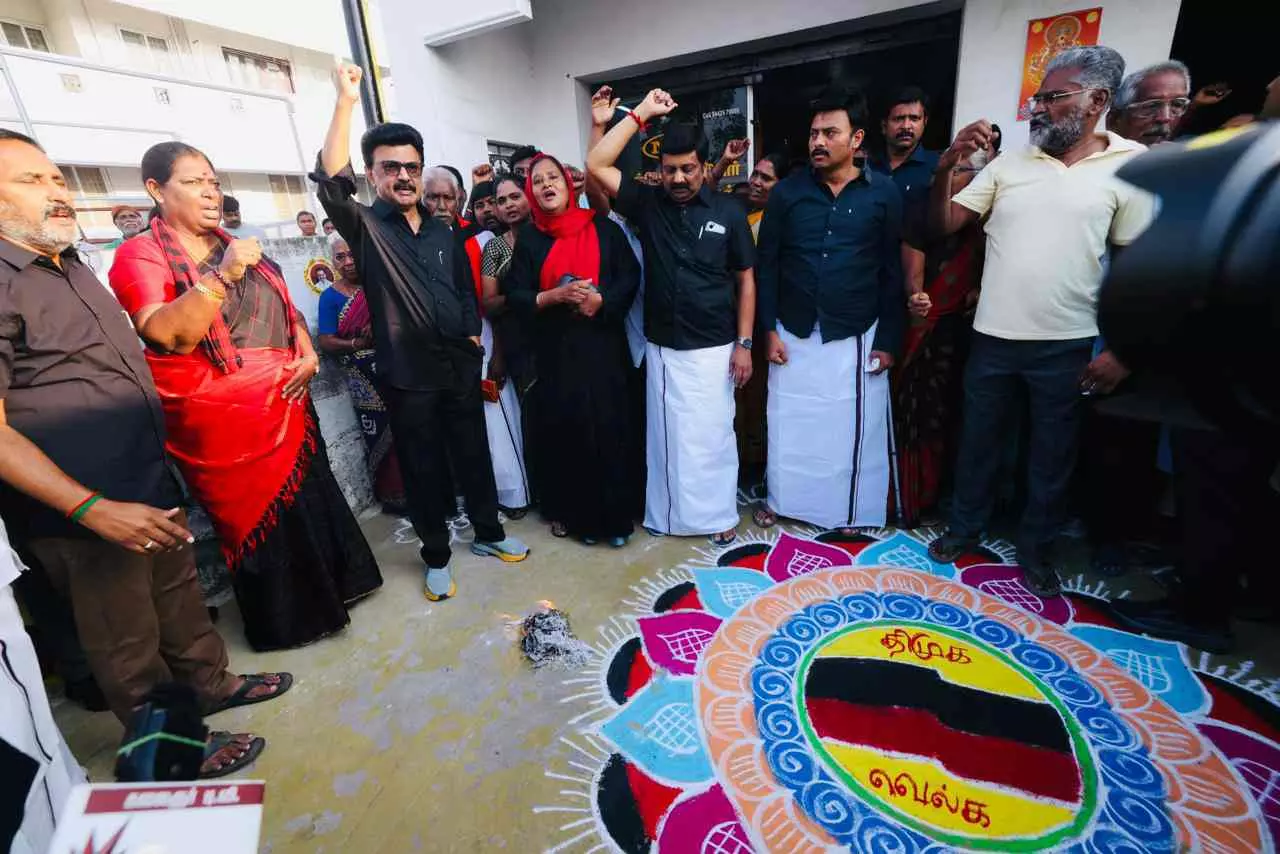
The DMK on Saturday (April 18) strongly rejected the BJP’s allegation that parties in the INDIA bloc, including the DMK, were responsible for defeating the implementation of the Women’s Reservation Bill, and accused the Centre of “politicising” the issue by linking it to delimitation and the census.
Also read | Centre has sinister motive behind linking Nari Shakti with Delimitation Bills: DMK
Responding to the charge, DMK leaders said the party has consistently supported women’s reservation but opposed what it called the “conditional framework” imposed by the BJP-led government, which ties its rollout to a future census and subsequent delimitation exercise.
Wilson questions delay, intent
DMK Rajya Sabha MP P Wilson criticised the Centre’s approach, arguing that the current framework complicates what could have been implemented immediately. Taking to social media platform X, he said he had introduced a Private Member’s Bill on Saturday (April 18) seeking to delink women’s reservation in Parliament and state Assemblies from the census and delimitation process, and to bring it into force without delay.
However, Wilson said permission to move the Bill under Rule 267 was denied. “What could have been done so simply was turned into a complicated affair because the BJP has no intention of implementing women’s quota,” he said, adding that the government’s stance “proves beyond doubt” that it is using the issue for political messaging rather than genuine reform.
He also questioned the urgency behind passing a law now that is expected to be implemented only after the next delimitation exercise, likely around the 2029 elections. “What is the hurry to pass a bill now that will apply to the 2029 elections?” he asked.
DMK opposes delimitation linkage
On delimitation, Wilson reiterated the DMK’s long-standing position that population alone should not be the sole criterion for redrawing parliamentary constituencies. He argued that factors such as Gross State Domestic Product (GSDP), industrial growth, and gross enrolment ratio should also be considered, especially for states that have successfully implemented population control measures.
He further demanded that quota for OBCs be incorporated alongside women’s reservation and called for the withdrawal of the bill in its present form. His proposed legislation also sought to extend the freeze on delimitation till 2051 and mandate ratification by two-thirds of states before any reallocation of Lok Sabha seats.
Echoing similar concerns, DMK leader Kanimozhi NVN Somu said women’s reservation “cannot be held hostage to delimitation.” Speaking to The Federal, she said that when the Women's Reservation Bill was introduced in 2023, the DMK had clearly demanded its immediate implementation based on existing seat strength, without waiting for census data or boundary redrawing.
Kanimozhi slams BJP stance
“There is no need for such preconditions. Linking reservation to delimitation only shows that the BJP wants to do politics with the issue,” she said. According to her, the Centre projected the bill ahead of the 2024 Lok Sabha elections as a major reform, while knowing fully well that it would not be implemented immediately.
She accused the BJP of staging a “gimmick” by promising reservation while deferring its execution. “If you really have the intent, you can provide 33% quota within the current strength of 543 seats. Instead, you want to increase the number of seats and then provide reservation, which effectively reduces its immediate impact,” she argued.
Also read | 2026 elections all about Tamil Nadu vs Delhi, says Kanimozhi | Interview
Kanimozhi also pushed back against criticism that the DMK’s opposition to delimitation is politically motivated ahead of 2026 Assembly elections. She said the party’s stance is rooted in its ideological commitment to federalism and state autonomy. “This is not new. The DMK has always stood for the rights of states, especially those that have contributed to population stabilisation. It is BJP that tries to somehow create an image, but it fails in Tamil Nadu as usual,” she said.
DMK pitches women empowerment
Highlighting the party’s record, she said that the DMK government made several efforts to increase the participation of women in governance and polity. “Tamil Nadu’s 50 per cent reservation for women in local bodies and increased representation in government jobs and other sectors show how we worked towards women's reservation. We have consistently expanded opportunities for women. The question is why the Centre is unwilling to implement reservation immediately at the national level,” she said.
The exchange comes amid a broader political debate over delimitation and representation, with southern states expressing concern that population-based seat redistribution could penalise them for successful family planning efforts.
When asked why the DMK has not increased the number of seats allocated to women or assigned key portfolios such as finance and education in the Cabinet, she said, “We have been improving our performance. The Dravidian Model 2.0 government will focus on women’s empowerment in a big way, and you will see that after the 2026 Assembly elections, once the government is formed.”