







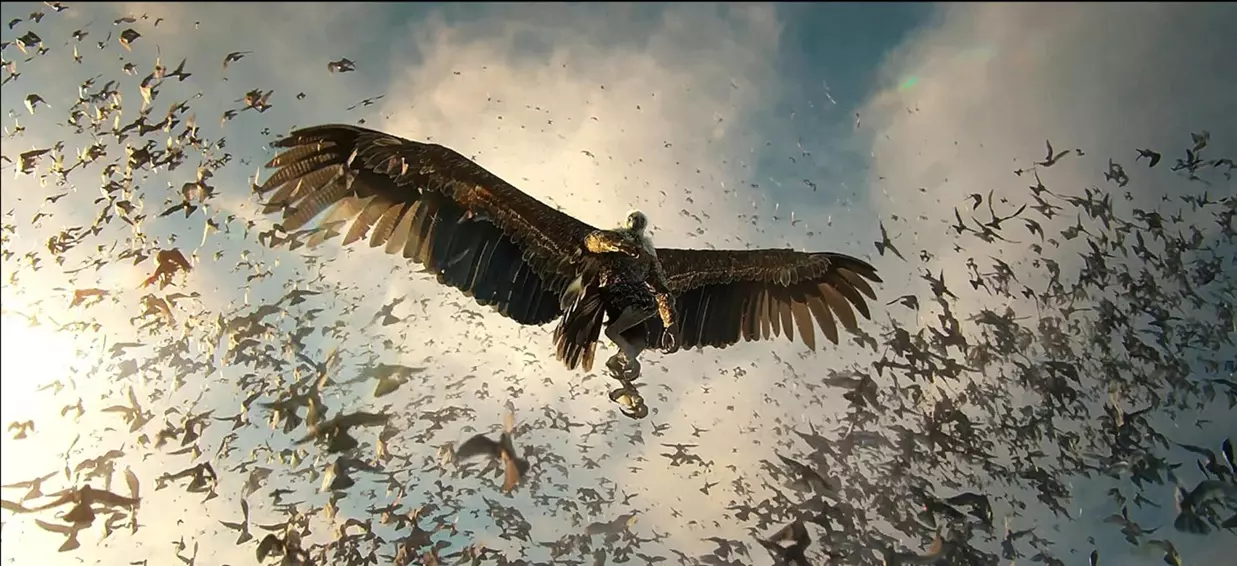
Ramayana named among top 20 visual effects contenders for 2027 Oscars: Reports
The Rs 1,600-crore epic is in the Best Visual Effects mix alongside Dune: Part Three, Avengers: Doomsday and Godzilla: Minus Zero

Nitesh Tiwari’s Ramayana: Part One has entered the top 20 contenders for the Best Visual Effects Oscar ahead of the 99th Academy Awards on 14 March 2027, according to Variety.
The Indian epic joins major Hollywood releases including Dune: Part Three, Avengers: Doomsday, The Odyssey, Project Hail Mary, Disclosure Day, Spider-Man: Brand New Day, Whalefall and The Sheep Detectives, alongside Japanese blockbuster Godzilla: Minus Zero.
Also read: Ramayana: Part One review
Reportedly made on a Rs 1,600-crore budget, Ramayana: Part One is the most expensive Indian film ever made and features more than 9,000 visual effects shots. Eight-time Oscar-winning studio DNEG — whose credits include Dune, Interstellar and Brahmastra — led the visual effects alongside ReDefine, with DNEG chief executive Namit Malhotra also producing the film with Yash.
A sequence pitting computer-generated Jatayu against Yash’s Ravana has drawn widespread praise. Critics and viewers have hailed the visual effects as Indian cinema’s strongest yet, matching top Hollywood standards. Variety noted that The Academy does not publicly release the top 20 contenders and declined to confirm the list.
Awards buzz builds globally
Released worldwide through Sony Pictures on 5 November 2026, the adaptation of the Indian epic stars Ranbir Kapoor as Lord Rama, Sai Pallavi as Sita and Yash as Ravana, with an ensemble cast. Overseas audiences have seen a 30-minute truncated cut titled Ramayana: Rise of a Legend.
Momentum is building across Western awards circuits following announcements from the Critics Choice Association, which shortlisted Ramayana for both Best Visual Effects and Best Stunt Design. That strong showing reflects a wider shift towards Asian spectacles, highlighted by Godzilla: Minus Zero — whose predecessor Godzilla Minus One won the visual effects Oscar in 2025 — and India’s recent Oscar footprint after RRR reached the visual effects top 20 in 2023 before winning Best Original Song for 'Naatu Naatu'.
Preliminary voting for the Oscar shortlists runs from December 7 to 11, with category shortlists revealed on December 15. Visual effects branch members will then screen presentations from the 10 shortlisted titles at bake-offs between January 8 and 10 ahead of choosing final nominees.
Nominations voting opens from January 11 to 15, leading to the nominations announcement on January 21. The 99th Academy Awards will take place on March 14, 2027 at the Dolby Theatre at Ovation Hollywood.