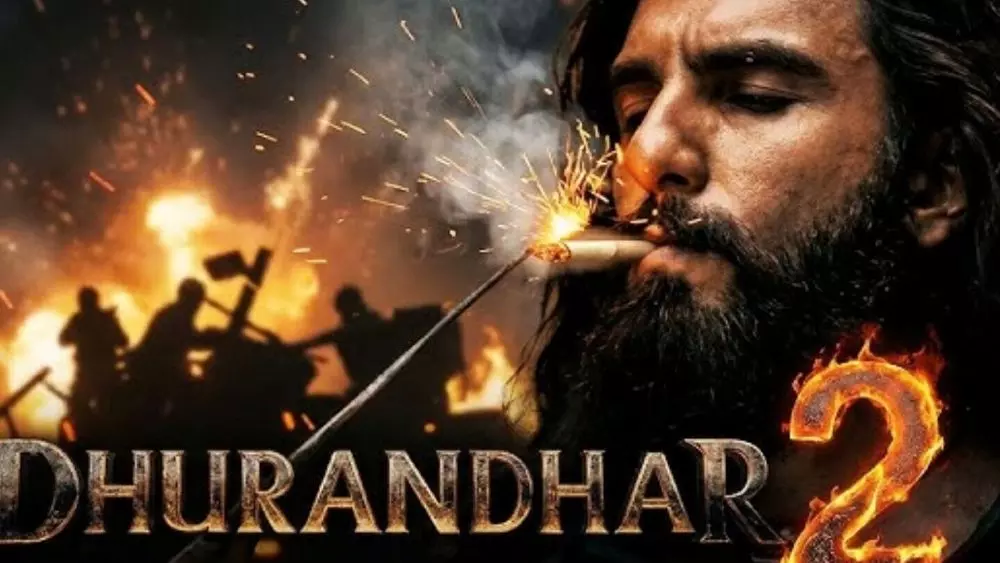
Dhurandhar: The Revenge uses the wish-fulfilment framework to play defence for the BJP in general and the Narendra Modi government in particular.
Why Aditya Dhar’s Dhurandhar films are India's very own wish-fulfilment military drama
Dhurandhar and its sequel, Dhurandhar: The Revenge, place themselves in the tradition of films like The Patriot, Inglourious Basterds, Rambo: First Blood Part II and American Sniper. In all of these films, radical individualist interventions upend the course of history, dramatically transforming defeat into victory.

There’s a literary technique used by publishers of comic books and genre fiction, which helps them change established facts and events within a fictional timeline — it’s called ‘retcon’, short for ‘retroactive continuity’. It’s how origin stories are adjusted or even overhauled for long-running marquee characters like Superman and Batman. It’s how Arthur Conan Doyle “brought back” Sherlock Holmes after killing him off in ‘The Final Problem’. A retcon is an adjustment after the fact, essentially, and it helps comics publishers cater directly to hardcore fans, who want to see certain themes and story arcs being actualised.
In one of the last scenes in Dhurandhar: The Revenge, the sequel to the 2025 release Durandhar, writer-director Aditya Dhar uses the retcon to deliver a similar dose of wish-fulfilment for fans. Throughout the first film, Dhar teased the presence of a new Big Bad, a Karachi gangster called “Bade Saahab”. In Dhurandhar: The Revenge, released this week, this man is confirmed to be mob boss Dawood Ibrahim, mastermind of the 1993 Bombay blasts. During the film’s climax, Indian spy Hamza/Jaskirat (Ranveer Singh) expresses regret that he couldn’t kill Ibrahim. But his handler pulls a retcon, revealing that Ibrahim had already been slow-poisoned with dimethyl mercury over 20 years ago, that his subsequent nerve damage and physical decline happened because India’s spymasters at RAW wanted to make him suffer (without killing him). “Jo mazaa zinda rakh ke tadpaane mein hai, woh maarne mein nahi” (torturing him is more enjoyable than killing him) goes the line, a curious closing sentiment for a film that has just shown you 230 minutes of gnarly kills, the corpses piling up like a game of Tetris.
Also read: Dhurandhar: The Revenge has a screenplay mired in clichés, but plays to the gallery
Meanwhile, in the real world, law enforcement and government officials in India, America and dozens of other countries have failed to bring Ibrahim to justice for over 20 years, even after he was designated a global terrorist by the United Nations Security Council. What Dhurandhar: The Revenge is doing with Ibrahim’s story arc, therefore, is classic wish fulfilment — it’s saying, hey, we didn’t fail to kill Dawood, we kept him alive on purpose. Dawood isn’t living a life of luxury in his “White House” in Clifton, Karachi; he is actually suffering and feeble and constantly coughing up globs of blood. It’s basically a bedtime story for grown-up children who desperately need to believe in their government’s supposed omnipotence.
The wish-fulfilment military drama
By deploying the narrative technique described above, both Dhurandhar and its sequel place themselves in the longstanding tradition of “wish-fulfilment military dramas” — films like The Patriot (2000), Inglourious Basterds (2009), Rambo: First Blood Part II (1985), American Sniper (2014) et al. In all of these films, radical individualist interventions upend the very course of history, transforming defeat into victory in suitably dramatic fashion (for the Dhurandhar universe, of course, that individual is Hamza/Jaskirat).
Tarantino’s Inglourious Basterds sees an oddball group of American soldiers killing Hitler and his closest allies in one go, ending World War II overnight with a decisive victory. In The Patriot, Mel Gibson plays a kindly American landowner whose battleground heroics basically end up driving the colonial British government off America altogether. Rambo II erases America’s ignominious defeat in Vietnam by having Rambo kill a bunch of comically evil Vietnamese and Russian military officers.
Dhurandhar: The Revenge paints any criticism of the BJP as Pakistani-funded.
Freud hypothesised that dreams are the original wish fulfilment device. These Hollywood films, therefore, are a bit like vivid dreams during which American audiences express their desires and aspirations. But they also do a lot more. All of these films hide the crimes and missteps of the nation-state in question. Inglourious Basterds critiques Hitler’s bigotry and racism several times but pointedly ignores the racism prevalent in the American armed forces of the 1940s. The Patriot (2000) is partially based on the life of Francis Marion, a South Carolina militia leader who owned African-American slaves and killed and raped a large number of Native Americans. But these aspects of his life are completely whitewashed by the film and in fact, Mel Gibson’s character Benjamin Martin is shown instead to be an employer of free-men-of-colour, a narrative decision that was heavily criticised back in 2000, including by the director Spike Lee.
How Dhurandhar Plays Defence for Modi, the BJP
Dhurandhar: The Revenge uses the wish-fulfilment framework to play defence for the BJP in general and the Narendra Modi government in particular. In the chest-thumping grammar of Aditya Dhar’s films (including his debut film Uri), alleged or established intelligence failures linked to the Pathankot (2016), Pulwama (2019), Galwan (2020) and Pahalgam (2025) terror attacks are just temporary blips on an otherwise flawless, super-strong, basically infallible government record. How does Dhar convince his audiences of this ‘magical thinking’, this aggressive wish-fulfilment?
Firstly, Dhurandhar: The Revenge paints any criticism of the BJP as Pakistani-funded. There’s a scene in the film where General Iqbal (Arjun Rampal) of the ISI is being scolded by his seniors upon Modi’s Lok Sabha election victory in 2014. “Why did you spend so much money on Indian socialists, university students, NGOs, media houses?”, the ISI elder tells Iqbal with a sneer. In one fell swoop, this line indicts the enemies of BJP’s ideological project and automatically converts them into enemies-of-the-nation. The film basically says that if you belong to a political party opposed to the BJP, you are being funded by Pakistan—we see the ISI lamenting the Congress’s electoral defeats, noting that they are “hamaari pasand waale log” (our preferred people).
Also read: 'Dhurandhar' director Dhar to fans: Don't share spoilers, stay till end credits
Secondly, it paints the demonetisation measures of 2016 as a masterstroke, single-handedly puncturing the schemes of Pakistani terrorists. There are three separate lines where a Pakistani villain curses Modi to the heavens, calling him “chaiwalla” every time. “Chai-waale ne gaand maar di yaar”, a Dawood Ibrahim associate says at one point (The chaiwallah has f****ed us).
Third, the villainous character of Atif Ahmed (based on the real-life alleged gangster and Samajwadi Party politician Atiq Ahmed) is another crucial factor in this context. In 2023, Ahmed and his brother were shot point-blank and killed while talking to the media, in the presence of dozens of police officers. Dhurandhar: The Revenge dramatises this event and basically brings to life the Uttar Pradesh Police’s post-facto charge-sheet against Ahmed. After Ahmed’s killing, the UP Police had claimed that the Samajwadi Party politician had confessed to links with Pakistani terrorist organisations, including but not limited to receiving weapons and funding. Of course, once Ahmed and his brother were dead, there was no way of disproving the Uttar Pradesh Police’s version of events. To this day, there is no other documentation or corroboration of this supposed Pakistani link, other than the word of the Uttar Pradesh Police.
Fourth, the state of Punjab, which had been at the forefront of the farmers’ protests of 2020-2021, which ultimately forced Modi to take a rare step backwards and repeal a set of proposed legal reforms to the agricultural sector, has been painted as a hotbed of drugs, corruption and ultimately, sedition. This is accomplished via the character of Jaskirat’s childhood friend Binda. Binda is shown to be an incorrigible drug addict and eventually, Khalistani terrorist who fantasises about “aazaad Punjab”, openly declaring his disdain for and enmity towards India. He collaborates with Pakistani terrorists, getting their drugs and weapons across the Indo-Pak border in Punjab, much to Hamza/Jaskirat’s shock and disappointment.
“Pakistan ka mustakbil ab Hindustan tay karegaa” (It’s India that will now dictate Pakistan’s future), Hamza/Jaskirat says during the last half-hour of Dhurandhar: The Revenge. It’s a line with remarkable candour, because it basically spells out the film’s wish-fulfilment ambitions, and what more could the chest-thumping Modi fan wish for, in real earnest?