Mourinho review: Netflix series celebrates Portuguese football manager’s wins, glosses over losses
The documentary series doesn't offer much fresh insight on the enigma that is José Mourinho, popularly known as 'The Special One'. For over two decades, the football manager and former player has remained one of the game’s most controversial figures and yet, there is something that draws you to him.

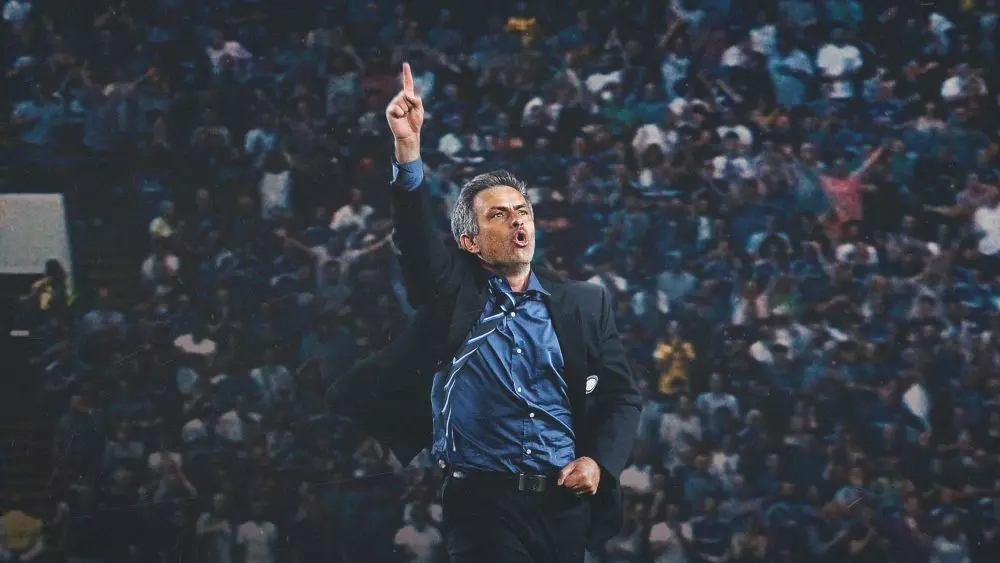
The first episode is dedicated entirely to Mourinho’s tenure as the manager of the West London club, which he took from relative nothingness to the pinnacle of European football in just three years. The second episode focuses on his historic time at Inter Milan, while the third episode revisits Mourinho’s Real Madrid years.
A colourful portrait of one of football’s most complicated characters, Netflix’s Mourinho finds “The Special One” in characteristically charismatic form. It portrays football manager and former player José Mourinho as somehow both psychologically opaque and emotionally transparent; he claims that he has never felt pressure, but he seems to thrive in it; he is capable of forming lifelong bonds with everyone except his own flesh and blood; Mourinho is an enigma, one that would take more than a Netflix series to crack.
For over two decades, the Portuguese football manager has remained one of the game’s most controversial figures and yet, there is something that draws you to him. While this new documentary series doesn’t offer much in the name of fresh insight, for football fans who came of age in the 2000s, it has about the same effect as Chad Kroeger’s 2002 Spider-Man banger “Hero” turning up on your shuffle playlist.
'Love-bomber', 'toxic' leader
Unlike the more reverential sports documentaries that Netflix’s American wing delivers from time to time, the streamer’s British offerings glisten with dry humour. For instance, when Mourinho feigns modesty while giving the production crew a tour of a shrine that he has created for himself, an off-camera voice, presumably belonging to the director, can’t resist pointing out the giant mural of the man himself adorning the wall behind him.
Mourinho is the first to admit that he’s a divisive figure, but all he seems to crave is the public’s love. It’s the only reason he chose to return to Chelsea in 2013, after a bitter separation five years earlier. The first episode is dedicated entirely to Mourinho’s tenure as the manager of the West London club, which he took from relative nothingness to the pinnacle of European football in just three years. The second episode focuses on his historic time at Inter Milan, while the third episode revisits Mourinho’s Real Madrid years.
He was, of course, backed by the billions of Roman Abramovich during both his stints at Chelsea. The Russian oligarch, who remained the owner of the club until a few years ago, doesn’t appear in the documentary. The only footage of Abramovich appears to have been shot with long lenses at Chelsea’s home fixtures, like he’s the subject of a National Geographic series. Mourinho certainly doesn’t mince his words about his former employer; he admits plainly that when he returned to Stamford Bridge as the coach of Inter Milan, he was motivated purely by “revenge” against his former boss.
Also read: Spider-Man to Gemini, how Haryanvi is having its moment in the spotlight
By most accounts, Mourinho was a rather toxic leader himself. The documentary features several star players he coached over the years, including Chelsea icons Frank Lampard and John Terry, Inter Milan legends Javier Zanetti and Marco Materazzi, and even Spain’s World Cup-winning captain Iker Casillas, with whom Mourinho butted heads during his tenure at Real Madrid. More than one of these players claims that they would’ve died on the pitch for Mourinho; such was the loyalty that he commanded from those he favoured. Those who weren’t willing to bend to his will, on the other hand, were benched, or worse, ignored.
One person describes Mourinho as the typical love-bomber. He would shower his players with glowing praise — Lampard was left in disbelief in the shower one day when Mourinho called him the best player in the world, which both of them knew wasn’t true — but he could turn on a dime when the going got tough. Famously, his own compatriot Cristiano Ronaldo barely got along with him at Real Madrid. He doesn’t show up in the documentary, but Casillas drops by to smile sheepishly when asked who leaked Mourinho’s tactics to the press a day before a key match.
A tragic flaw
While the series recalls Mourinho’s victories with enthusiasm, it largely glosses over his losses. The decade that he spent coaching Manchester United, Tottenham Hotspur, Roma, Fenerbahçe, and Benfica is summarised in a montage. As expected from a glossy Netflix production, the montage is excitingly paced and even a little moving, but it’s hardly illuminating. Mourinho says that he isn’t interested in wallowing, but he certainly seems eager to paint himself as an all-sacrificing provider for basically being an absent parent and spouse for decades. “I know that they enjoy life much more without me,” he says. This, by the way, is another example of the duality of Mourinho’s psyche.
He also refuses to revisit his childhood, declaring that it wouldn’t even warrant five minutes of screen time in his biopic. Indeed, there’s barely a mention of it in this series. And yet, there are indications of a complicated relationship with his father, a journeyman goalkeeper who, Mourinho recalls in a rare moment of vulnerability, was fired from his job on Christmas Day. Perhaps this is why he continues to hold a grudge against Abramovich, the first man to sack him.
He admits that he struggled to step out from under the shadow of his father, who was universally beloved in the football community. Mourinho may have achieved much more than his dad, but he could never attract the same kind of respect as a human being. This is his hamartia, his tragic flaw. And this is precisely why he’s such a terrific subject for a documentary.