Village Rockstars 2 Review: Rima Das’s film makes the ecological feel personal
Village Rockstars 2 releases in theatres in India two years after its world premiere at the Busan International Film Festival in 2024. The Assamese filmmaker returns to the subject of her 2018 breakout feature in this quietly devastating portrayal of growing up.

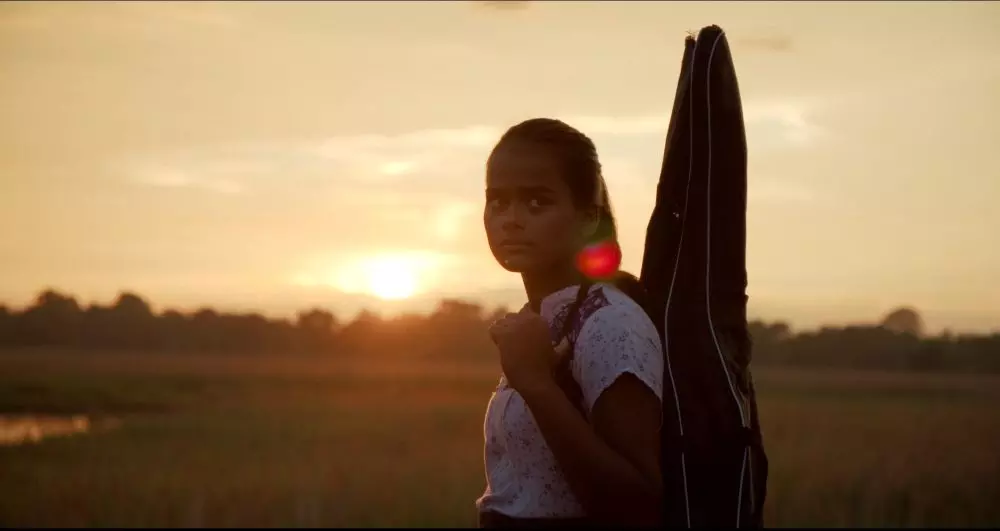
The 10-year-old protagonist of Village Rockstars, Dhunu, has entered adolescence in Village Rockstars 2, but what hasn't changed is her relationship with the world around her.
The first thing we see in Rima Das’s Village Rockstars 2 is a girl making something out of a blade of grass. Dhunu is in a field, dressed in pink, a tiara made of leaves on her head. She is working with the concentration of someone doing something important. Gradually, other girls enter the frame. They are making little ornaments out of leaves, grass and flowers, dressing each other up. Dhunu ties a flower bracelet around another girl’s wrist.
It is a deceptively simple beginning. The girl we remember from Village Rockstars (2018) — the celebrated Assamese indie that announced Das as a filmmaker with a distinctive voice — is still here, with her instinct for play, but she is no longer 10. She has entered adolescence and the film’s first images suggest a shift: this time, so much of Dhunu’s world is made up of women.
She is with her mother. She is with her girlfriends. She is sometimes with two or three girls at once, talking, teasing, confiding. There is a physical ease between them, a tenderness and playfulness that gives Village Rockstars 2 — which released in theatres in India on September 25, two years after its world premiere at the Busan International Film Festival in 2024 — an unmistakable sense of sisterhood. One friend talks about seeking heartbreak because perhaps suffering will make her a better artist. Dhunu talks about a boy she likes, but hasn’t let him kiss her.
The world of Dhunu
Even the guitar has changed meaning. At the end of the first film, Dhunu’s mother gave her a real guitar, an extraordinary gift given the family’s circumstances. Now, when we first see it, Dhunu is not playing it. She is repairing a broken string. It is a small, almost throwaway moment, but the gesture carries the weight of years. The impossible dream of the 10-year-old has become an ordinary part of her life. She plays in a band now. The guitar has ceased to be an object of aspiration and become an instrument she knows how to fix.
Also read: Paradise review: Nani’s charm, martial arts-inspired action fails to rescue film
What hasn’t changed is Dhunu’s relationship with the world around her. She climbs trees with her brother, learns to swim, watches insects, handles animals. There is a scene in which she holds a snake with such gentleness that she seems less frightened than fascinated by its beauty. An ant crawls across her face. Goats wander around. A dragonfly catches her attention. It’s a living, breathing world teeming with non-human life.
That is perhaps what makes the film’s later devastation so painful. Das has spent much of the film teaching us how this landscape feels before she shows us what happens when it is destroyed. The fields are open and green, the sky enormous. Children run around in them. People farm, forage, work and play. Dhunu’s mother seems attuned to every change in the landscape. When Dhunu sees a rainbow over the fields, her mother tells her it is a sign that the floods are coming. She is passing on the secrets of the land to her daughter.
People as part of landscape
Dhunu’s mother is a remarkable woman: widowed, fiercely independent, endlessly resourceful, making a living through farming, knitting and foraging while raising her two children. She’s the emotional centre of the film — played by Basanti Das, the real-life mother of Bhanita Das, who plays Dhunu. Rima Das gives her the elemental force of Mother Nature herself. When the land is assaulted, it’s as though she takes the hit. There are bulldozers in the village in the name of ‘development’, felling trees and killing birds, as well as land-grabbing brokers, one of whom is after Dhunu’s mother, trying to persuade her to sell the piece of land she’s so fiercely protective of. The son plays a role here and it only underlines the film’s understated but persistent awareness of patriarchy.
Inevitably, the floods come, and it is difficult to think of many Indian films that have conveyed their devastation with such profound sadness. Das makes the ecological feel personal. She doesn’t separate the characters from the landscape, perhaps because she knows this world so intimately. This is the same village Das grew up in, Kalardiya, in Lower Assam. Bhanita is her cousin. The fact that she casts non-professional actors and draws such wonderful, naturalistic performances from them is part of the sleight-of-hand of her filmmaking, which blurs the line between fiction and non-fiction. (She’s written, shot, edited and produced it).
Also read: The Love Hypothesis review: Amazon Prime Video film is a feel-good watch
She captures the rhythm of the lives of the people whose stories she is telling. By returning to Dhunu — or Bhanita; it’s hard to say who inspired whom — she finds a protagonist reckoning with the pains of growing up and the realities that come with it. Like Ray’s Apu Trilogy, the film finds something expansive in simply watching a young person grow up, her inner life inseparable from the world around her. The result is a coming-of-age film that becomes a quiet meditation on growing up as everything familiar around you begins to change.