The Furious review: A bruising, breathtaking action spectacle that is one for the ages
Directed by action choreographer Kenji Tanigaki, this film takes every great action trick in the book and pushes it to exhilarating new heights.

While The Furious doesn’t overtly state the underlying message of its premise, it nevertheless makes bold commentary about the world that innocent souls are enduring today. The villains of this world are based on the Jeffrey Epsteins of the real world.
There’s a rare brief moment of quiet in Kenji Tanigaki’s The Furious during a five-way standoff on the first floor of a police station. All the people involved in this situation are men, none of them cops and each possesses lethal hand-to-hand combat skills that’d make any hesitation unthinkable. The manner in which this intricate complex situation, which arrives nearly 70 per cent into the narrative, is resolved perfectly illustrates the inventiveness and sheer guile of this maverick of a film.
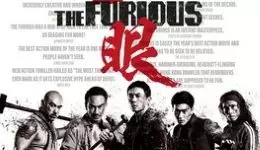
What follows is a show of one-upmanship that no one could dare imagine. At the centre of the mix is the bald, hulking brute, Ho (Brian Le), who’s set out to avenge the death of his sinister, child-trafficker father. Diagonally opposite is his perpetrator, Paklung (Joey Iwanaga), the suit-clad, boy-next-door-looking lunatic, fresh off killing some of the city’s most important men, including his own father-in-law. Paklung is flanked by his hired hand, Tak (Yayan Ruhian), the maniacal archer who shall never miss a target. And on the other side of Ho are the film’s two protagonists, the mute father Wei (Xie Miao), trying to rescue his daughter Rainy, and the tenacious Navin (Joe Taslim), looking for his partner who’s gone missing.
How and why these men are here is best left undisclosed, but let’s just say that the subsequent ten-to-fifteen-minute action sequence is nothing short of a mind-bending film in itself. If Paklung wants to see the end of Wei because of a personal loss, Ho won’t let him live until that moment. If Tak, the archer, wants to help his boss, Navin will stand in his way and throw some gobsmacking, whirlwind attacks at him. No one is safe or less formidable than the other, but such are Tanigaki and co’s whimsical powers that they manage to imbue irony and humour even into a nutcase situation such as this. Even the most intense enemies here end up needing each other’s help momentarily.
And this theatricality, this flair, is what makes The Furious the most enjoyable action experience of recent times. It boasts a simplicity that is both easy and refreshing, and yet, never does it come across as derivative, despite clearly belonging to the legion of slick action movies like The Raid, John Wick, Headshot and others.
Unoriginal, outrageous, yet believable, dazzling
An unnamed South Asian city where children are going missing owing to the apparent sinister intentions of the ultra-rich class. An investigative journalist who risks her life digging into the matter and later disappears without a trace. Creepy nightclub owners, a never-ending battalion of unhinged assassins, a squalid warehouse and its gloomy basement that could never be spotted. And a good-natured handyman who cannot speak and withholds a past that is as mysterious as it is delectable. These tropes are hardly original, and it isn’t that the makers aren’t aware of that fact. They still go ahead and put together the movie because they know what their trump cards are: outrageous yet highly believable action choreography (Kensuke Sonomura), dazzlingly crafty cinematography (Meteor Cheung), and an ensemble cast that is fiercely committed to the task.
Also read: Toy Story 5 Review: When technology becomes the new plaything
In fact, the performances, too, are technical in the way that they fully comprehend the objective and go well beyond what’s achievable. Their characters, for all their superhuman martial-arts abilities, feel authentic and firmly rooted in the physical as well as the cultural setting of the story. These people understand the landscape incredibly well, and this sense of place among them is further accentuated by the film’s mise-en-scène. Like any action spectacle worth its salt, The Furious utilises what it sees around itself — large ice containers, pointy ice picks, sledge hammers, claw hammers, whiskey bottles, glass shards, and practically everything else with a literal edge — and evokes violence and viscerality that are greatly justified. The production design is so impressive that it almost feels as though the makers discovered the locations first and then built the fight choreography around them.
Action as expression
Physical action becomes Tanigaki’s way of expression and he gleefully mines every corner of the world his story inhabits. At one point, just when you begin to wonder where the film could possibly go after resolving a major conflict, he summons an army of bloodthirsty young men and unleashes them on Wei and Navin. The resulting sequence is crowded, chaotic and deafening, refusing to relent for as long as it can. And yet, it isn’t even the film’s finest action set piece.
It isn’t just the grown-ups alone that put their bodies through the wringer here. While Dad frantically goes about dropping bodies in search of Rainy, the young girl herself rises to the occasion, proving far more resourceful and resilient than anyone might expect by relying on both brains and brawn.
While The Furious doesn’t overtly state the underlying message of its premise, it nevertheless makes bold commentary about the world that innocent souls like Rainy are enduring today. It goes without saying that the villains of this world are based on the Jeffrey Epsteins (child sex offender) of the real world out there. It isn’t a surprise either that it took a global collaboration of this kind — featuring a Japanese director, a principal cast drawn from Hong Kong, Indonesia, Thailand, the United States and elsewhere, a cinematographer from Hong Kong and an editor from the USA (Chris Tonick), among many others — to tackle the subject with absolute panache.