Toy Story 5 Review: When technology becomes the new plaything
Pixar updates the franchise's oldest anxiety — that of an old toy being replaced by a new one — for the digital age, as Woody, Jessie and the gang confront a rival more powerful than any toy before them

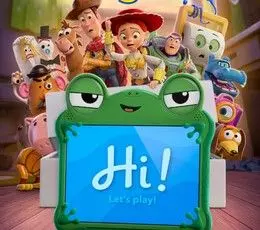
The toys of Toy Story have never had a purpose beyond being companions to children. Their entire existence depends on being loved, played with and imagined into adventures.
One of the foundational anxieties of the Toy Story films — told from the perspective of toys who come alive when humans aren't looking — is that of an old toy being replaced by a new one. In the first film, released in 1995, Pixar delivered one of its earliest emotional gut punches in the story of how Buzz Lightyear (Tim Allen), the flashy new space ranger, becomes Andy's favourite toy, threatening Woody the cowboy's (Tom Hanks) place at the centre of the boy's world. Buzz was newer, shinier and more exciting; you could understand why a child would gravitate towards him. In different ways, every Toy Story film since has returned to this fear of becoming obsolete.
Toy Story 5 updates that anxiety for 2026. This time, the threat isn't another toy but technology itself. Early in the film, there is a striking image of children sitting alone in their rooms, absorbed in screens rather than playing outdoors or staging adventures with action figures and dolls. The toys struggle to make sense of this reality. "Maybe it's a fad, like record players and hula hoops," Jessie the cowgirl toy says hopefully. She has no idea what they are up against.
The film picks up years after Andy passed his toys on to Bonnie at the end of Toy Story 3 (2010). Bonnie has loved them as fiercely as Andy once did and spent an entire film with them, Toy Story 4 (2019), but she is growing older and finding it harder to fit in. Imaginative and something of an introvert, she is different from the other children around her. Playing with toys has become a source of embarrassment rather than pride. When her parents finally buy her a tablet-like device called Lilypad, it becomes the centre of her attention. The toys watch helplessly as the newcomer transforms Bonnie's world.
When tech rivals toys
Lilypad becomes a rival. Designed to help Bonnie make friends, it can send messages, make recommendations and dictate her choices. The toys, meanwhile, become convinced that Bonnie's new circle of friends is leading her in the wrong direction. Their mission is simple: help Bonnie find real friends before it is too late.
This adventure places Jessie at the centre of the story. Woody and Buzz are still around, but they are supporting players this time. It is a smart choice. Ever since Toy Story 2 (2000) revealed her painful memories of being abandoned by her original owner, Emily, Jessie has been the character most haunted by the prospect of being forgotten. Her abandonment issues make her a natural protagonist for a story about toys facing extinction. At one point, a worried Rex (a toy dinosaur) sums up the mood with a simple line: "Extinction, not again."
Along the way, the film introduces a number of new characters. There is Smarty Pants, an obsolete educational gadget that doubles as a potty-training device and is himself struggling to stay relevant. There are amusing walk-on characters, including a pizza slice wearing sunglasses, and a collection of animal allies that includes a handsome horse, a grunting pig and a pet salamander. What gives these characters life, as always, is the voice acting. The Toy Story films have always excelled at making plastic, fabric and electronics feel like fully formed personalities.
Toys in a human world
The film's biggest strength remains something Pixar understands better than almost anyone else: the pleasure of physical comedy. Much of the fun comes from watching these characters navigate a world built for humans. Smarty Pants and his sidekicks squeezing into hiding spots, toys scrambling across rooms, vehicles and rooftops, and elaborate rescue missions all generate a steady stream of visual gags. Part of the enduring appeal of animation lies in its ability to exaggerate physical reality, and Toy Story 5 still knows how to exploit that.
At the same time, the technology angle creates some problems. Because Lilypad can seemingly do almost anything, the story occasionally relies on convenient button presses and vaguely defined capabilities to move the plot forward. The rules become slippery. One moment, a problem appears impossible; the next, technology provides an easy solution. There is a clever touch when Woody and Buzz enlist the help of the household salamander to operate Lilypad's touchscreen, but too often the film uses technology as a narrative shortcut.
The story also falls into a familiar Toy Story pattern of characters being separated, ending up in the wrong place and then having to find their way back. Rescue missions involving trucks, toy horses, armies of Buzz Lightyears and donation bins keep the plot moving, but the constant movement from one location to another eventually becomes repetitive. At times, the film feels less interested in where it is going than in finding another obstacle to place in front of its characters.
Yet there is something touching about the film's central concern. The toys of Toy Story have never had a purpose beyond being companions to children. Their entire existence depends on being loved, played with and imagined into adventures. That has always given the series an unexpectedly existential dimension. Buzz once had to come to terms with the fact that he wasn't really a space ranger. He was a toy. The question Toy Story 5 asks is even more unsettling: what happens when children no longer need toys at all?
Watching Bonnie disappear into a screen, some among the audience might be carried back to their own childhood, when imagination could turn a pen into an action hero during a boring class. The pleasure came not from the object itself but from the imagination it unlocked. Toy Story 5 may not be among the series' finest entries and its critique of technology is sometimes blunt, but it understands something valuable: the importance of play, and the imaginative possibilities hidden inside ordinary physical objects.