Form 6 row in Bengal: EC’s silence deepens suspicion | Capital Beat
As TMC claims that 30,000 Form 6 applications were filed in a single day, we decode the controversy, its credibility and whether it could impact TMC’s prospects

The TMC has alleged that nearly 30,000 Form 6 applications—used for inclusion of new voters in electoral rolls—were submitted in a single day in West Bengal. The controversy has sparked a political storm, with accusations of electoral manipulation and questions over the Election Commission’s (EC) transparency.
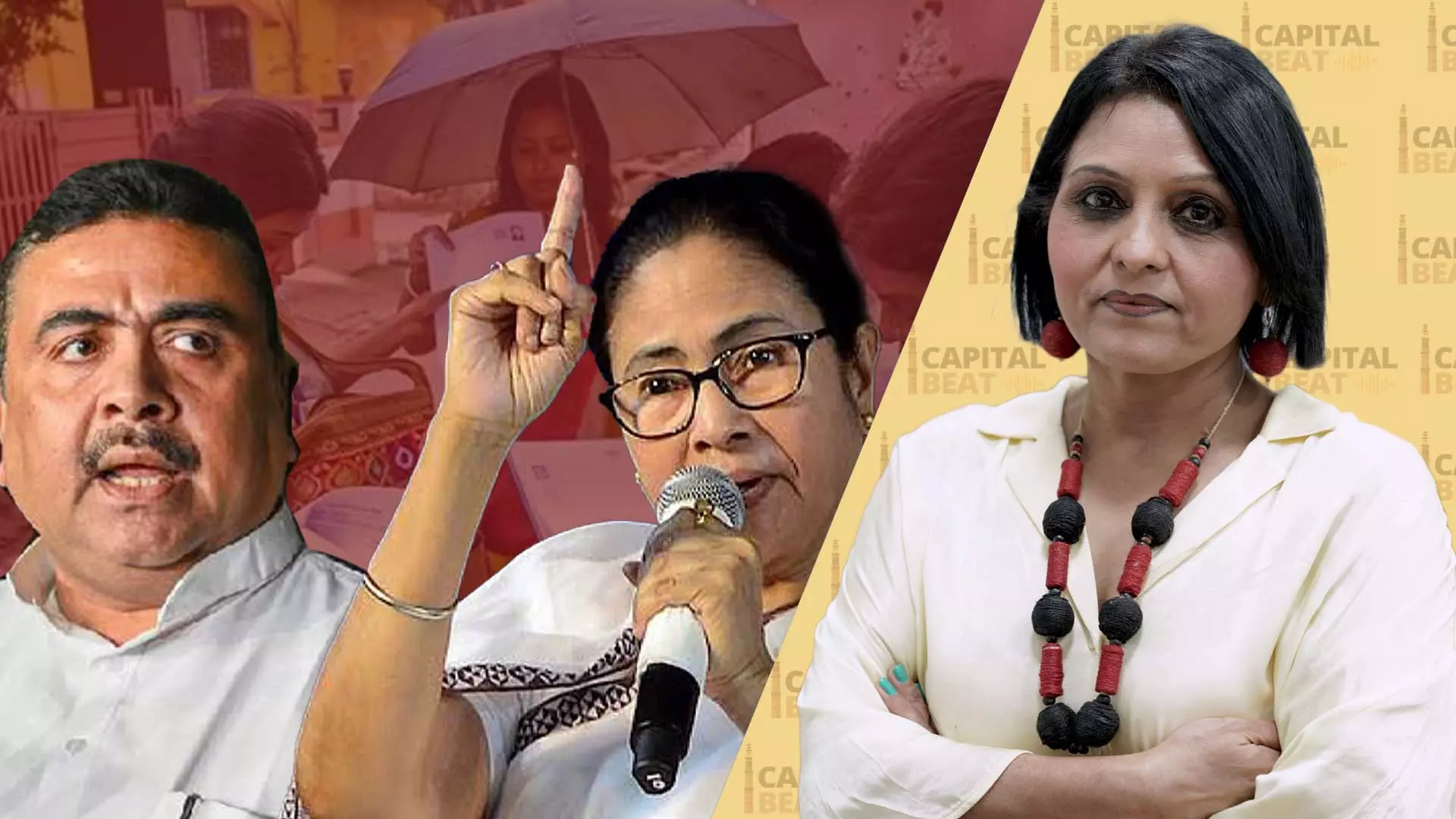
In this episode of Capital Beat, The Federal spoke to TMC spokesperson Shubhanakar Bhattacharya, senior journalist Shikha Mukherjee, and The Federal's Samir K Purkayastha to unpack the scale, credibility, and possible impact of the row ahead of the state elections.
Form 6 row
TMC leader Abhishek Banerjee has alleged that bulk applications were submitted across multiple constituencies within a short span, arousing suspicion of coordinated manipulation.
Bhattacharya called the entire process “one of the most corrupt” and alleged that it was designed to “overtake the electoral process”. He argued that a delayed Census and the sudden push for voter roll revision point to systemic flaws.
According to him, the issue is not just about West Bengal but part of a broader pattern seen in states like Bihar, Maharashtra, and Haryana.
Opposition response
Bhattacharya also criticised the wider Opposition, particularly the Congress and the Left, for their muted response. He argued that this was a moment for a united front against what he described as a “flawed electoral system”.
Also read: BJP trying to add outsiders to Bengal voters' list, alleges Mamata, writes to CEC
“This is not about Trinamool Congress. The entire Opposition should have stood united against the policy,” he said, adding that failure to act earlier in states like Bihar allowed such practices to continue.
He also questioned why similar protests seen in other states have not been replicated in West Bengal, suggesting a lack of coordinated political resistance.
Legal concerns
The discussion also raised legal questions around the alleged volume of Form 6 submissions since Supreme Court guidelines restrict bulk submissions, prompting questions on whether there has been a violation.
Shikha Mukherjee highlighted another critical issue — timing. She noted that Form 6 submissions continuing after the start of the nomination process is unusual and inconsistent with practices seen in states like Kerala and Tamil Nadu.
She stressed that the EC must clarify timelines, including deadlines for submission and disposal of applications, to ensure transparency.
Transparency gap
A recurring theme in the discussion was the lack of clarity from the EC. Mukherjee pointed out that despite meetings with political leaders, the EC has not publicly explained its position.
“The Election Commission is mum. There is no clarity on when these forms will be processed or what the cut-off date is,” she said.
Also read: From ‘Didi-o-Didi’ to welfare push, softer tone, cultural reset: BJP reworks Bengal playbook
Purkayastha echoed this concern, arguing that opacity in the process is fuelling suspicion. He noted that multiple supplementary voter lists have been released without details on additions or deletions.
This, he said, risks eroding public trust in the electoral system.
Political impact
Purkayastha suggested that the controversy could have unintended political consequences. According to him, the issue has shifted the focus of the election narrative.
“This has become the main poll plank,” he said, adding that other issues like corruption scandals and governance concerns are now taking a back seat.
He argued that the lack of clarity from the EC may actually benefit the TMC by reinforcing its narrative of electoral manipulation.
Demographic fears
Another major concern raised was the allegation that voters from other states were being added to West Bengal’s rolls.
Bhattacharya claimed there were instances of people being encouraged to travel and register as voters in the state, though these claims remained unverified within the discussion.
Also read: Mamata’s 'I am the candidate' gambit returns for 2026 Bengal battle
Mukherjee offered a more nuanced view, suggesting that if such movements were happening, they might involve migrant or post-Partition communities rather than long-settled populations.
However, she stressed that without official data, these claims remain speculative and underline the need for institutional transparency.
Ground confusion
The panellists also highlighted the confusion among voters on the ground. Mukherjee described the situation as “bizarre”, citing cases where members of the same family were inconsistently included or excluded from voter lists.
She pointed out that even individuals with valid documents like passports have reportedly faced deletion from rolls, raising questions about the verification process.
Purkayastha added that the lack of accessible information makes it difficult for citizens to even verify their own status, let alone mobilise protests.
Institutional trust
The broader concern, the panellists agreed, was the erosion of trust in democratic institutions.
Also read: BJP uses RG Kar victim’s mother’s candidacy to push poll agenda on safety and justice
Frequent transfers of officials, lack of clarity on procedures, and perceived inconsistencies in implementation have created what Purkayastha described as an “environment of suspicion.”
He warned that such conditions could have long-term consequences for public confidence in elections.
Way forward
While there was no clear consensus on solutions, the panellists agreed on one point — the need for transparency.
Mukherjee emphasised that the EC must clearly outline timelines, processes, and data related to voter roll revisions.
Without this, she warned, the controversy could deepen and further complicate an already charged political environment.
(The content above has been transcribed from video using a fine-tuned AI model. To ensure accuracy, quality, and editorial integrity, we employ a Human-In-The-Loop (HITL) process. While AI assists in creating the initial draft, our experienced editorial team carefully reviews, edits, and refines the content before publication. At The Federal, we combine the efficiency of AI with the expertise of human editors to deliver reliable and insightful journalism.)