- Home
- India
- World
- Premium
- THE FEDERAL SPECIAL
- Analysis
- States
- Perspective
- Videos
- Sports
- Education
- Entertainment
- Elections
- Features
- Health
- Business
- Series
- In memoriam: Sheikh Mujibur Rahman
- Bishnoi's Men
- NEET TANGLE
- Economy Series
- Earth Day
- Kashmir’s Frozen Turbulence
- India@75
- The legend of Ramjanmabhoomi
- Liberalisation@30
- How to tame a dragon
- Celebrating biodiversity
- Farm Matters
- 50 days of solitude
- Bringing Migrants Home
- Budget 2020
- Jharkhand Votes
- The Federal Investigates
- The Federal Impact
- Vanishing Sand
- Gandhi @ 150
- Andhra Today
- Field report
- Operation Gulmarg
- Pandemic @1 Mn in India
- The Federal Year-End
- The Zero Year
- Science
- Brand studio
- Newsletter
- Events

Why the new-age version of PM Modi’s austere lifestyle comes with a price tag attached
Amidst ongoing geopolitical crisis, Prime Modi has urged for prioritising local goods and cutting down on foreign trade, among other measures. But neither minimalism, nor sustainability, nor going desi need necessarily mean saving for the consumer.

Yogesh Sadhwani, 49, a crisis consultant who co-owns a 4.5-acre farm near Pune, remembers a time when he had not had ice cream for eight months. “Living on the farm, the closest shop was 14 kilometres away, and I would have had to take out the car to go get ice-cream, so it never even occurred to me,” says Sadhwani.His partner, owing to her media job, necessarily works from the city and...
Yogesh Sadhwani, 49, a crisis consultant who co-owns a 4.5-acre farm near Pune, remembers a time when he had not had ice cream for eight months. “Living on the farm, the closest shop was 14 kilometres away, and I would have had to take out the car to go get ice-cream, so it never even occurred to me,” says Sadhwani.
His partner, owing to her media job, necessarily works from the city and flits in and out. He, too, has to intermittently come into the city for his consulting jobs, or as he calls it, “bring in the chicken for children” — they have three dogs on the farm. On such visits, to Pune or Mumbai, he tries, as far as possible, to carpool with neighbouring “farmers”, he says.
Which alone could make him the poster boy of Prime Minister Narendra Modi’s recent push for austerity measures amidst the ongoing US-Iran war and the resultant global fuel crisis. Addressing the nation earlier this month, the PM spoke of a return to work from home mode (though it was more a suggestion than a decision), carpooling and accessing public transport wherever possible, not buying gold, prioritising local products and conserving foreign exchange — including avoiding foreign travel.
Modi’s mantra of austerity aligns to an extent with the modern, minimalist lifestyle which some have been experimenting with. It also fits in with, or overlaps, popular concepts such as sustainability and a return to all things desi (which the PM has been vocal about in the past, too, of course, at a more economic/business level when he pushed for an ‘Atmanirbhar Bharat, or urged buying of locally-manufactured goods amidst last year’s US tariff onslaught).
But while such lifestyle shifts may end up saving foreign exchange for the country, and make us feel environmentally and culturally woke, does it necessarily cut corners?
Also read: How coaching institutes in Kota, Sikar are preparing for NEET-UG re-test
The thought is not exactly new, or original. Indian freedom fighter, poet and United Provinces’s first governor, Sarojini Naidu is once said to have asked Mahatma Gandhi, “Do you realise the amount it costs each day to keep you in destitution”.
For the modern, aspirational Indian, minimalism might encourage decluttering (physically and mentally), but one may still end up spending as much by upscaling on luxury when one cuts down on volume.
Indeed, life and relationship coach, Chetna Chakravarthy questions why they shouldn’t.
““It's very convenient how we always place the responsibility of living simpler lives on the consumer, while industries just keep pushing out more and more stuff, and we are being bombarded with advertising all around. The idea of a ‘good big life’ is being sold to us even in our sleep and so asking somebody to suddenly get up and live a simpler life when they have worked so hard for the last 20 years to be able to splurge and live a big life to me is kind of unfair, foolish and also impractical. If I am going to be constantly told to buy, buy, buy and buy some more, it's very hard for me as a human being to live a simple life,” she says.
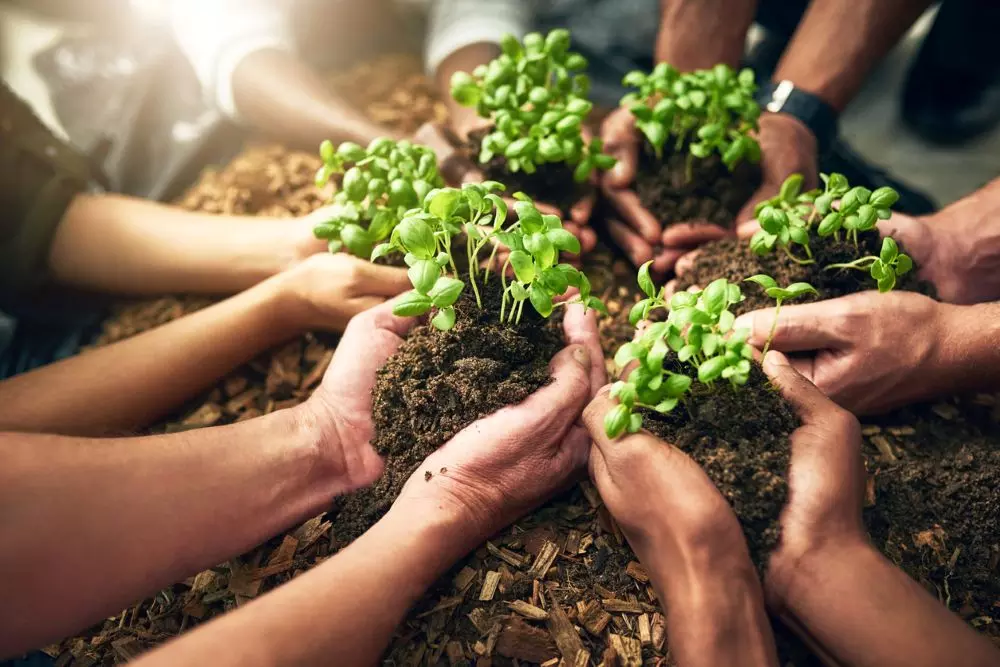
Hidden costs can take one completely by surprise which adopting a sustainable lifestyle. Photo: iStock
The possibilities of overspending are even more when it comes to a sustainable lifestyle.
When Sadhwani moved to the farm situated in the Western Ghats during the monsoons of 2023, they faced 19 days without power because of the unrelenting rains. So, even after the significant expense of buying a farm and running it, he decided to invest in a solar panel for the “luxury of a 24x7 electric supply” in the villages.
Some do manage to have their cake (or in this case croissant) and eat it too.
For Priti Sen Arora, 44, who moved with her husband and two children to live near Pondicherry’s Auroville’s bio region, living sustainably was about access. “The local international school was subsidised, there are measures in place for biogas and composting, solar panels were set up, and EV charging points, bicycles and eco cycles are available. Even more so, the food and café scene is so good that I don’t have to pay metro prices for croissants.” And instead of taking her children to the mall, which would have been a city activity in Hyderabad or Kolkata, here they go on forest walks, beach clean-up drives and cycle around to their friends' places. “It’s a very 90s Indian life.” But with croissants.
Too often, however, ‘hidden costs’ can completely take one by surprise.
Bagan Farms co-owner Zareen Desai found it out the hard way after she started a farm-to-table restaurant at the property near Kolkata. What really had her stumped was the cost of clearing garbage. She would often have to send back garbage in her car to her resident in Kolkata’s Ballygunge area — a distance of 40 kilometres. The alternative was paying Rs 250 per wheelbarrow for having it removed to the nearest disposal facility.
Desai also talks of issues in sourcing ingredients. A farm close to Kolkata with tables in orchards brings an evocative image of making things from scratch until Desai ran out of cheese and decided to make her own mozzarella after sourcing milk from the local “khatal” (Bengali word for dairy farm or cow shed). “The milk was so watered down that 4 litres of milk yielded less than 250 grams of mozzarella,” she remembers.
From farm to fashion, it’s a similar narrative of expensive comfort (think ikat dresses, vegan leather shoes and handmade, handwoven saris).
“Indian wear [using local textiles and crafts] takes a lot of manpower and man-hours. So obviously the prices go up because something which is fast fashion and machine-made takes less time. We use hand embroideries and weaving, which is more time [and manpower] consuming,” explains designer Abhishek Roy.
It looks beautiful, classy, on the pages of a lifestyle magazine, or when worn by that friend who can afford it (with loads of kohl and chunky silver, it’s a whole desi-posh look); but for most middle-class buyers, the eyes would instinctively move to the price tag even as they finger the light, breezy cotton or glossy silk longingly. Again, sustainable and local, but at what price to the consumer?
“Even if you tell me to shop locally, it's very hard for me to do so when a home-grown brand will sell me a dress at 17,000, but a Zara or H&M will give me one at 2,500 or 3,000 or, say, even 4,000. Yes, I understand that the home-grown brand is charging Rs 17,000 because they're producing less and their overheads are different. I get all of that, but then why should I, as a consumer, have to pay for that”, reasons Life and relationship coach Chetna Chakravarthy, summing up the average consumer concern.
Also read: How professional instability is shaping financial planning, career choices for Indians
Organic food to organic clothes, for those who can afford it, it is a lifestyle choice, albeit a healthy and conscious one, but unattainable for the many trying to make salaries stretch till the next pay day.
And the thought is not restricted to Indian consumers.
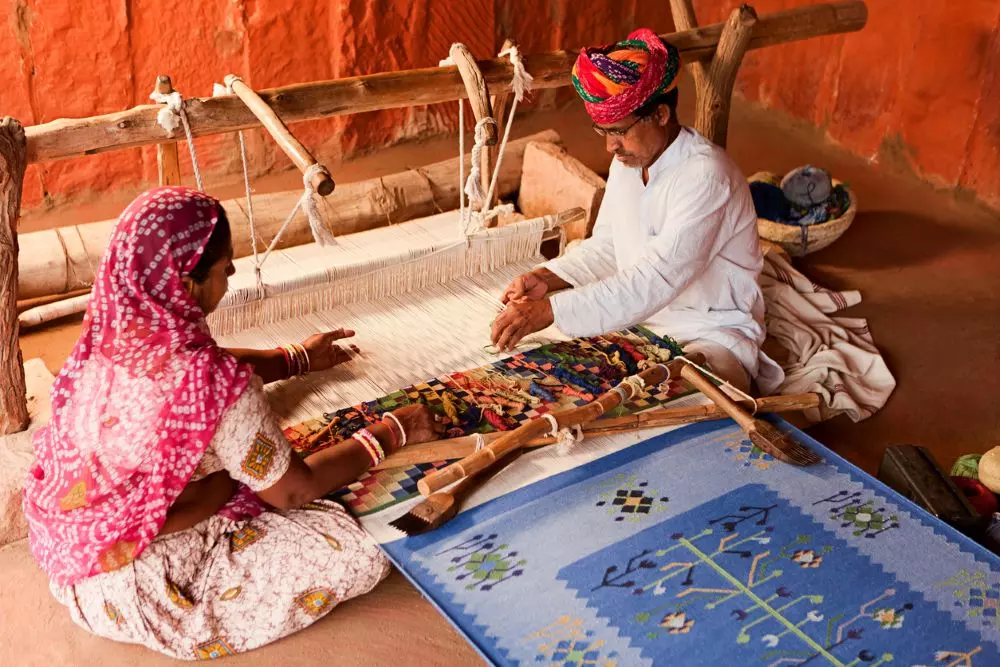
Indian fashion using local textiles and crafts are resource and time intensive, thus often costing more. Photo: istock
In a survey fielded in early 2025, British market research company Euromonitor found that “despite increased awareness around sustainable practices, affordability is still a major hurdle for consumers and corporations. In retail channels, concerns about inflation and the ongoing cost-of-living crisis continuously influence purchase decisions”. According to the firm’s Voice of the Consumer: Sustainability Survey, 2025, “nearly 40% of global consumers see the high price relative to non-sustainable products as a barrier to sustainable purchases”.
The same price sensitivity governs the choice of travel destinations, when Indians see the price of a Goa, Kerala or Puducherry vacation equalling (or nearing) a two-nights-three-day package in Thailand, Sri Lanka or Vietnam.
“It's very easy to say travel within India, but you can't force people to change the way they want to travel. They may not want to backpack and live in a small hut somewhere, eating food that you get on a street-side dhaba,” says Chakravarthy. Which, while an extreme picture, is not completely outlandish. Many sustainable voices for local experiences come without certain creature comforts, even across higher price points. Homestays or “glamping tents” often function without ACs, lifts or even onsite parking.
And the alternative are the resort (including heritage and sustainable ones) which rival the cost of a foreign trip, while they peddle desi aesthetics or ‘green’ practices.
All these Far East countries, such as Thailand, Malaysia, Indonesia, are offering visa on arrival so that they can attract tourists from India. They have decreased hotel prices, while domestic airfares have skyrocketed,” point out Surojit Bose, travel advisor.
Agrees Anil Punjabi, director of Kolkata-based Ares travels, “there has to be some kind of incentive to the agents and hotels and the airfare has to be reduced. It has to be cheaper than abroad, because when we talk abroad and we talk domestic, people expect it should be cheaper”.
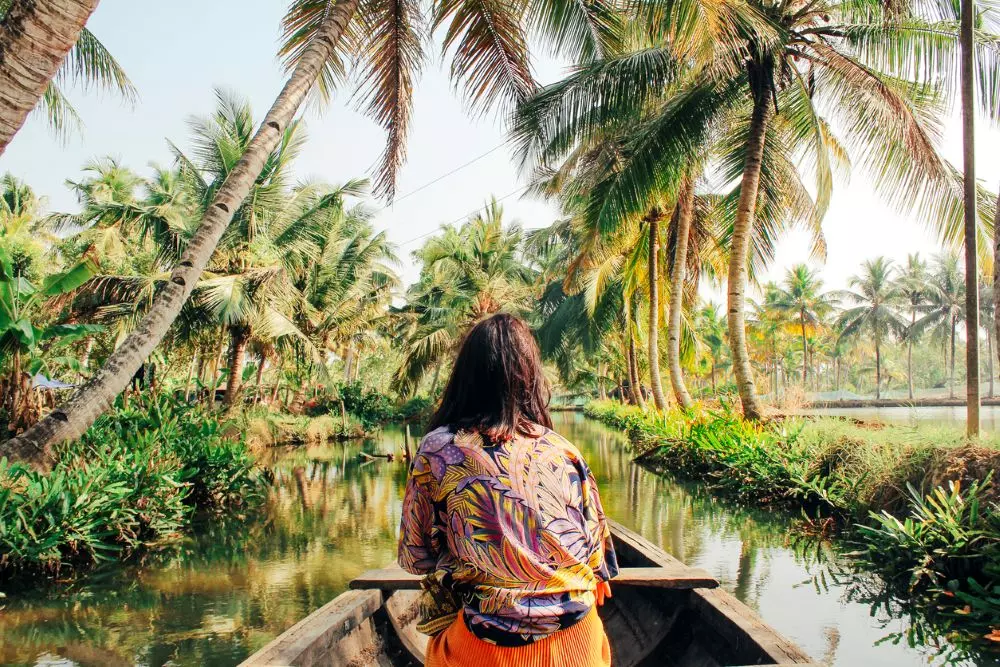
The cost of travelling within India can rival holidays to countries like Thailand or Vietnam, though the level of luxury may differ. Photo: iStock
For the mindful traveller, it’s a question of purpose.
“I'm either going for culture, I'm either going for cuisine, I'm either going for sightseeing, or I'm going for wellness. These are the basic parameters that people are choosing from today. If I have to spend that same kind of money in India or internationally doesn't matter because at the end of the day, I know that when I go to India, when I travel in India, I'm at a certain, you know, calibre of hospitality when I'm spending that kind of money,” says food and travel writer Insia Lacewalla.
She adds: “What I am paying here is luxury, what I'm paying there is a mid-segment, you know. The exclusivity of staying in a sattvic yoga retreat or somewhere like the Ahilya Fort in Maheshwar [Madhya Pradesh] is different from that of a food walk in Vietnam. The end goals are different.”
Having said that, Lacewalla admits: “International holidays for Indians will always be a great checklist. The purpose is very different for that. And I don't think either to be a good or a bad thing.”
Meanwhile, at his farm in the Western Ghats, Sadhwani is making his own comparisons. “You save on clothes, because you don’t have to dress for a certain life. You don’t eat out [so you save on restaurants]. Staff salaries are the same,” he says.
Then adds: “But we use organic fertilizers; it lasts longer, but the yield is less.”