How late director Shankar Nag and his team brought alive RK Narayan’s Malgudi on screen
When it premiered on Doordarshan 40 years back, in September 1986, ‘Malgudi Days’ was lauded by millions of Indians. However, the journey to bring this acclaimed serial to life, from screenplay to the small screen, was strewn with challenges.

For all its portrayal of simplicity on screen, the making of ‘Malgudi Days’ — first aired on Doordarshan in 1986 — was anything but simple.Forty years later, revisiting this iconic TV serial makes the viewer wonder how this world spotlighting ordinary people and their humdrum troubles, foibles, and dreams have clearly stood the test of time. For even today, the serial,...
For all its portrayal of simplicity on screen, the making of ‘Malgudi Days’ — first aired on Doordarshan in 1986 — was anything but simple.
Forty years later, revisiting this iconic TV serial makes the viewer wonder how this world spotlighting ordinary people and their humdrum troubles, foibles, and dreams have clearly stood the test of time. For even today, the serial, available online, still retains its laid-back, old-world charm, starting with its highly hummable signature title track, ‘tanaa nana naa’, which swiftly lulls you into the lap of a rustic, rooted landscape.
Shot in a remote, beautiful village — Agumbe — tucked away amid the thick forests of the Western Ghat region of Karnataka, the late Shankar Nag and his team were bonded in building a universe that stayed close to the one that was imagined by the inimitable writer, RK Narayan. Malgudi could easily be a village or town anywhere in the world. For it told the tales of the regular guy — the postman, school master, a vendor or a school boy. They were not heroic figures — just intensely human.
When it premiered on Doordarshan in September 1986, ‘Malgudi Days’ was lauded by millions of Indians. However, the journey to bring this acclaimed serial to life, from screenplay to the small screen, was strewn with challenges.
The team, comprising roughly 60 to 120 people, were filming in a village, which was a one-horse town, remember those part of the unit. They bunked with the residents, who opened their doors to them. If anything had to be accessed — a donkey, an elephant, a Morris Minor car — it had to be transported from Bangalore, 300 kilometres away. Messages could be sent to Bangalore only via ‘trunk calls’ (long-distance calls made within the country), or telegrams, since it was still the ’80s.
The famous Indian jugaad was often on display, as a unique contraption was once devised by John Devraj, the art director and production designer, to shoot underwater for one episode.
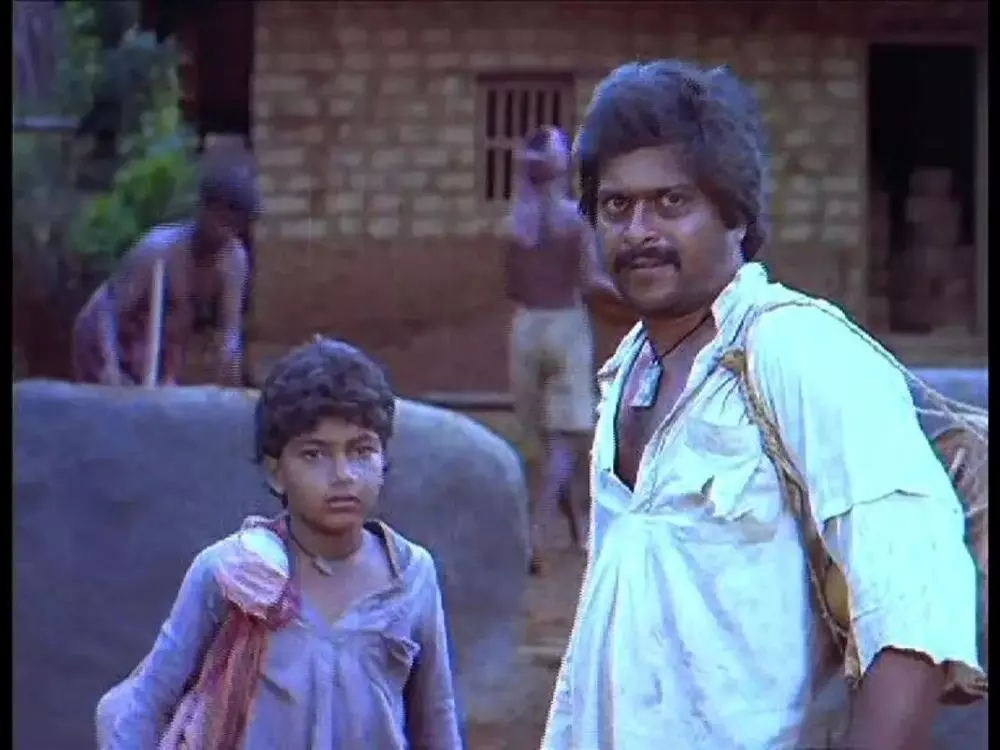
Shankar Nag with Manjunath in Malgudi Days. Photo: By special arrangement
To make matters more deadly, they had to contend with King Cobras as they slithered around in the vicinity of their shooting spots. After a while, they forgot to flinch seeing rat snakes coiled around windows, recounts Manjunath Nayaker, or Master Manjunath as he was then credited, in a chat with The Federal. Manjunath had played the mischievous and much-loved character, Swami.
A public policy consultant in Bengaluru today, Manjunath had a thriving acting career as a child artiste, which he gave up for lack of opportunities when he became an adult. Having done 23 movies before he was snapped up by director Shankar Nag for Malgudi Days, he says, “Looking back, trying to depict the 1940s in the ’80s with such limited resources was a major challenge. Agumbe was a quaint village with few facilities; it had just one post-office, one bus-stop, one provision store, one PWD [public works department] guest house. The credit goes to Shankar Nag, Arundathi Nag [Shankar’s wife and film-theatre personality], her sister Padmavati [Bengaluru-based veteran actress Padmavati Rao], John Devraj, Ramesh Bhatt (associate director), production designer Jagdish Malnad and others, who transformed Agumbe into Malgudi”.
The transformation was so complete, says Manjunath, that local bus conductors would yell ‘Malgudi’ at the Agumbe stop.
On the lack of extra actors on the set, he recalls one incident. “In the episode ‘Hero’, I bite the leg of a thief to catch him. That thief was played by the guy who served us tea and coffee. For the next scene, he would remove his kurta and walk around in the background with a limp. No modern gadgets or trick photography were used, but nobody could guess. That was Shankar Nag’s brilliance,” he narrates.
Besides having to bear the pain of running barefoot on the laterite-stoned landscape of Agumbe, little Swami had to contend with a close brush with the King Cobra, which evoked awe and sheer terror all at once in him.
“Agumbe was known as the King Cobra capital. The villagers had warned us about it. ‘When you see a bunch of snakes slithering away, run with them since it means the King Cobra is coming’, they said,” he shares. While acting in a later episode in ‘Malgudi Days’ called ‘Naga’, in which Shankar Nag played his father, Manjunath got to experience this. Not only did Manjunath work with a live snake and a monkey in this episode, but while shooting the episode, the snake on his shoulder tensed up, alerting Manjunath to run in the opposite direction with the entire crew following him.
One major hurdle for the young actors playing Swami and his friends, as well as for some of the adults, was their limited fluency in Hindi and English — the two languages in which the series was filmed. However, Shankar Nag was adamant that the serial must use only South Indian actors and felt it did not matter if they spoke Hindi with an accent, recall those part of the team.
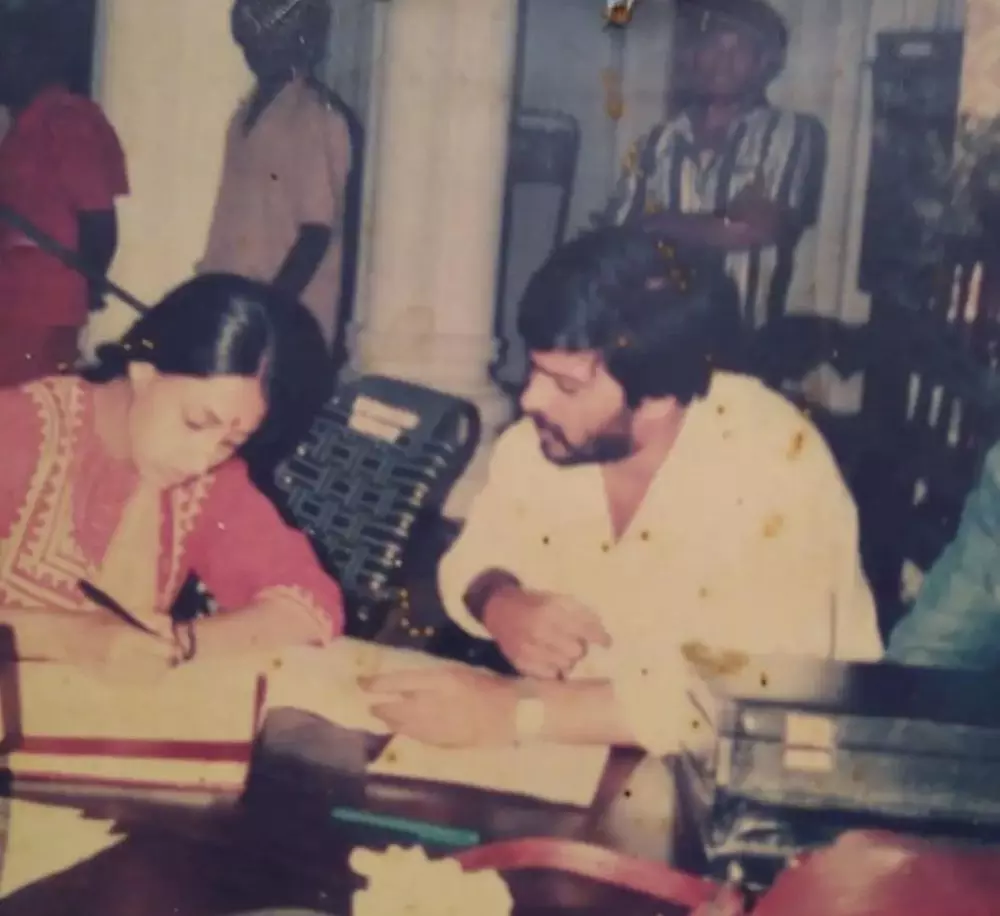
Padmavati Rao, actor and Shankar Nag's sister-in-law, was the assistant director for Malgudi Days. Photo: By special arrangement
Padmavati Rao was an assistant director in Malgudi Days and played the wife of the sweet vendor (played by Ananth Nag) in The Vendor of Sweets episode. She recalls, “Most actors had to be tutored. Manju was a brilliant child; he was like a sponge and if you told him something once, he would make it his own and fly with it.”
She adds: “To shoot at the Arasalu railway station, we had to travel for an hour. We would arrive early in the morning since the steam engine would pass by only once a day at 6 am. A big fat deposit had to be paid to the Indian railways, which was unaffordable, but Shankar wanted the scene to be authentic. The catch was that the train would be gone in the blink of an eye and so Manju had to reel off dialogues in English and Hindi in that split second while the camera rolled. It was not an ordinary feat he was accomplishing at that time.”
To ensure they were better prepared, Rao says they learnt to gauge how far the train was by placing their ears on the tracks to listen to the vibrations – was it 30 seconds or two minutes away? “Those were fun times,” sighs Rao, seated in her Bengaluru bungalow, recalling those “magical” moments.
Also read: Why residents of Kerala's Thasarak village have been 'living' with fictitious characters for decades
For Mumbai-based screenplay writer Mariam Jetpurwalla, the challenge was not just converting RK Narayan’s literary text into a visual medium. “A big challenge with RK Narayan’s stories was that it hardly had any plot structure. There is no conflict, no structure to the story like a beginning, middle and end, etc. He also tended to write extremely slim stories. Sometimes, the story could be told in five to 10 minutes, so how do you organically expand it and be true to the characters? But Shankar and I worked very well together and decided to stretch the story. For instance, we managed to stretch ‘Swami and Friends’ to eight episodes, though we had material for just four episodes. Swami and Friends are the episodes people remember the most,” says Jetpurwalla, who went on to work on 26 episodes.
RK Narayan had great faith in her screenplay adaptations of his stories.
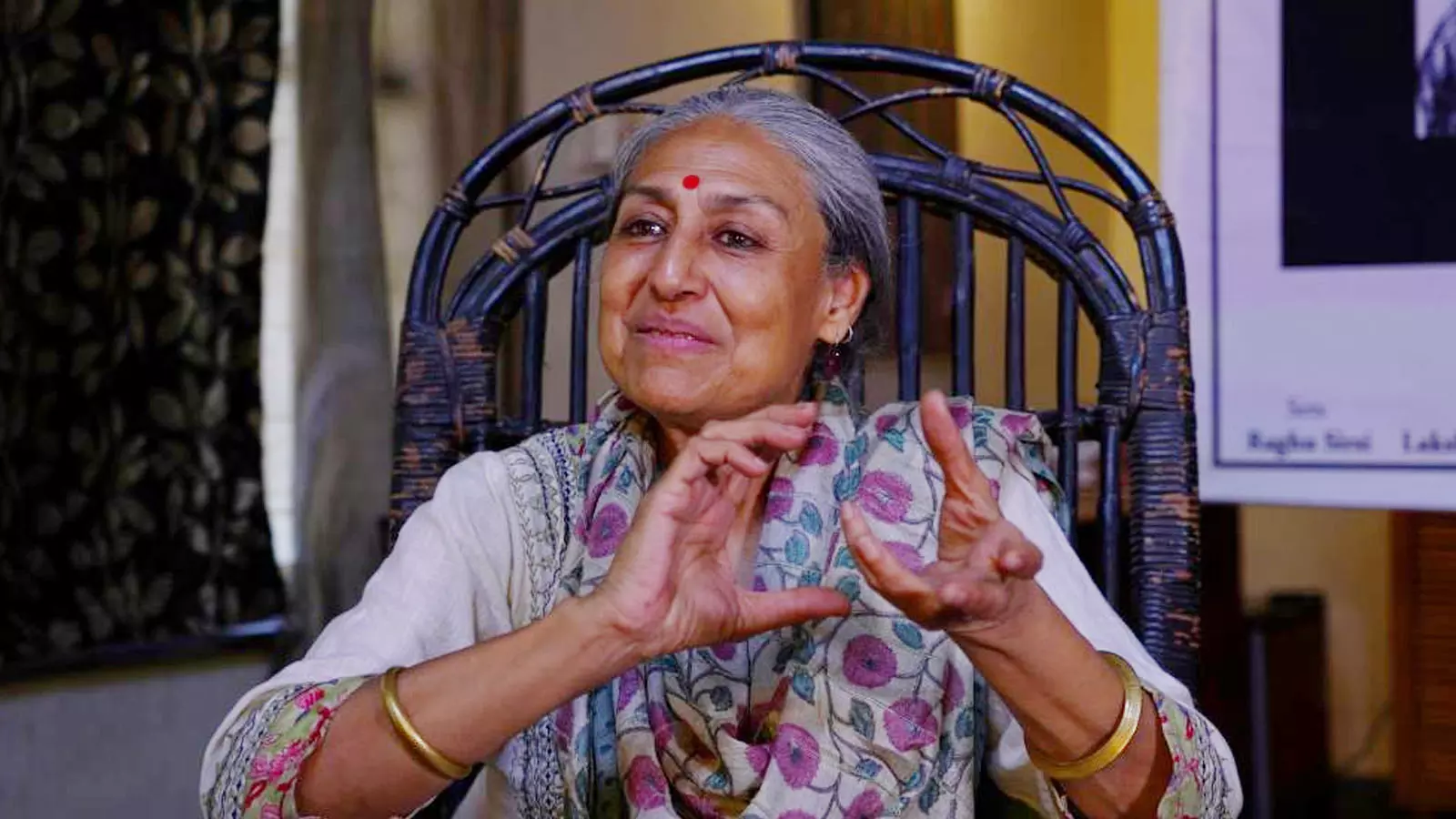
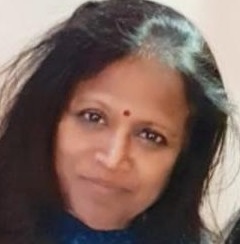
Padmavati Rao today. Photo: Raghu RD
Rao, who shot to fame with her role in Kannada hit ‘Geetha’, and subsequently acted in Hindi films like Pardes and Padmavaat, recalls how RK Narayan had little to say about women in his stories.
She reminisces, “We could not have a world without women, so we ended up fleshing out the women’s characters. In The Vendor of Sweets episode, the wife’s character, which I played, was only a mention in the story. We developed her character to feature her in flashbacks as a leitmotif.” Scenes of the vendor going to see his bride for the first time, romantic interludes with his wife and the death scene were included in the episode without disturbing the main narrative.
To stay close to the essence of RK Narayan’s storytelling style, the Malgudi Days’ production team erected their own shops, a bus stop, Swami's school and even the impressive statue of ‘Sir Lawley’ – the fictitious Sir Frederick Lawley after whom RK Narayan named a street in his stories, Lawley Road.
Rao believes the papier mache statue of Sir Lawley statue, background to much of the conversations and actions across episodes, may still be around.
“The team stayed faithful to what Narayan described in his stories – if he said golden twilight or dusk or described a dress, we took our cues from there. Once, he described a certain street lamp, which was pumpkin-shaped in the episode ‘Gateman’s Gift’. It was not available anywhere; maybe it came from England in the pre-Independence era. Yet, we managed to source it, made sure it fitted and worked. Shankar would ask for the most impossible things and the production team, which included [production designer] Jagdish Malnad, were always up to the task, even if it was horses, donkeys or elephants.”
“Forty years ago, shooting with a Mitchell [movie] camera, we were inventing things on the go. This kind of experience cannot be replicated, I am sure remakes will be done [Doordarshan did revive the show in 2006, 15 episodes directed by Kavitha Lankesh], Malgudi will be made again but it will never be the same,” says Rao, who also shares a surreal experience of listening with rapt attention under a starlit night sky to the late actor and playwright Girish Karnad narrating the story of Nagamandala, which had been told to him by AK Ramanajum.
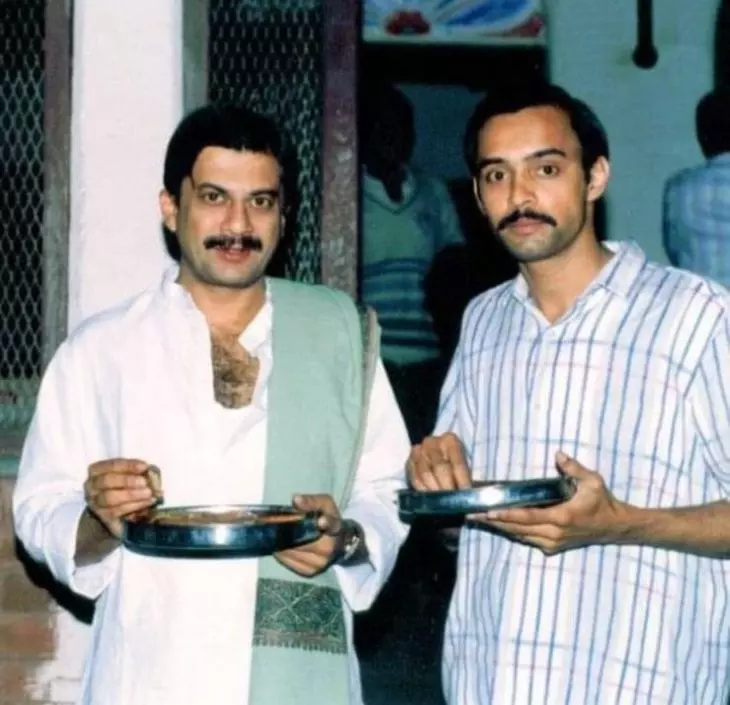
Sunil Sadanand with Ananth Nag on the sets of Malgudi Days. Photo: By special arrangement
Sunil Sadanand, a flight purser, who had essayed the role of Mali, the rebel and spoilt son of the sweet vendor, believes Agumbe’s ambience lent itself to RK Narayan’s world. “He told the stories of the postman, beggar, sweet vendor, ordinary lives with no glamour. It is similar to Asterix comics, where every little corner of the panel would have something going on – like a colony of ants engaging in a full-blown dialogue – in Malgudi Days, you could see so much happening inside the frame while walking on the road,” he adds of his impressions of those days.
“I think Narayan was a genius for thinking about the storytelling machine in The Vendor of Sweets, which is close to AI tech today,” he adds.
“The Morris Minor car, the costumes we wore, the locations (we even shot in Basavanagudi in Bangalore) in an old bungalow, the clocks, the fan made of paddy, curry pots and all the props created an authentic feel of that period,” he says.
He also credits Shankar Nag for allowing them to improvise and build on their characters.
“Shankar was really the master weaver who created this masterpiece without famous film stars. He built this beautiful world, where you felt at home since it was so Indian and rooted. It all began with the opening flute melody, which was like a rural call that set the tone,” he says.
Sadanand also recalls the pressure Shankar Nag was under to deliver each episode on time to Doordarshan. He would see him in his dubbing studio, furiously dubbing for actors or roping in Sadanand to do so too to beat the deadline. There is no time to waste, he would say, remembers Sadanand.
Also read: How ‘baithakis’ — intimate gatherings over conversation, culture and cuisine — are making a comeback
According to Jetturwala, who was in Doordarshan at that time, the government channel’s new policy to open up commercial time to independent producers helped Nag to make Malgudi Days, produced by TS Narsimhan.
“Because of this new policy allowing producers to make their own productions, the Sagars [Ramanand Sagar] did Ramayan and Ramesh Sippy did Buniyaad as well,” she says.
Shankar felt RK Narayan was lesser known in his own country and far more popular abroad. “Even his books were difficult to get. Shankar said we have to take pride in what is our own. This is a gem that needs to be valued and decided to pick up the project,” shares Rao.
And, after RK Narayan saw the pilot project, ‘Old Man and the Temple’, he remarked, “I did not know there was so much in the story”. But he gave Shankar a pat on the back and said “Young man you have carte blanche to use my stories.” To Manjunath, he said, “You played Swami just like I imagined him”, a compliment that he cherishes in his heart even today.
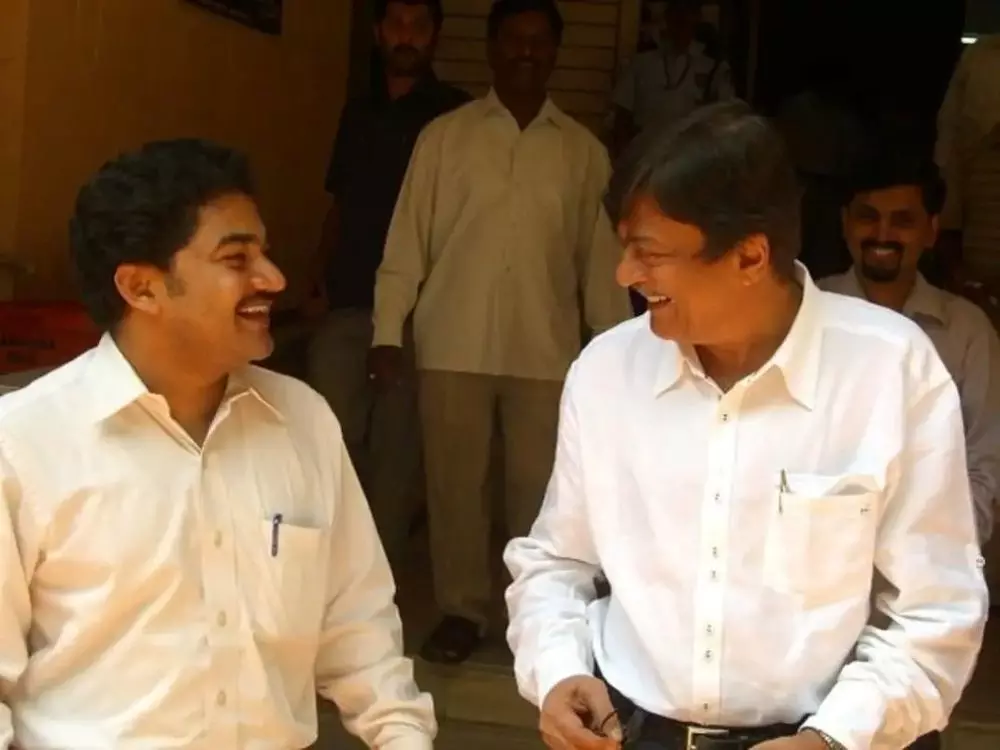
A grown-up Manjunath with Ananth Nag. Photo: By special arrangement
Rao remarks they had no clue Malgudi Days would become a classic. They were just doing something they loved.
“What’s its legacy? It delves into the human condition with all its inadequacies and its richness. It looks at both sides of the coin in any situation. No character is black or white; even if they are, there will always be a counter argument. Malgudi has been telecast on channels across the world, and it strikes a chord across geography, culture, time, boundaries and other barriers. Purely, because it delves into the spirit of being human, into the core of being human,” reasons Rao.
A RK Narayan fan, Ajay Dasani, a senior banker and consultant based in Dubai, believes the serial was popular because of its ability to stir feelings of empathy in viewers.
“The characters were fallible but lovable at the same time. Despite bringing out negative elements, it could still leave one with optimism and faith in the goodness of human nature. The story may be based in South India, and culturally too follows the customs, nevertheless it was a microcosm of what could be any village/ town in India in that period. They were simplistic characters confronted with rapidly revolving events like independence and the advent of newer institutions like banks and trains blending into the traditional temple and market place life by the river,” says Dasani.
Quite simply, a world that survives the passage of time.