Why in Kashmir, chargesheet in Sarla Bhat case, has reignited questions over Pandit rehabilitation
Last month, J&K State Investigation Agency filed a chargesheet in the 1990 abduction, rape and murder case of nurse Sarla Bhat. Displaced Pandits who have returned to Kashmir in the past decade under PM employment schemes welcome the move as a step towards long-delayed justice. But claim their own struggle for permanent rehabilitation in the Valley they once called home is ongoing.

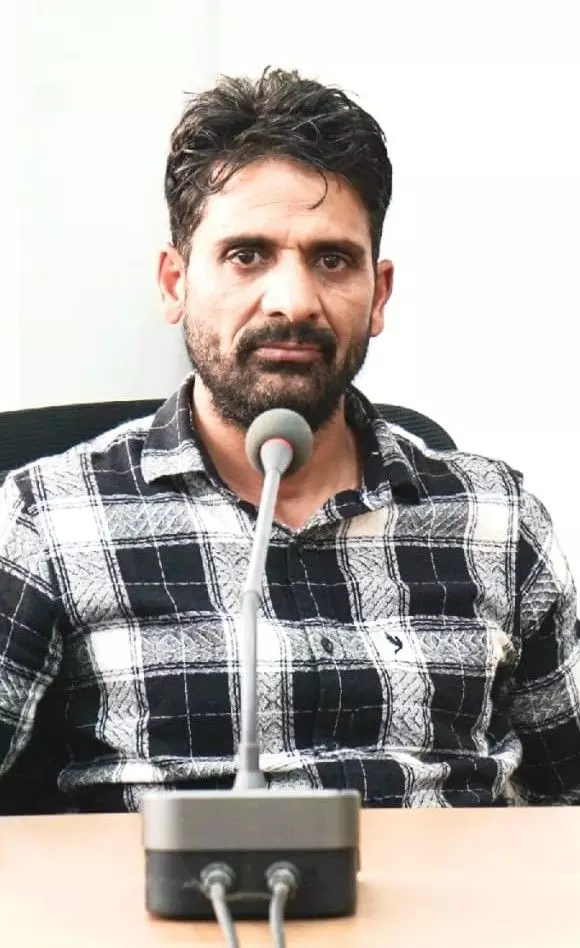
When 38-year-old Ashish Razdan returned to Kashmir in 2017, it was the hope of being home. My family is from Ganpatyar, Habba Kadal [a neighbourhood in Srinagar]. I was born at [Srinagar’s] Lal Ded Hospital. Somewhere deep inside me, I remain attached to my motherland. I wanted to serve my own society despite being displaced from it,” he says, by way of explaining why he chose the...
When 38-year-old Ashish Razdan returned to Kashmir in 2017, it was the hope of being home. My family is from Ganpatyar, Habba Kadal [a neighbourhood in Srinagar]. I was born at [Srinagar’s] Lal Ded Hospital. Somewhere deep inside me, I remain attached to my motherland. I wanted to serve my own society despite being displaced from it,” he says, by way of explaining why he chose the Prime Minister’s Employment Package (to rehabilitate displaced Kashmir Pandits in the erstwhile state).
He adds: “I was posted at Nandpora, Dal, Saida Kadal in Srinagar. Back then, it was a far-flung area where no one was willing to serve. I worked there for five years [as a teacher at a government school. After serving there for five years, he is now posted at a school in Jawahar Nagar, Srinagar]. You can ask the locals and my Muslim colleagues how dedicatedly we served.”
Looking back, however, Razdan, the general secretary (media and publicity), All Prime Minister’s Package Employees’ Union Kashmir and coordinator Zewan Welfare Society, Srinagar (a group working for rehabilitated Pandits), regrets the move back to Kashmir. "We were cheated. We were promised regular state cadre jobs, but we continue to serve in supernumerary roles. After serving for 30 years, we will simply vanish into thin air. Sometimes I feel I would have been better off taking a private job in Delhi,” he alleges, with barely contained bitterness.
Last month, the Jammu and Kashmir State Investigation Agency filed a chargesheet in the 1990 abduction, rape and murder of Kashmiri Pandit nurse Sarla Bhat. The chargesheet mentions five alleged operatives of the banned Jammu and Kashmir Liberation Front (JKLF), including its jailed chief, Yasin Malik. Three of the other accused—Abdul Hameed Sheikh, Ghulam Mohammad Taploo and Mohammad Yousuf Sofi—have since been killed, while the fifth, Khursheed Ahmad Chalkoo, is absconding and believed to be in Pakistan.
Bhatt was 36 when she was killed. While her family has welcomed the chargesheet as a step towards justice, according to reports, they have also said that it has come too late.
Meanwhile, the renewed attention to Bhatt’s case has also turned the focus yet again to the exodus, under threat, of Kashmir’s Hindu community, the Pandits, in the ‘90s, as militancy gained ground in the erstwhile state (the state of Jammu and Kashmir was bifurcated into the Union Territories of Jammu and Kashmir and Ladakh in 2019), and the issue of Pandit rehabilitation.
The Union government has announced provisions for the return and rehabilitation of Kashmiri migrants under the Prime Minister’s Packages in 2008 and 2015. A Home Ministry statement in 2021 informed that “post abrogation of Article 370 [which had provided a ‘special’ status to Kashmir] in 2019, “as many as 520 migrant candidates have returned to Kashmir for taking up the jobs that have been provided to them under the rehabilitation package. Another nearly 2,000 migrant candidates are also likely to return under the same policy in the year 2021 on successful completion of the selection process”.
The statement added: “Of a total of 6,000 posts announced under PM Packages, nearly 3,800 Kashmiri Migrants have been rehabilitated directly by way of providing government employment”.
Those who have moved to the state under the package, however, cite “flaws” in the provisions of the package. An engineer, speaking on condition of anonymity, claimed one of the provisions requires employees to remain posted in Kashmir throughout their service. "Such a condition has the characteristics of bonded labour and raises serious legal concerns," he alleges.
He adds: “In 2014 the General Administration Department sought clarification regarding promotions under the package. In February 2015, the Revenue Department responded that once employees were promoted, the supernumerary posts should be abolished and their salaries should thereafter be drawn from the regular government budget. However, in June 2022, a fresh order stated that even after promotion, the supernumerary posts would continue. A supernumerary post is only a shadow post and cannot continue indefinitely. We are still struggling with this issue.”
File photo of members of Rahul Bhat's family mourning his death. 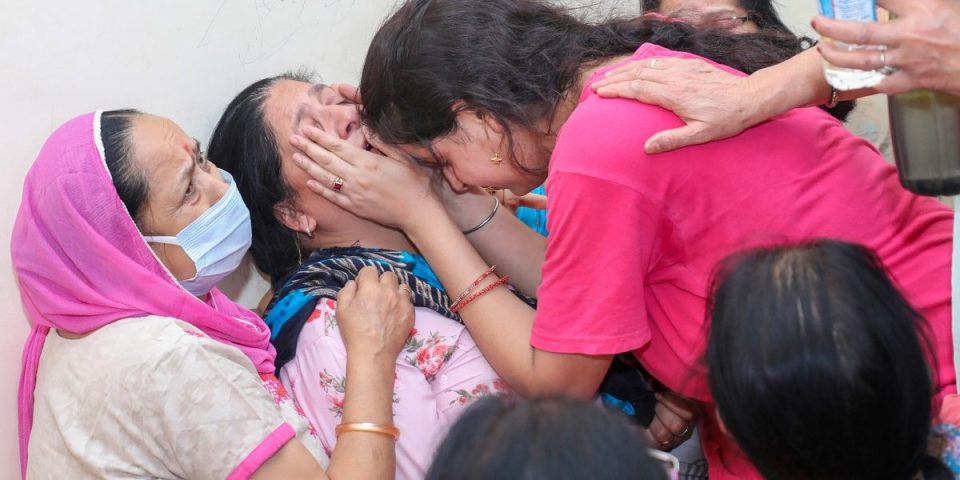
Not the least of the worries of those who accepted employment under the PM package and moved back to Kashmir is accommodation.
The Home Ministry’s 2021 release stated, “In order to encourage the rehabilitation of Kashmir Migrants back at their ancestral places in Kashmir Valley, the government announced the following incentives in order to help those families which were desirous of settling back at their original places or residence. Assistance @Rs. 7.5 Lacs for repairing their fully or partially damaged house; Rs. 2 Lakh for dilapidated/unused houses; Rs. 7.5 Lakh for purchase/construction of a house in group housing societies for those who have sold their properties during the period after 1989 and before the enactment of JK Migrant Immovable Property Preservation, Protection and Restraint of Distress Sale 1997”.
The statement added: “In order to provide accommodation to the 6,000 Kashmiri Migrants who are getting employed in the Government of Jammu and Kashmir in the valley, 6,000 Transit Accommodation units are being constructed for Kashmiri Migrant Employees in various districts of Kashmir Valley at an estimated cost of Rs.920 Cr. So far, 1,025 dwelling units have already been constructed, which include 721 dwelling units in the district of Budgam, Kulgam, Kupwara, Anantnag and Pulwama. Another 1,488 units are under construction and land has been identified for about 2444 units.”
However, those The Federal spoke to alleged only around 1,200 employees have been accommodated in transit camps at Vessu in Anantnag and Sheikhpora in Budgam, while another 323 were accommodated at Virwan in Baramulla last year.
"The first 1,200 employees waited nearly five years for accommodation. Initially, eight people shared one room, then four and only later was each person allotted a separate room," Razdan claims. "Since 2017, I have been living in rented accommodation and paying Rs 14,000 every month.”
Talking about the killing of Rahul Bhatt, a Pandit government employee in 2022, Razdan adds.
"It was only after we protested for nearly a year after that against the deteriorating security situation [there were reports of Pandits receiving threats following the abrogation of Article 370] that the government became serious and accelerated construction [of transit camps.”
Razdan adds: "There have been serious security lapses, and the promised accommodation has not been provided. The very purpose of the package has not been fulfilled. We do not have our own homes here. Many of us are posted in scattered locations and there have been threats to our lives. We were displaced in the 1990s. Today we are serving in fear and after retirement we may have to leave Kashmir again. In what sense is this rehabilitation?"
Rakesh Bhat, a 45-year-old government school teacher recruited in 2010, says he has been living in a rented two-room house in Srinagar's Indira Nagar since 2014. "I have been paying Rs 14,000 in rent every month. My elderly parents live with me. The transit camp offers only one room. It is simply not enough for my family. We want permanent rehabilitation.”
Similar concerns were echoed by retired employee Naresh Kumar Bali.
"They say they have rehabilitated Kashmiri Pandits by constructing transit camps, but many of these camps remain incomplete and lack basic facilities. We are willing to return, but there must be a proper rehabilitation policy,” he rues. Pointing out that the transit camps are only for employees, he wonders, with permanent accommodation, whether those who had moved to the Valley under the PM’s employment schemes “are expected to leave again after retirement”?
Residents at Mattan, Matibhawan, Ranbirpora and Shangus in Anantnag district, Mirhama and Chowgam in Kulgam, Kulangam and Nathnusa in Kupwara and Sheikhpora and Kakanmaran in Budgam district talk of incomplete work and/or lack of basic infrastructure like insufficient drinking water and electricity supply.
For many employees, the chargesheet in the Sarla Bhat case represents a long-delayed movement towards justice. But they say their own struggle—for permanent rehabilitation, security and dignity in the Valley they once called home—remains unresolved.
The Federal reached Relief Commissioner Arvind Karwani on call and text messages; the article will be updated if a response is received.
Also read: Why, despite growing market, IVF continues to pose a challenge for many
Over the decades, the issue of Pandit rehabilitation has remained a political one, with parties repeatedly promising support.
"Every year, our party president, Mehbooba Mufti, visits Tulmulla Ganderbal and other sacred places and raises the concerns of the displaced Kashmiri Pandit community. She has also submitted a document seeking a comprehensive rehabilitation policy for Kashmiri Pandits because this is about human dignity, not merely accommodation,”People's Democratic Party (PDP) spokesperson Mohit Bhan told The Federal.
He further pointed out that PDP legislator Muntazir Mehdi, who represents the Budgam constituency, introduced the Kashmiri Pandit and Migrant Reintegration Bill in the Jammu and Kashmir Assembly. The Federal has also reached National Conference spokespersons for comment; the article will be updated if a response is received.
However, RTI activist Rakesh Handoo, a member of the Pandit community, alleges the annual Amarnath Yatra and the Kheer Bhawani Mela at Tulmulla (a Pandit religious festival) were being used primarily to promote religious tourism rather than facilitate the return of displaced Kashmiri Pandits. "YouTubers and social media influencers are brought in to project the image that Kashmir is safe for Kashmiri Pandits to live in. Pandits are brought in buses from Jammu and Delhi to promote religious tourism, but that is not rehabilitation," he says.
Echoing Razdan’s concerns of decline in security of Pandits following the abrogation of Article 370 in 2019, he says, “The decisions taken by the Centre made the minority [Hindu] community here vulnerable.”
Pradeep Kumar (name changed on request), a 35-year-old government employee, too, claims social integration has not been a major cause of concern.
“We share good relations with our colleagues from the majority [Muslim] community. There are black sheep in every community, but ordinary Kashmiris have treated us with warmth. The main problems we face stem from the loopholes in the Prime Minister's package, not from our day-to-day social interactions.”
Despite the disappointments, however, like Razdan, he says the move back ‘home’ remains an emotional decision for the community. "Kashmir holds immense significance for us. Our connection with this land is sacred”, wondering, “If someone serves here for 20 or 30 years and is then expected to leave after retirement, how is that rehabilitation?”