- Home
- India
- World
- Premium
- THE FEDERAL SPECIAL
- Analysis
- States
- Perspective
- Videos
- Sports
- Education
- Entertainment
- Elections
- Features
- Health
- Business
- Series
- In memoriam: Sheikh Mujibur Rahman
- Bishnoi's Men
- NEET TANGLE
- Economy Series
- Earth Day
- Kashmir’s Frozen Turbulence
- India@75
- The legend of Ramjanmabhoomi
- Liberalisation@30
- How to tame a dragon
- Celebrating biodiversity
- Farm Matters
- 50 days of solitude
- Bringing Migrants Home
- Budget 2020
- Jharkhand Votes
- The Federal Investigates
- The Federal Impact
- Vanishing Sand
- Gandhi @ 150
- Andhra Today
- Field report
- Operation Gulmarg
- Pandemic @1 Mn in India
- The Federal Year-End
- The Zero Year
- Science
- Brand studio
- Newsletter
- Events

Why, despite growing market, IVF continues to pose a challenge for many
A couple in Gurugram were left heartbroken recently when they found that twin babies born to them through IVF were not biologically theirs. While reports of such cases have admittedly been few, the IVF process does not guarantee 100 per cent chance of pregnancy. There have also been concerns of pregnancy complications and preterm births, while women who have opted for it talk of physical and emotional toll. The expense of an IVF procedure too remains high.

Richa Mishra, 39, had spent five years of married life without actively thinking about having a baby. Then something changed inside her in the sixth year of marriage, she recalls, and she decided she wanted a baby. “Of course, you do hear from parents that time is running out, but I had never let it bother me,” recalls the Gurugram resident, a former journalist. “The decision to have...
Richa Mishra, 39, had spent five years of married life without actively thinking about having a baby. Then something changed inside her in the sixth year of marriage, she recalls, and she decided she wanted a baby. “Of course, you do hear from parents that time is running out, but I had never let it bother me,” recalls the Gurugram resident, a former journalist. “The decision to have a baby, when I took it, was all mine.”
The decision-making proved to be easier than getting pregnant, however.
“When, despite trying for a while, we failed to get pregnant, I visited a gynaecologist and was diagnosed with Polycystic Ovarian Disease (PCOD, which may pose challenges to conception and pregnancy),” she recalls. “I was put on a strict diet and told to undergo lifestyle changes, which did help me become healthier, but I was still not conceiving.”
Finally, Richa and her husband decided to opt for in-vitro fertilisation (IVF) to become pregnant two years back.
One of many assisted reproductive technology (ART) procedures available today, IVF is an infertility treatment which involves the extractraction of egg from a woman's ovary, fertilising it in a laboratory with sperm collected from the man and then placing the embryo in the woman's uterus to be carried till the baby's birth.
According to a report published by market research and consultancy company Grand View Research, the size of India’s IVF market was estimated at “USD 1.06 billion in 2023”, which was “projected to grow at a CAGR [compound annual growth rate] of 7.8% from 2024 to 2030”. The report cited “technological advancements in assisted reproductive technology, rising awareness about fertility treatments, the growing acceptance of IVF as a viable option for couples trying to conceive and the increasing prevalence of infertility cases” as some reasons for the growing demand for IVF in the country. Citing data from the National Family Health Survey 2019-21 (NFHS-5), the Grand View Research report stated that the “Total Fertility Rate (TFR), the average number of children per woman, has declined from 2.2 to 2.0 nationally between 4th round and 5th round of NFHS ( 2015-16 & 2019-21)”.
And yet the IVF path is not without its risks, as a Gurugram couple found out recently, when they purportedly found out that twins born to them through IVF "were not biologically related to them".
According to reports, the couple — Rahul, 41 and Meenu, 39 — started having doubts when they realised that the babies resembled neither of them. A DNA test confirmed their worst fears. Worried about the fate of their biological embryo — the couple had had their egg and semen extracted for the IVF — they approached the clinic, but alleged they were met with resistance and lack of cooperation. Driven to desperation, the couple moved court against the clinic last month, demanding an investigation. Meanwhile, they continue to parent the twins born to them.
The trauma of the Gurugram couple may seem like a real-life manifestation of the 2019 Bollywood comedy starring Akshay Kumar, Kareena Kapoor, Diljit Dosanjh and Kiara Advani, Good Newwz, where a fertility clinic accidentally swap the sperms of the characters played by Kumar and Dosanjh, resulting in their respective wives being pregnant with the other man’s child, but for those faced with such situations, the experience is anything but comic.
And the 2026 Gurugram case is not the only one of its kind either.
In 2025, an alleged case of sperm mix-up reportedly unveiled a massive child trafficking ring. In another reported case, in June 2009, a woman gave birth to twins through an ART procedure. However, a DNA profiling later purportedly revealed that the husband was not the biological father of the twins.
“When undergoing IVF treatment or getting pregnant through ART, couples place full trust in the fertility clinics as they share the most intimate details of their life with them. They also expect similar trust from the clinics,” says Sneha Banerjee, assistant professor, University of Hyderabad, who writes and researches on the subject. “Although the facts of the Gurugram case are yet to be fully determined, it highlights the need for robust systems of traceability and accountability. If, after the birth, suspicions arise about the identity, handling of gametes and embryos, the consequences go beyond ordinary clinical error. They indicate institutional failure, directly impacting trust and informed consent.”
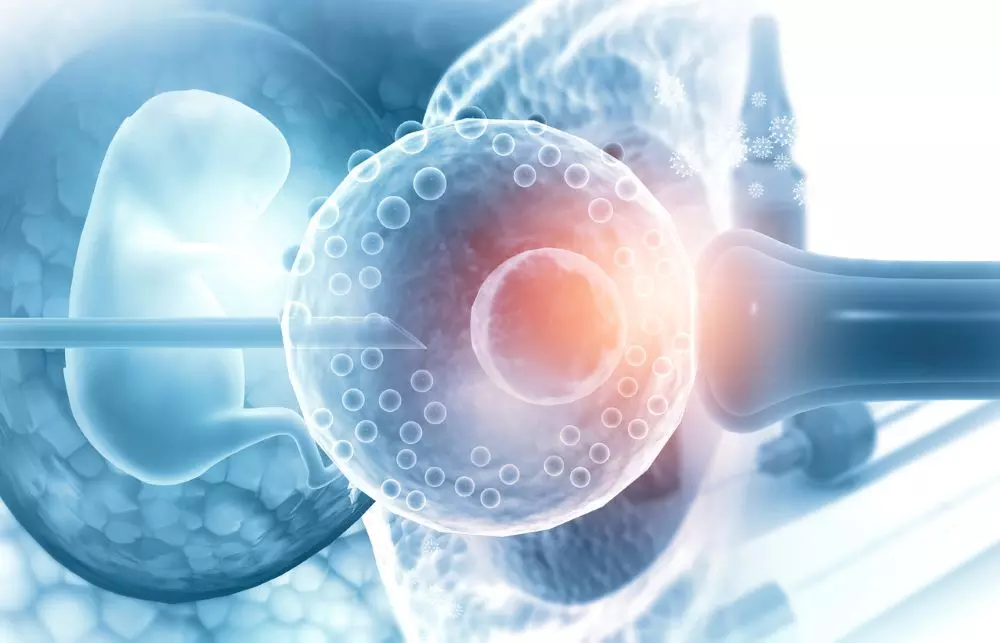
Women who have undergone IVF talk of the pain of daily injections and the invasive procedure and the mental trauma of not knowing if it will be successful. Photo: iStock
While reports of such cases have admittedly been few, the IVF process itself remains challenging for most.
“We had been clearly told by our doctor that the chances of pregnancy are not guaranteed. While the gynaecologist was more hopeful after grading our egg and sperm, I was still cynical. I was mentally preparing myself during the procedure that I may not get pregnant,” recalls Richa.
While concerns of complicated pregnancies, preterm births or even miscarriages are often associated with IVF conceptions, Richa says the toll — physical and mental — starts even before pregnancy is confirmed.
“For about a month or more before the IVF procedure, I received hormonal injections daily to prepare me for ART. Those injections changed me mentally and emotionally as a person. It’s difficult to put it in words, but I was not behaving like myself and I could see that. I was feeling vulnerable.”
Talking about a work episode, she says, “I forgot to do something I had been told to at work and when my colleague asked me about it, I started crying. It was embarrassing; it was not how I would have normally behaved in such circumstances.”
She also recalls the physical pain. “There are two surgeries that they do as part of the procedure. One to extract the egg, and second to put the fertilised embryo in the ovary. For me, the extraction was extremely painful. The procedure is done under anaesthesia, but I was in discomfort for days afterwards,” she recalls.
Often, despite the joys of motherhood, the trauma of the procedure lives on in the women who have undergone it.
A Jaipur-based mother of an adult son, speaking on condition of anonymity, claims she continues to carry memories of the pain even years later.
“I was forever in anxiety mode. This was years back, but still the memories of the daily hormone injections, the invasive procedures, monthly visits to the doctor and hundreds of tests I underwent and especially the uncertainty over its success back then, make me shiver even now. IVF is a blessing but drains you psychologically,” she says.
For many, the cost of the procedure is another stumbling block.
“We spent about Rs 3.5-5 lakh for one cycle. I had been very clear that if I didn’t become pregnant, I wasn’t going to repeat the procedure. We couldn’t afford it,’ says Richa, whose husband is a software engineer.
The hope of a family, however, make many go back for a second, or even third attempt, where pregnancies fail the first time.
Answering a question in Parliament on the high cost of ART and IVF treatments in February this year, minister of state for the Ministry of Health and Family Welfare, Prataprao Jadhav, said that according to the findings of the Health Technology Assessment India (HTAIn) Resource Hub at the ICMR-National Institute for Research in Reproductive and Child Health, the average out-of-pocket expenditure (OOPE) for a single IVF cycle is approximately Rs 1.10 lakh at a public hospital and Rs 2.30 lakh at private hospitals. In addition, the median out-of-pocket expenditure for general infertility care (non-IVF services such as consultations, investigation, medications and monitoring) was estimated at around Rs 7,340 in public hospitals and Rs 11,834 in private hospitals.
India passed the Assisted Reproductive Technology (Regulation) Act in 2021, which, among other things, calls for “registration of assisted reproductive technology clinic or assisted reproductive technology bank”, the establishment of a “national registry of clinics and banks”, talks about the duties of the clinics (including preimplantation genetic diagnosis), establishes rights of a child born through ART and also lists out offences and penalties.
The aim, according to Mumbai-based advocate and solicitor who deals in civil and family law, Pallavi Divekar, was to ensure prevention of misuse and the safe and ethical practice of assisted reproductive technology services. “It was brought onto the statute book primarily due to the rapid, unregulated ‘mushrooming’ of IVF centres / fertility clinics across India and the widespread ethical malpractices that accompanied this growth,” she adds.
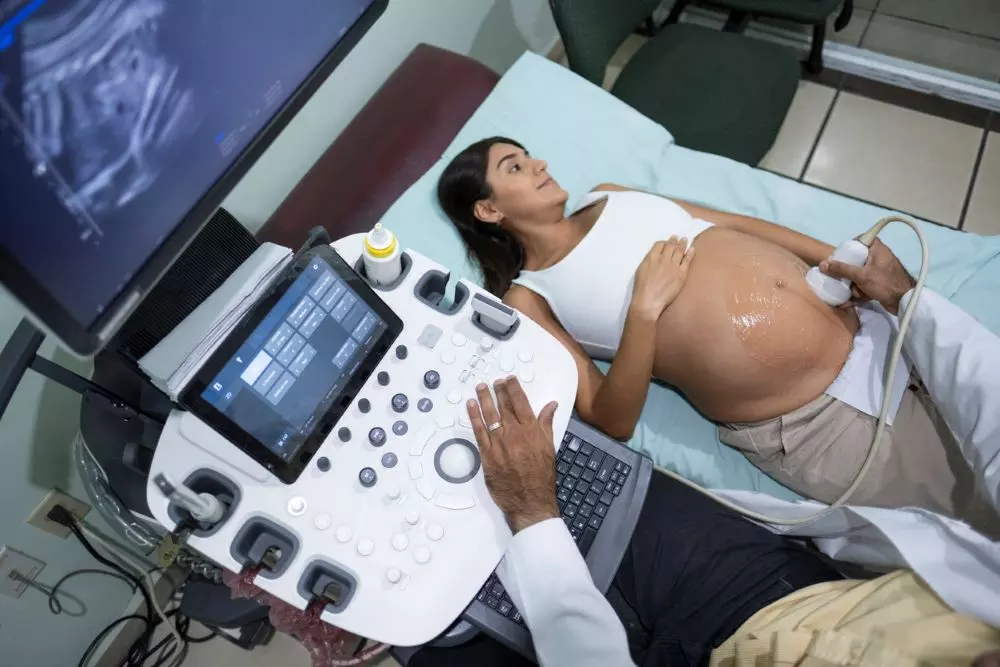
India passed the Assisted Reproductive Technology (Regulation) Act in 2021, but many experts feel it requires strengthening. Photo: iStock
However, many legal experts are of the opinion that the Act requires strengthening.
“The ART Act is meaningful, but some other points need to be incorporated to give it more strength. Like DNA testing at the pre-implantation stage to avoid the added burden on parents who are already reeling under physical and mental stress,” points out Supreme Court advocate Ameyavikrama Thanvi.
While the Act requires clinics to maintain a grievance cell, there are no further provisions on how these will be regulated, say experts. Similarly, while mandated counselling services are a positive feature of the Act, counselling should ideally be independent of the clinic, they add.
Doctors themselves are divided on the issue.
“Even though complete check-ups take place before such procedures, there is misuse, as both patients and the medical fraternity are sometimes casual about this whole procedure,” admits Dr Rajprabha Pangaria, an obstetrician and gynaecologist based in Jaipur.
Dr Nayana Patel, specialist in the field of ART, surrogacy and IVF expert, meanwhile, dwells on the positives. “With advancement in science and IVF, there has been a 60 per cent cumulative increase in getting a baby through ART and IVF. As infertility has increased amongst couples due to jet-setting lifestyles, they should plan early to avoid complications later. And sometimes IVF remains their only hope.”
While clarifying that IVF was a “good and safe procedure”, she, however, adds that there should be checks and counter-checks at every step.
Richa admits that the demands of her and her husband’s jobs, and the accompanying lifestyle, contributed to their difficulty in conceiving naturally. Her son turns two this month and while she is loving every bit of being a mother, she still recalls the scares she had during her pregnancy.
“The pregnancy was confirmed in December and in January I started bleeding. I later learnt that it happens at times even with normal pregnancies. After that the first few months were fine, but complications started from the sixth month. My blood reports were not good and there were issues with the baby’s position. I was recommended to be on bed rest.”
Remembering the journey, she stresses, “I would say IVF should be the last resort for any couple trying for a baby. One should always try to conceive naturally if they can.”