Why Karnataka’s planned discontinuation of 'Nali-Kali' education programme has some concerned
The activity-based learning programme for govt school students of classes 1 to 3 looks set to become history. While the Kannada Development Authority has pushed for its continuation, critics blame Nali-Kali for 'declining enrolment' in govt schools and argue that it leaves children ill-equipped to handle the academic rigours Class 4 onwards.

In 2020, a video clip, purportedly of students in a Karnataka government school singing and dancing while they learnt multiplication tables, went viral on social media. News reports of the time cited posts on X (then Twitter) applauding the teaching methodology, with some purportedly posting that they wished their maths teachers had been equally innovative.One news report, while writing of...
In 2020, a video clip, purportedly of students in a Karnataka government school singing and dancing while they learnt multiplication tables, went viral on social media. News reports of the time cited posts on X (then Twitter) applauding the teaching methodology, with some purportedly posting that they wished their maths teachers had been equally innovative.
One news report, while writing of the social media chatter, linked it to Nali-Kali, or an activity-based learning system, used for students of classes 1 to 3 in government schools in Karnataka. The system, envisaged in the ‘90s to lighten the burden of studies and make education fun for children, at least in the introductory years, now looks set to become history.
First introduced in a school in Heggadadevanakote (or HD Kote) of Karnataka’s Mysuru district, the Nali-Kali programme was launched on a pilot basis in 1995 and expanded statewide in 2009. The aim, according to educationists, was to “remove the fear of punishment and examinations associated with traditional education” and to teach through play-based learning. Instead of merely reading from textbooks, children were taught through activities. Multi-grade classrooms were introduced for students of classes 1 to 3, and the children were divided into small groups with the intention to foster qualities of cooperation and social skills among them. The goal was to move away from the conventional blackboard-and-lecture method and encourage self-learning through drawing, songs, dance, and learning cards.
Also read: Students schemes, tree plantation and blood donation to census, poll duty — what’s keeping teachers
For students, it came like a breath of fresh air.
“In the beginning, when I started school, I wouldn’t want to go to school. However, under the Nali-Kali programme, since lessons were combined with games, I gradually began to enjoy classes. Only now do I realise how much I learnt while playing,” says S Prakash, a student of class 9 at a government school in Karnataka. He adds: “In Nali-Kali, teachers sit on the floor with the children and mingle with them as equals. Because of this, teachers appear like friends to children. Lessons are taught through songs, dance, drama, and drawing.”
According to reports, the programme in its initial days enjoyed the support of the United Nations Children's Fund (UNICEF). Over the years, the system has also reportedly received the backing of organisations like The World Bank and the Azim Premji Foundation.
A 2022 article published in the Learning Curve Magazine in 2022, and available on the Azim Premji University website, observes how in the Nali-Kali programme, the “curriculum is reorganised into small manageable units called milestones. There are milestones for each subject (language, mathematics, environmental studies). The child goes through the learning ladder, with activities and learning material as steps. Classes are clubbed together and there is ample scope for peer group learning.”
It adds: “Nali-Kali was important also because through this multi-grade, multi-level, activity-based teaching-learning process, it would address another critical constraint: the lack of required numbers of teachers”.
Ironically, now the burden on teachers is being cited as one reason for what looks like the impending discontinuation of the system.
An education department official, speaking on condition of anonymity, told The Federal that while seating children from Classes 1 to 3 in a single classroom (the multi-grade system of Nali-Kali) worked well in schools with low student strength, in districts of North Karnataka, where student numbers are high, it becomes impossible for one teacher to manage everyone. “Differences in age also hinder learning pace. Therefore, the department plans to completely discontinue Nali-Kali from the 2026–27 academic year. In the first phase, the scheme will be suspended in 29,000 schools and the ‘single-grade classroom’ system will be reintroduced, with separate classrooms and separate teachers for each grade,” the official added.
Also read: How West Bengal is teaching kids compassion for strays, ways to avoid dog bite
The move has by-and-large received support from teachers.
A teacher at a government school near Anekal, on the outskirts of Bengaluru, said that while the concept of Nali-Kali was good, “implementation is difficult”. “Everything looks good on paper, but in reality, the additional workload on teachers feels burdensome, making it hard to deliver quality education. The scheme emphasises peer support, but the question remains how capable are children of that age to support each other,” said the teacher, who did not want to be named.
Critics of the programme cite Nali-Kali as one reason for “declining enrolment in government schools” and argue that students used to the Nali-Kali method struggle with the sudden shift in academic pressure as they move to Class 4.
“A child who learns joyfully for three years suddenly struggles in Class 4 under the burden of examinations and thick textbooks. This is not a flaw in the system, but a failure to build a bridge between two different systems of learning,” said T Ravikumar, a retired headmaster. “Dismantling a system that once brought smiles to the faces of poor children amounts to crushing their innocent creativity. But at the same time, the pressure on teachers must also be acknowledged, as it prevents them from giving adequate attention to the Nali-Kali programme.”
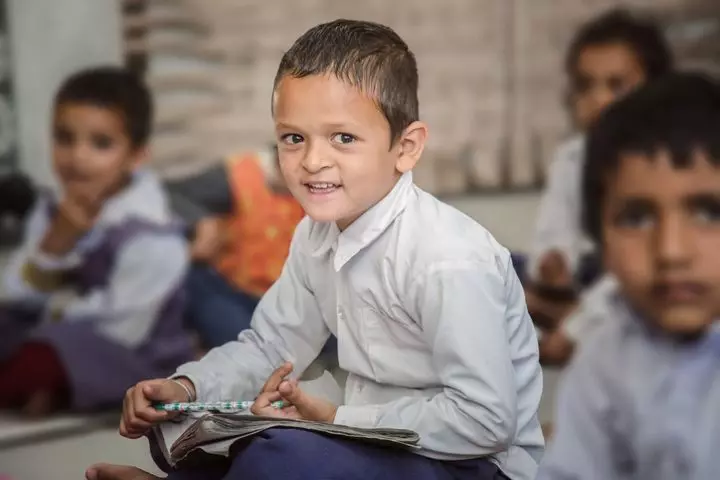
According to sources, the government plans to completely discontinue Nali-Kali from the 2026–27 academic year. In the first phase, the scheme will be suspended in 29,000 schools. Representative image. iStock
According to Chandrashekar Nuggali, president of the State Primary School Teachers’ Association, there had been persistent demands to discontinue the Nali-Kali programme in the past seven years. “Nali-Kali is also one reason for the declining enrolment in government schools in the past decade,” he claimed.
Torn between wanting to give their children an edge in future competitions and the desire to lighten the burden on them, some parents, too, are choosing pressure over play.
“My son was initially enrolled in a government school. The Nali-Kali programme seemed good at first, but later the child could not focus much on studies and became more inclined towards play, which affected learning. As a result, he was moved to a private school,” says Neelkantha, a private sector employee. “To compete with private schools, government schools must balance play with academic rigour. The authorities must understand why parents are increasingly preferring private schools and work towards solutions,” he urged.
Meanwhile, some are continuing to fight to help preserve the innocent joy of learning for children.
The Kannada Development Authority (KDA) has not only opposed the state's move to discontinue Nali-Kali, but has submitted a study report to the government highlighting how implementation flaws are behind the apparent failure of the programme. According to the KDA, Nali-Kali can succeed only if teachers take responsibility for identifying each child’s learning style and adapting accordingly.
Teachers must be provided with appropriate tools and techniques to enhance children’s learning experiences, states the KDA report, adding that such efforts were not seen. It was due to this, among other reasons, that the Nali-Kali programme has failed to produce the expected impact, claimed the report, urging the education department to reconsider its decision to discontinue the system.
“Under Nali-Kali, of the total 80-minute class period, the first 10 minutes should involve children in collective activities to create a conducive learning environment. In the next 10 minutes, students should identify their learning level and use appropriate colour-coded cards and materials. In the third 10-minute phase, teachers must guide students correctly — this stage is crucial for language learning. If teachers provide proper guidance, learning progresses effectively. The next 40 minutes involve instruction-based learning, followed by the final 10 minutes for assessment. This entire process is student-centric rather than teacher-centric, but it requires constant alertness from the teacher. Children must be actively engaged through games, songs, stories, drawings, and other activities,” KDA chairman Purushottam Bilimale told The Federal.
He added” “Children from Classes 1 to 3 differ widely in age, learning level and learning capacity. In such situations, teachers have failed in forming and managing groups effectively to make multi-grade teaching meaningful, leading to serious setbacks in language learning. Many teachers lack a clear understanding of the Nali-Kali programme. Some have not developed it as a culture-based process, while others came unprepared to implement it. Naturally, children show more interest in play, and redirecting them towards learning requires extra effort from teachers.”
Also read: What alleged deaths by suicide of school kids say of our awareness of mental health issues in young
Psychiatrist and psychological counsellor DR HK Kalpana Naveen echoes Bilimale’s support for the Nali-Kali programme.
“The scheme is highly beneficial for children’s psycho-physical development and also helps prepare them for the next stage of schooling. Since it follows a teaching method that combines play with lessons, it generates interest in learning among children. Through games, songs, stories, pictures, and colourful learning cards, children learn joyfully. This method allows every child to learn at their own pace, making learning more effective. By connecting classroom learning with real-life experiences, it supports the overall development of children. It removes the fear associated with traditional education and creates a free and open learning environment,” she said.
Now, the fun may soon be out of learning for students of Classes I to 3 in Karnataka government schools, replaced by a dreary pressure to excel that has come to define much of the country’s education system.