50 years of Ebola virus: Why, despite 'zero cases', low risk, 'take no chances' is India’s strategy
The virus, named after the Ebola river in then Zaire (now the Democratic Republic of the Congo or DRC), was first isolated in June 1976 by Belgian scientist Peter Piot. It is said scientists avoided naming it after a place for fear of stigmatisation. Hence the river’s name. World Health Organization has declared the current Ebola outbreak in DRC a public health emergency of international concern.

There are few viruses that have been around for half a century and yet remain among the most feared pandemic threats. Which is why Ebola has the world in a tizzy — yet again. Just about a month ago, the World Health Organization declared the Ebola epidemic in the Democratic Republic of the Congo (DRC) caused by the Bundibugyo strain as a Public Health Emergency of International...
There are few viruses that have been around for half a century and yet remain among the most feared pandemic threats. Which is why Ebola has the world in a tizzy — yet again. Just about a month ago, the World Health Organization declared the Ebola epidemic in the Democratic Republic of the Congo (DRC) caused by the Bundibugyo strain as a Public Health Emergency of International Concern (PHEIC).
India is at an enviable position of “never having recorded” an Ebola Virus Disease (EVD) case, as was informed by the Centre to the Lok Sabha in 2017. In 2014, one Ebola survivor reportedly travelled to India post recovery. He was quarantined as a precaution.
The virus, named after the Ebola river in then Zaire (now DRC), was first isolated 50 years ago, in June 1976, by Belgian scientist Peter Piot. There is an interesting story about the naming of the virus — it is said scientists avoided naming it after a place for fear of stigmatisation. Hence, the river’s name was chosen.
Also read: Why Delhi HC judgment on ‘right to be forgotten’ has the legal fraternity divided
A viral infection caused by multiple strains of the virus, Ebola typically begins with symptoms such as fever, body ache and fatigue. The incubation period ranges from two to 21 days, with the optimum period when a patient starts showing symptoms, being about seven to eight days. Unlike in the case of Covid 19, an asymptomatic patient rarely spreads the disease. It is not airborne and a person has to come in contact with the patient’s bodily fluids to contract the disease. This also includes sweat, which means that a crowded and hot country may theoretically see a faster spread of the disease.
While India’s track record is heartening, government officials, academics and doctors are unanimous in their assessment that it does not leave room for complacency. Which is why India has adopted an all-hands-on-deck approach even with the current outbreak, roping in the National Centre for Disease Control (NCDC), the Indian Council of Medical Research (ICMR), the Directorate General of Health Services, Ministry of Civil Aviation, Immigration authorities and other concerned Ministries and Departments, for strengthened surveillance and public health preparedness across the country. Health minister JP Nadda is holding periodic reviews to take stock of the measures. Airports receiving flights from the affected countries, like DRC, South Sudan and Uganda, are geared to test and digitally track patients as required.
Epidemiologist and former head of communicable diseases at ICMR Dr Lalit Kant, stresses the need to maintain vigilance at the airports. “India is at a very low risk and we have detailed protocols already existing that were developed at the time of the 2014 outbreak. The only entry point really is through flyers from infected countries,” he says.
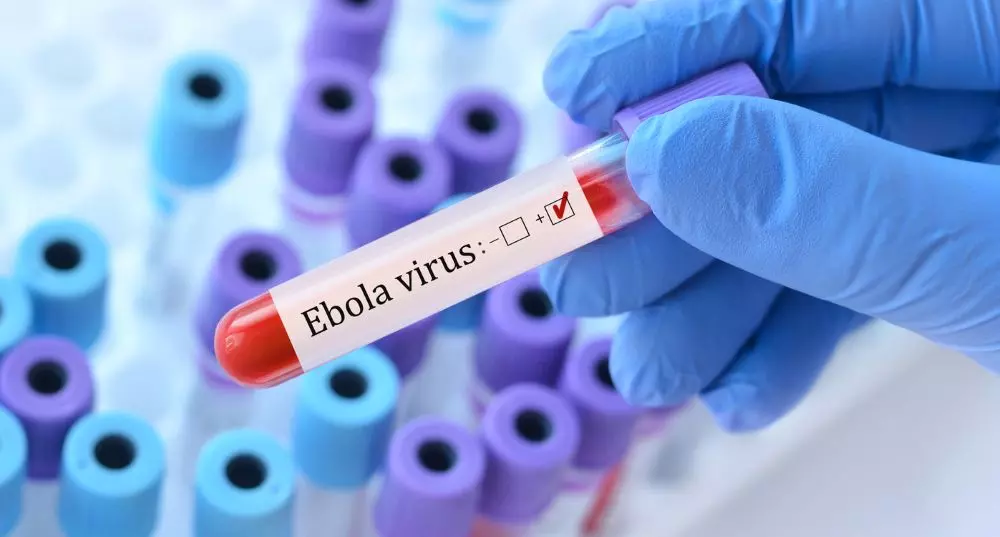
A person has to come in contact with an infected persons bodily fluids to contract the disease. This also includes sweat, which means that a crowded and hot country may theoretically see a faster spread of the disease. Photo: iStock
For Ebola tests, India had a unique problem. Kits are being manufactured indigenously, but their validation — which is an assessment of how accurate the tests are in real world — situations was a challenge as there are no positive samples in the country to validate them against.
A senior government official said: “We pulled all stops and used our missions abroad to get some positive samples and the day we got them, we validated the tests the same evening. Now we have 5000 kits ready, waiting to be deployed.” Many private manufacturers, too, have entered the fray, so India’s stock of EVD testing kits is expected to be good enough not just for the country’s internal needs but also for export.
The Bundibugyo strain behind the current outbreak is reportedly less deadly (30-50 per cent fatality) than the more common Zaire strain (60-90 per cent fatality), but there is currently no vaccine against it. The epidemiological trade-off of that lower fatality is that the ‘R value’ for the current outbreak stands at close to two. R or reproduction number is a measure of how infectious a pathogen is. An R of 2 translates to every Ebola patient on average infecting two others.
There is an inverse relationship between fatality and infectiousness. If a patient dies within a few days of the illness, they infect far fewer people than they do during the process of recovery, when they are likely to come in contact with more people.
While the World Health Organization has reportedly put DRC in the “very high risk” category, countries sharing borders with DRC, such as Uganda in “high risk” category for Ebola. Other countries in Africa and across the world are believed to be at low risk.
Also read: Why in Kerala, World Cup flex wars are reflective of football being a lived experience in the state
Meanwhile, India has issued a travel advisory for citizens to avoid non-essential travel to the Democratic Republic of the Congo, Uganda and South Sudan. While this does not explicitly indicate visa denials, India has taken a stance to limit entry from these geographies as far as feasible. However, one set of people that continue to travel from these countries are medical tourists as there is a humanitarian dilemma in refusing visas to such people.
Top sources in some of the academic institutes involved in surveillance say that while no case of EVD has been detected, some of the common diseases that are being found in travellers from these nations, as they are being screened on arrival, are malaria and hepatitis. There is also the problem of absconders. “Some airports are facing a problem of people giving wrong addresses and telephone numbers and just disappearing in the crowd. That is why we are trying to switch to an app-based tracking. However, we have also had instances of people coming back voluntarily for testing or seeking isolation protocols after they have taken ill,” said a second government official, speaking on condition of anonymity.
Talking about India’s long, and some would say fortuitous, track record of keeping Ebola at bay, a senior health administrator said: “In the past, Ebola outbreaks have mostly been localised in certain parts of Africa. Ebola also needs much closer contact than, say SARS CoV2. Which is why it has been epidemiologically confined. That is a good thing because even though there are vaccines for some Ebola strains, they have not been proven to be a very strong public health approach. Fortunately or unfortunately, India-Africa travel is circuitous and less common than traffic between India and Southeast Asia and Europe, which is how Covid 19 had arrived in India.”
He added: “Our present approach is centred around early detection and effective containment of the virus and we are doing well there. But the lingering fear is of a mutation that can change the infective or disease-producing behaviour of the virus.”
The Union Health Ministry has issued SOPs on public health preparedness and response to EVD, including protocols to be followed by international passengers. For those coming in for the affected countries, flyers are being categorised into different groups based on whether they have a history of contact with EVD patients or flu-like symptoms. In case of the latter, the SOPs clearly say that all such people will be managed as Ebola patients till proved otherwise. Guidelines have also been issued for hospital infection control, isolation facility preparedness and for safe and dignified handling of remains of Ebola patients in case of a death.
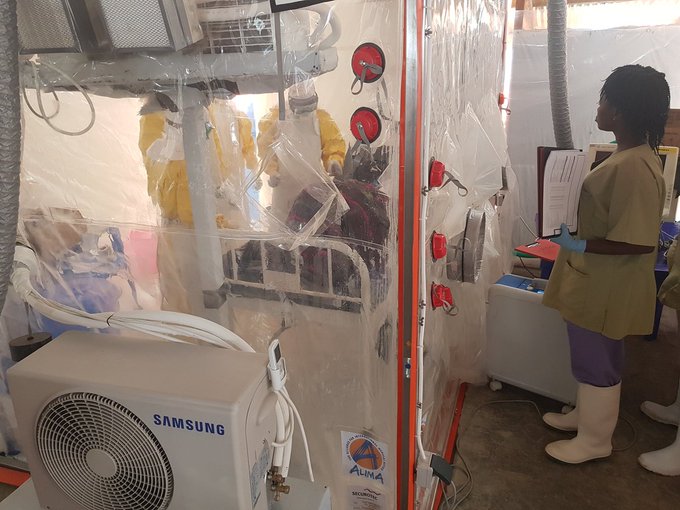
File photo of a World Health Organization employee checks the isolation ward after the outbreak in DRC. Photo: X
The chances of India getting an Ebola outbreak are “close to zero”, says epidemiologist Dr JP Mulyil. “We do not know why, but just like yellow fever, Ebola has never visited India. Perhaps it was just good fortune or perhaps it is that India does not have the ecosystem for the multiplication of the virus. But we have to be conscious of the fact that it is a zoonotic disease. As long as we do not start importing monkeys from Africa — we did bring Cheetahs from there (a reference to the translocation of Cheetahs from Namibia and South Africa in 2022-23) — I would say we are safe,” he adds.
According to Dr Rajib Dasgupta, professor at the Centre of Social Medicine and Community Health, School of Social Sciences, Jawaharlal Nehru University, India’s current state of precautions and preparedness is robust, but declaration of PHEIC means that it constitutes a serious cross border risk. That is why there is no room for letting our guards down.
As in earlier outbreaks, India has also sent “tens of millions of dollars’ worth” of equipment, drugs and PPE kits to the affected countries, said the first government official quoted above. Next in line are testing kits, the official added.
Also read: World Environment Day: Why some Indians are giving up jobs, businesses to focus on sustainability
The recurrence of Ebola in countries in central Africa has baffled scientists for some time now. There are systemic issues such as poor access to basic health services and malnutrition. But there is also a section of epidemiologists who are reportedly now linking it to the working conditions in the gold mines in the region, where men work together in hot, humid and crowded conditions, giving the virus a contagious freeway of sweat to spread through. The endemicity of malaria in the area also means that because of the similarity of symptoms, the first suspicion usually is always of the mosquito-borne parasitic infection rather than the viral scourge that Ebola is.
Weighing in on the goldmine connection, Dr Dasgupta said: “Deforestation linked to mining activities, increasingly fuelled by the search for so-called 'conflict minerals' and 'artisanal mining', is contributing to the outbreaks. These are in informal settings to a significant extent and lack occupational health safeguards and services. These factors interact through complex pathways to transmit and sustain Ebola infections.”
While the global anxiety over Ebola persists, one question that is uppermost in people’s minds is “When will this [the current outbreak] end?” A government scientist associated with disease modelling says that their calculations show that the current outbreak may last till November. “It will probably peak around August and then taper off with a long tail,” the scientist said.
For the world, and particularly for the African nations where the Ebola virus makes a periodic comeback, a vaccine that acts across strains may perhaps be the most fitting commemoration of this recalcitrant public health threat.