


- Home
- India
- World
- Premium
- THE FEDERAL SPECIAL
- States
- Perspective
- Videos
- Sports
- Education
- Entertainment
- Elections
- Features
- Health
- Business
- Series
- In memoriam: Sheikh Mujibur Rahman
- Bishnoi's Men
- NEET TANGLE
- Economy Series
- Earth Day
- Kashmir’s Frozen Turbulence
- India@75
- The legend of Ramjanmabhoomi
- Liberalisation@30
- How to tame a dragon
- Celebrating biodiversity
- Farm Matters
- 50 days of solitude
- Bringing Migrants Home
- Budget 2020
- Jharkhand Votes
- The Federal Investigates
- The Federal Impact
- Vanishing Sand
- Gandhi @ 150
- Andhra Today
- Field report
- Operation Gulmarg
- Pandemic @1 Mn in India
- The Federal Year-End
- The Zero Year
- Science
- Brand studio
- Newsletter

In an era of dating apps and right swipes, why books continue to be relationship starters
Singer Dua Lipa and actor Callum Turner, who got married last month, have revealed that their relationship started with talking about a book which both were reading at the time they first met. Around us, too, many among the Gen Z are turning to literature to get a peek into the other person's personality.

Sometime in the mid-2000s, Delhi-based media professional Paroma Chatterjee (name changed on request) met a guy on Orkut — that now-extinct predecessor to social media platforms like Facebook, X, Instagram… “Being a die-hard fan of the novel Gone With The Wind, I was very excited when I stumbled upon an Orkut group of Rhett Butler fans. [Butler is the male protagonist of the novel]....
Sometime in the mid-2000s, Delhi-based media professional Paroma Chatterjee (name changed on request) met a guy on Orkut — that now-extinct predecessor to social media platforms like Facebook, X, Instagram… “Being a die-hard fan of the novel Gone With The Wind, I was very excited when I stumbled upon an Orkut group of Rhett Butler fans. [Butler is the male protagonist of the novel]. Days after I joined, I was surprised to receive a message from this guy who said he had found me in that group and decided to reach out when he realised we were both from India and in the same city; I was living in Kolkata back then. I was intrigued; most Butler fans are women, I had not known him to be popular among men.”
Chatterjee and the guy clicked.
“We dated for a couple of years before going our separate ways,” she says.
At 46 years old, Chatterjee is among Indians who made the move from real to virtual as an adult, or nearly so. But for a generation more used to swiping right on a potential romantic partner than checking out the person seated on their right in the Metro, how often do literary matches lead to a relationship green flag?
Here’s the surprise.
Singer Dua Lipa (30) and actor Callum Turner (36), who got married last month, have revealed that their relationship started with talking about the book Trust, by Hernan Diaz, which both were reading at the time they first met. Turner has been quoted in the media as saying that they had both just finished the first chapter when they met, “So we're on the same page” — literally, and metaphorically.
Also read: How digital impersonators are turning staff trust into a weapon to empty company accounts
Long before dating apps became a part of life, in the ‘70s, ‘80s and ‘90s, bookstores, libraries and book clubs had already served as quiet settings for many real-life meet-cute moments — from the locking of eyes across library racks to bonding over the shared love for an author or title. It spilt into hours spent reading together, or hunting for that one perfect book to gift to your beloved on their birthdays; the cover page would often carry a declaration of feelings, with the date when the gift was made. Opening the book years later would stir up memories and emotions, carefully preserved between the yellowed, well-thumbed pages.
That physical copy may have given way to words on a tablet or mobile phone screen for the Gen Z (those born between 1997-2012), but, despite the oft-voiced concern over the apparent decline in reading, the meeting of minds and hearts over literature appears to have survived the tech onslaught.

Long before dating apps became a part of life, in the ‘70s, ‘80s and ‘90s, bookstores, libraries and book clubs had already served as quiet settings for many real-life meet-cute moments. Photo: iStock
“I feel that the books a person reads can reveal their interests, values and personality. While it's not the most important factor [she is looking for in a person or potential love interest], I find people who enjoy reading interesting because it often shows curiosity and a willingness to learn,” says 24-year-old S Sandhya, a Chennai resident.
For Sandhya, who works in Deanta, a publishing house, books are both a comfort and a connect to others. “If nothing else, they serve as conversation starters. I haven't specifically started talking to someone because of their book preferences, but if I noticed that they liked a book or author that I enjoyed, I would definitely be more interested in getting to know them. It gives an easy and meaningful topic to talk about,” she adds.
The idea that a person’s preference in books gives others a peek into their personality is echoed by 23-year-old Yashwin Prakash, a Sydney-based website developer. “Reading habits alone wouldn't determine my interest in someone, but they can provide useful insight into their character and worldview,” says Yashwin.
Also read: Why Bengal’s oft-cited cultural supremacy might be on a decline
Dating platforms themselves appear to have noticed a growing emphasis on shared interests when it comes to swiping right on potential matches.
“Connections are meaningful when interests align and that’s why Gen Z are looking for intentional and interest-based dating. They want to meet like-minded individuals who share their passions and interests, like reading,” shares Samarpita Samaddar, former communications director (India and Southeast Asia) of the dating platform, Bumble.
Samaddar adds: “I have seen people use books and [literary] genres on dating apps as filters; someone listing Haruki Murakami or Arundhati Roy would be signalling how they think, what they like, the kind of silence they’re comfortable in. Shows a whole worldview and people actually read that very deliberately. Badges like reading, books and even genres like fantasy, thriller, romance, sci-fi are highly used on dating apps.”
A shared book can give a glimpse into someone. “You can talk about a character’s choices, and connect it to talking about your own. That kind of conversation is rare and valuable. Reading gives people a way in that doesn’t feel like an interview, especially since Gen Z is doing away with performative swiping,” she further tells The Federal.
One India-origin dating app has gone a step further, putting books at the centre of their meeting modus operandi. Launched in December 2023, according to its LinkedIn bio, Bookmark makes, well, books, “the medium to do a vibe check”.
“Take a peak into their libraries, discover books they love (or hate), find recommendations you'd never have discovered before — and through it find your way to a connection with someone,” encourages the platform that claims to have been “founded by avid readers who wanted to create a platform where book lovers could connect and find love, book buddies or friendship based on their mutual love for books!”.
Indeed, reports suggest some among the Gen Z are even choosing to hit the pause button on apps to step out of the virtual sphere into the real-world dating game of yore.
A survey last year by online bookstore ThriftBooks found 44 per cent of respondents would rather meet a romantic partner through a book club than through a dating app. Among Gen Z respondents, nearly half preferred the idea of meeting through a shared reading community. The survey also found that 23 per cent of book-club members had developed a romantic interest through their reading groups.
From spontaneous meet-cutes in the physical world to bonding over hobbies, the slow charm of getting to know a person in the flesh is reportedly winning over the online generation and books occupy centre stage in this shift.
Pop culture representation might already be capturing this. If the 1998 cult classic You’ve Got Mail showed protagonists Joe Fox and Kathleen Kelly, memorably played by Tom Hanks and Meg Ryan, as bookstore business rivals meeting in an online chatroom and bonding over email exchanges, oblivious to their real identities — an early nod to the coming digital boom — the 2022 romance The Blind Date Book Club, take the central characters, a bookstore owner and a journalist, back to a book club matchmaking set-up.
Also read: What attempt to cover Mohenjo-daro Dancing Girl’s bare torso exposes about our own discomforts
”If someone enjoys reading, I see them as thoughtful and curious. It gives me a positive impression of them,” says Bhavani J, a 24-year-old research scholar from Chengalpattu (Tamil Nadu). She recalls her own experience of starting a conversation via books. “I once started a conversation with someone because they mentioned a book I had read and enjoyed. It made it easier to find something to talk about.”
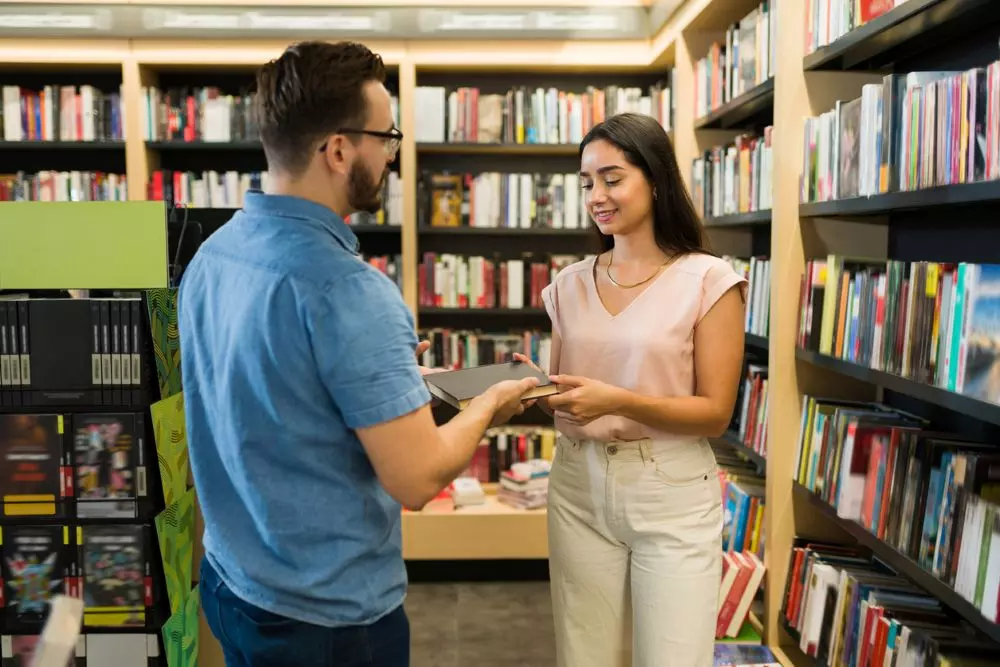
From spontaneous meet-cutes in the physical world to bonding over hobbies, the slow charm of getting to know a person in the flesh is reportedly winning over the online generation and books occupy centre stage in this shift. Photo: iStock
A favoured character, as in the case of Chatterjee, may also shape expectations in a relationship. But, as 24-year-old accountant Deva Dharshini admits, it’s important to separate fact from fiction. “Fiction has always had a significant influence on how I view potential romantic partners. But over time, I've come to understand the reality of life and human connections and what to look for in a life partner in real life. Because fiction and reality have a significant difference,” she says.
Psychological counsellors and relationship experts approach the subject with caution.
“Reading similar books may not necessarily impact relationships, because we see couples who have different reading habits,” says Akshaya Gnanashree, clinical psychologist and founder of the Chennai-based Mind Aid. At the same time, if both partners enjoy the same book and are able to discuss it, it gives them the sense of being “understood”, she says.
Gnanashree adds: “Books we read have an impact on one's personality. During therapy sessions, some don’t talk about themselves but about characters they read. They relate to the characters; it sometimes becomes the reflection of who they are or who they want to be. We usually go deeper into these characters (during therapy) to understand their personality and how they relate to it.”
Indeed, bonding over books may not always be about finding someone exactly like oneself, but building a bridge into the other person's world. They are neither foolproof compatibility tests nor meaningless profile details. Instead, they offer small glimpses into how someone thinks, what moves them, what they value and how they see the world. In an era of quick swipes and shrinking attention spans that may be precisely their appeal.
Chatterjee recalls a time when any question on who would be a potential romantic match for her would draw the response, “a blend of Rhett Butler, Darcy [of Jane Austen’s Pride and Prejudice] and Captain Bluntschli [Arms and the Man, George Bernard Shaw]”. Now married, she says, “My husband is not a bit like any of them, but we are best friends. And while he prefers reading about nature and I enjoy literary fiction, we bond over Agatha Christie mysteries and PG Wodehouse humour. So those are the two authors you will find the most on our bookshelves.”
