Why new birth and death registration amendment bill raises questions of access
Passed in parliament last week, the Registration of Births and Deaths (Amendment) Bill, 2026, tightens the procedure for delayed registration and is purportedly aimed at preventing fraudulent certification. But while India may be close to universal birth and death registration on paper, is it equally easy for every Indian to get registered?

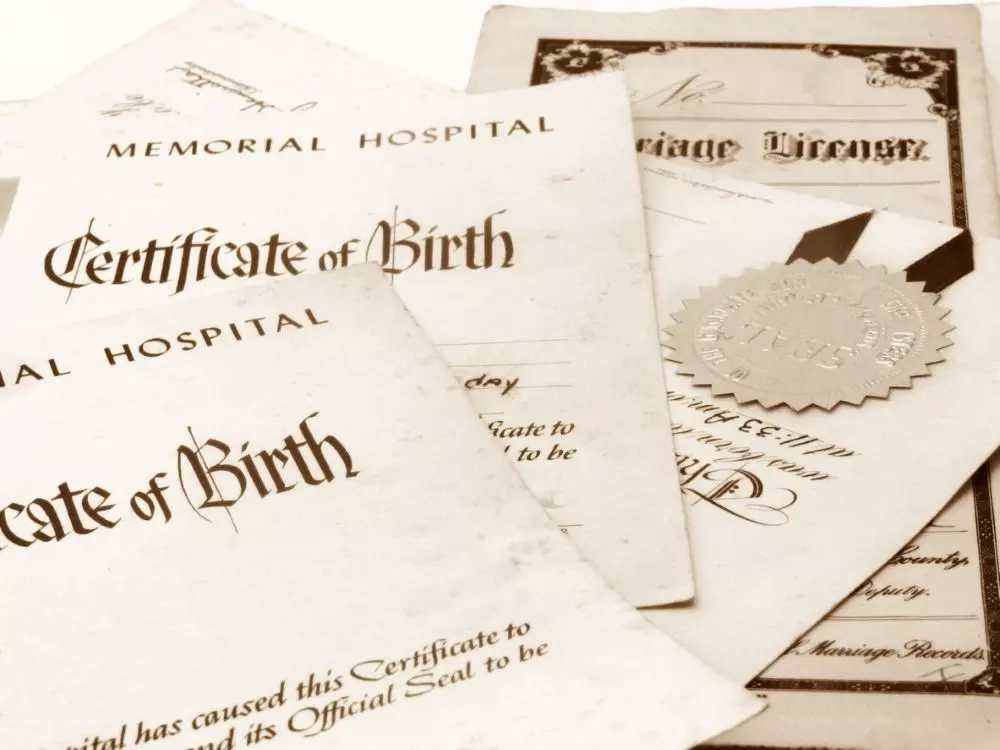
According to the Civil Registration System data, birth registration in India rose from 86.6 per cent in 2014 to 99.1 per cent in 2024. Photo: iStock
For a child born at home in a remote tribal hamlet, a migrant family struggling with language and paperwork, or a poor household dealing with a death, obtaining a birth or death certificate can arguably be far more complicated than simply filling out a form.
That is the fault line that the Registration of Births and Deaths (Amendment) Bill, 2026, passed in parliament last week, brings into focus.
The amendment to the 1969 law tightens the procedure for delayed registration. If a birth or death is disclosed more than a year after the event, but within two years, the amended law would reportedly require verification and approval by a district magistrate, sub-divisional magistrate or an authorised executive magistrate. For registrations delayed beyond two years, an order from a judicial magistrate (first class) will be required. The amendment is purportedly aimed at ensuring timely registration and preventing fraudulent certificates.
Earlier, a 2023 amendment had made birth certificates the principal or near-conclusive proof of date and place of birth for things like a school admission, voter roll inclusion and application for passport, Aadhaar, driving licence and even government jobs.
Now the new amendment comes amidst ongoing confusions over exclusions of names in the recent special intensive revision (SIR) of electoral rolls and an ongoing census exercise.
It also arrives as India reports near-universal registration coverage. According to the Civil Registration System, birth registration rose from 86.6 per cent in 2014 to 99.1 per cent in 2024, while death registration increased from 72.5 per cent to 99.4 per cent over the same period.
But national coverage figures can conceal a very different reality: how many people register on time, and how difficult is it for those who miss the deadline to enter the system?
That question matters in a country where poverty, illiteracy, migration, geographical isolation and social barriers can still determine how easily people access government services.
“The union government has passed the responsibility on to the people,” says tribal rights activist and advocate S Balamurugan, reflecting on the amendment. “Instead of creating awareness about registration, the Union government has asked people to move to courts to get their certificates. It is the responsibility of the government to conduct special camps for marginalised communities and especially tribal communities who have to travel to faraway courts to register births and deaths in their families. The bill is focused on making people accountable and no mention of errors made by officials and fixing loopholes to avoid fake entries.”
Murugan adds: “For nomad families, registration norms have to be explained and encouraged to get help. The focus of the government has diverted from providing services to the citizens in the last mile to penalising every person at least in one form.”
In much of urban India, the birth-registration process can be almost invisible to parents. A child is born in a hospital, hospital staff transmit the details to the local registration authority, and the certificate can subsequently be downloaded or collected. Similarly, death certification is largely taken care of at crematoriums and burial grounds.
But that system depends on births and deaths taking place within the formal network.
Kerala illustrates how a strong local-government and digital infrastructure can make the process relatively seamless. The state began computerising civil registration decades ago through the Information Kerala Mission's Sevana platform. It is now being expanded through the K-SMART portal, which allows citizens to search records, verify details and download digitally signed certificates. The state’s Akshaya network (aimed at bridging the digital divide) provides assistance to people who need help accessing digital services.
Karnataka has similarly invested in digital registration through its e-Janma portal, which operates at more than 33,000 centres. In rural areas, ‘village accountants’ can enter information through Nadakacheri centres or gram panchayats, while urban registrations are generally handled through medical officers of health. The state says more than 90 per cent of births and deaths are now registered within the stipulated period.
Yet the data from both states show why the place where a birth or death occurs matters and why technology alone may not be enough to plug the gap.
Kerala registered 3.27 lakh births in 2025, of which 3.21 lakh occurred in hospitals. Deaths present a contrasting picture: of the 3.02 lakh deaths registered that year, 1.83 lakh occurred outside hospitals. When a birth or death occurs outside an institution, the responsibility of ensuring that it enters the official system becomes more complicated.
In Karnataka’s northern districts, parts of Raichur, Yadgir, Kalaburagi and Chamarajanagar, traditional birth attendants, or sulagittis, continue to assist with some deliveries. Delays in registration can follow, with ASHA workers, anganwadi workers and auxiliary nursing midwifery (ANM) often helping collect information. Health-sector organisations have called for a simpler process at the gram panchayat level and greater awareness about the free registration window.
For someone living close to a government office with a smartphone and the necessary documents, a digital portal can mean convenience. For someone living in a remote village without reliable connectivity, the same digital system may mean another trip, another intermediary and another expense.
Also read: In Assam, recurring floods bring psychological trauma of displacement, rehabilitation fatigue
Both Delhi and Tamil Nadu have a largely institutionalised birth-registration system. Hospital staff routinely report births, while village health nurses or ASHA workers help families who miss the process or go in for home deliveries.
Tamil Nadu requires births and deaths to be registered within 21 days of occurrence. For events in hospitals, the institution reports it directly. For home events, the head of the family must report it to the local body. In many major hospitals and primary health centres (PHCs), birth certificates are processed before discharge.
K Vanitha, a village health nurse in Krishnagiri district, says health workers also intervene when a child is born at home. Hospital staff, she says, report births to the registration authorities as part of their routine. In home births, health workers visit families and ensure that the birth is documented. But the experience of migrant families can be different.
K Yasodha, a government school teacher in Tamil Nadu’s Erode district who has helped migrant workers obtain birth certificates for their children, says language is sometimes a barrier. She assists families when they fail to register births and alerts local health officials.
The difficulty increases when registration is delayed and requires a magistrate's intervention. “When they have to go to a judicial magistrate, it will be tough for us to coordinate,” she explains.
Death registration in India went up from 72.5 per cent in 2014 to 99.4 per cent in 2024. Photo: iStock
Tamil Nadu's registration numbers also need to be understood carefully. The 2024 Civil Registration System report shows registered births falling from 11.68 lakh in 2015 to 8.48 lakh in 2024, a decline of 27.3 per cent. According to the report, Tamil Nadu had imposed penalties in 15 cases for the delay in reporting in births and deaths.
Andhra Pradesh offers another view of the problem.
Birth and death registration is available through the Unified Birth and Death portal, MeeSeva centres and grama/ward sachivalayams. Births reported within 21 days can be registered free of cost. Delayed registration, however, can involve fees, affidavits and official permissions.
In tribal districts such as Alluri Sitharama Raju and Parvathipuram Manyam, home births and geographical isolation create additional hurdles.
Families may have to travel long distances, spend money on transport, find documents, deal with poor connectivity or make repeated visits to MeeSeva centres. Those unfamiliar with the process can become dependent on intermediaries.
For such families, the problem is not necessarily unwillingness to register. It can simply be that the state is physically or administratively difficult to reach.
And that is where the new law could become significant.
A family that has already struggled to register a birth for a year or two may now have to navigate a higher level of official scrutiny. The question is whether the system will provide enough assistance to distinguish between deliberate attempts at fraudulent registration and genuine delays caused by poverty, lack of awareness, migration or difficult terrain.
There is also a warning from West Bengal about what can happen when verification is tightened too quickly.
Following alleged irregularities involving birth and death certification, exposed during the SIR exercise in the state ahead of this year’s West Bengal assembly elections, the newly-elected Bharatiya Janata Party (BJP) government in the state changed the system for issuing certificates and transferred registration responsibilities from local elected representatives and some sub-registrars to designated government officials.
The changes led to a backlog in Kolkata. Between first week of May and July 30, more than 7,000 death certificates accumulated after the registration authority at crematoriums and burial grounds was suspended. Around 11,000 applicants were waiting for birth-certificate copies during the same period.
Sambit Ghosh, a resident of Kolkata’s Amherst Street area, recalls the “endless wait” for his son’s digital birth certificate for a passport application. The Kolkata Municipal Corporation later appointed additional officials and restored issuance after a 15-day disruption.
The episode highlights the balancing act before governments: how do you make registration secure without making it inaccessible?
A birth certificate is no longer merely a record of an event. It can become an essential document for establishing identity, accessing services and enrolling children in school.
A death certificate can determine whether a family can claim a pension, insurance or other benefits. In Karnataka, officials say awareness about death registration has increased partly because families need the certificate to access pensions and insurance.
That makes the consequences of non-registration particularly serious for people already at the margins.
A migrant parent who cannot navigate the local language. A tribal family whose child is born at home. An elderly person whose death occurs in a village far from a registration centre. A family that does not understand that a deadline has passed.
For them, a missed deadline can quickly become a bureaucratic problem.
Will the stricter system exclude the people it needs to reach?
“A child is the future of society. Governments should take up the responsibility to ensure every birth is registered. Instead of placing responsibility on people, governments should ensure infrastructure and record every birth and death,” says Sanghamitra Acharya, a professor at Delhi’s Jawaharlal Nehru University, hoping that “teething issues” would be sorted out in a few years.
Also read: Why pendency of cases is as much a challenge for lawyers as for litigants
That the government has a legitimate reason to strengthen the integrity of civil records is under debate. Birth and death records have implications far beyond statistics, and fraudulent certificates can undermine public administration.
As professor S.Irudhayarajan, chairperson of the International Institute of Migration and Development in Thiruvananthapuram, points out, “To claim benefits under various government schemes and receive assistance, certification is mandatory…In the absence of digitisation, the process might be tampered with”. Issues with the process, if any, will be addressed over the years, he hopes.
Human rights activist and senior advocate Henry Tiphagne believes that “the requirement to approach the courts”, in case of delayed registration, would help “bring down fraudulent entries”.
But the challenge is to ensure that anti-fraud measures do not turn genuine late registration into an obstacle course.
Advocate Suresh Babu, who has handled delayed registration cases in Chennai, also points to the judicial burden that could emerge. He said the Madras High Court had earlier removed judicial-magistrate intervention in delayed registration cases, allowing executive magistrates to conduct enquiries and pass orders after verification. With the new framework, he argues, delayed cases could again move towards the judiciary. He suggests the formation of dedicated courts for birth and death registration cases, rather than sending them into already crowded regular courts.
That raises the larger question the new law must answer… that of infrastructure preparedness.
India may be close to universal birth and death registration on paper. But is it equally easy for every Indian to get registered?
The answer could depend less on the technology of the portal and more on what happens at the last mile, in the village health worker's visit, the gram panchayat office, the MeeSeva centre, the hospital, the cremation ground and, increasingly, the magistrate's office. The success of the amended law will therefore not be measured only by how many fraudulent certificates it stops.
(With inputs from Rajeev Ramachandran, Samir K Purkayastha, Chandrappa M and Abhidhek Rawat)