- Home
- India
- World
- Premium
- THE FEDERAL SPECIAL
- Analysis
- States
- Perspective
- Videos
- Sports
- Education
- Entertainment
- Elections
- Features
- Health
- Business
- Series
- In memoriam: Sheikh Mujibur Rahman
- Bishnoi's Men
- NEET TANGLE
- Economy Series
- Earth Day
- Kashmir’s Frozen Turbulence
- India@75
- The legend of Ramjanmabhoomi
- Liberalisation@30
- How to tame a dragon
- Celebrating biodiversity
- Farm Matters
- 50 days of solitude
- Bringing Migrants Home
- Budget 2020
- Jharkhand Votes
- The Federal Investigates
- The Federal Impact
- Vanishing Sand
- Gandhi @ 150
- Andhra Today
- Field report
- Operation Gulmarg
- Pandemic @1 Mn in India
- The Federal Year-End
- The Zero Year
- Science
- Brand studio
- Newsletter
- Elections 2024
- Events

Why this Andhra village has banned sale of milk and milk products for over 400 years
In Ganjihalli village, milch cattle are reared, but milk is never sold. According to local accounts, the tradition dates back over 400 years, when in the midst of a disease outbreak killing cattle, a Muslim pir told villagers to desist from selling milk and milk products, slaughtering cattle and burning fodder, to ensure prosperity.

In a village in Andhra Pradesh’s Kurnool District, the milk that nourishes when consumed could be a potent tool for destruction if sold. Or so the looks believe.For centuries, residents of Ganjihalli — a village of around 1,200 houses and 4,000 residents, according to data shared by the Panchayat office — have desisted from selling milk, or any milk products. Most of the residents...
In a village in Andhra Pradesh’s Kurnool District, the milk that nourishes when consumed could be a potent tool for destruction if sold. Or so the looks believe.
For centuries, residents of Ganjihalli — a village of around 1,200 houses and 4,000 residents, according to data shared by the Panchayat office — have desisted from selling milk, or any milk products. Most of the residents are farmers, cultivating groundnut, paddy and green chilli. According to their own estimates, the village currently has about 510 milch animals, producing around 1,000 litres of milk every day. Not a drop is sold.
“We use the milk produced by our cows and buffaloes only for household consumption and community sharing. The surplus milk is given free to fellow villagers,” says Sheikh Mahabub Basha, 58, a Ganjihalli resident.
Adds Maheshwar Reddy, a 50-year-old rice trader from Ganjihalli. “If anyone needs milk, buttermilk, or curd, we give it for free. Selling it is considered a sin in our village.”
According to Paiinti Srinivasulu, 72, a village elder, the milk produced “is especially distributed free to young children and those in need”. Like lactating mothers, for example. “If a woman in the village gives birth, it is customary for nearby households to send milk,” informs Sulochana Devi, 29, a homemaker.
Also read: Why the revival of a festival last held about 270 years ago has public opinion divided in Kerala
It all started over 400 years ago, according to local belief, when a pir, or ‘holy man’, Rajayogi Murmu Bade Saheb Tata, is said to have lived in the village.
Though a follower of Islam, it is said Bade Saheb, originally from Podala Kandukuru village in Allagadda taluk of Andhra Pradesh, moved to Ganjihalli after a series of “visions of a Hindu deity directing him to the village”.
According to locals, the first ‘vision’ was of the deity Konda Madhava Swamy, who is believed to have appeared in his dream and invited him to visit the temple dedicated to the deity in Ternakal (Tarunikal) village. Interpreting the dream as a “divine order”, Bade Saheb is said to have made the journey to Ternakal, where he began living at the Konda Madhava Swamy temple, dedicating his life to devotion and service.
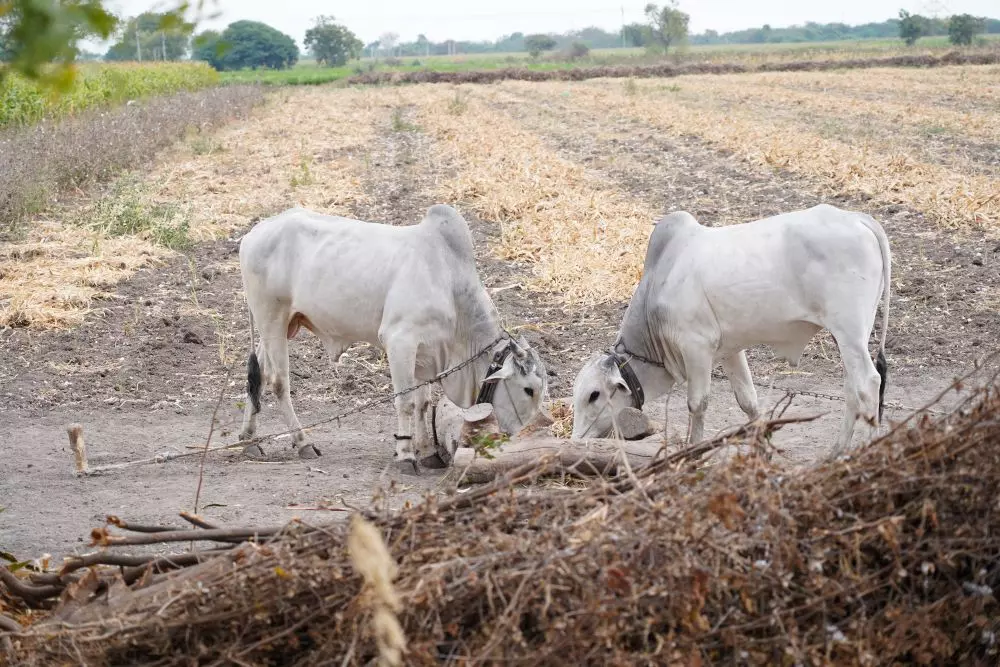
The villagers also do not slaughter cattle and no cattle fodder is ever burnt. Photo: Komanabelli Kiran Kumar
Then later, after another “vision” of the deity, this time purportedly instructing him to go to Ganjihalli village. Bade Saheb did as bade by the deity, where a local patwari, Nagireddy, is believed to have welcomed him to the village, saying that no Muslims were then residents of Ganjihalli.
Today, about 60 Muslim families are residents of Ganjihalli, a total population of nearly 200 people. The ban on milk sale is followed by residents irrespective of religious belief.
How that came to be is another anecdote involving Bade Saheb.
It is said about 400 years ago, a contagious disease spread among cattle in Ganjihalli and cows and buffaloes began dying.
One day, Bade Saheb, then a resident of Ganjihalli, wanted some milk and sent his son Hussain Saheb to fetch some. But since almost all the cattle were sick, no one was able to give milk. Finally, he went to the house of the village elder Pedda Nagireddy, who told him that their cow had died due to the disease and its body had been discarded near the Maremma temple at the edge of the village.
Determined to bring milk, Hussain Saheb went to the Maremma temple and prayed to the goddess, fearing his father’s anger if he returned empty-handed. Moved by his devotion, the goddess is said to have told him, “Call out your father’s name and raise the cow.”
Following her instructions, Hussain Saheb is believed to have called out: “Baba bole, doodh dev.” At his words, the dead cow purportedly stood up and gave milk to Hussain Saheb.
Witnessing this miracle, villagers are said to have requested Bade Saheb to help them save their cattle. The ‘Holy Man’ then instructed that no one in the village should sell milk, no cattle should be slaughtered and no cattle fodder should be burned. He also took a promise from the villagers that they would follow these rules.
To this day, residents of Ganhihalli follow the promise made to Bade Saheb.
Also read: Smell, stigma and supremacy: How 'food racism' shapes everyday life in India
“In this village, selling or buying milk is considered a sin. We believe we will incur the curse of our village guardian, Mahatma Bade Saheb, if we do so,” says Panagala Chodamma, a 26-year-old homemaker.
The belief is held by people across age groups and professions. Venkatesh Reddy, a 32-year-old real estate agent in the village, says it is something that has been passed down through the generations.
“The thought of violating the village rule never arises,” Tholu Ramudu, the village sarpanch, told The Federal. “We have heard from our elders that those who tried to break the rule in the past suffered misfortune — some such families were purportedly left with no descendants, while others faced financial losses. Because of these stories, no one in the village has ever seriously attempted to sell milk.”
Bade Saheb, it is said, attained ‘Jeeva Samadhi’ (becoming one with the universal consciousness) in 1679, but continues to be revered by residents of Ganjihalli as their spiritual guardian.
A dargah built in his memory draws people from across faiths.
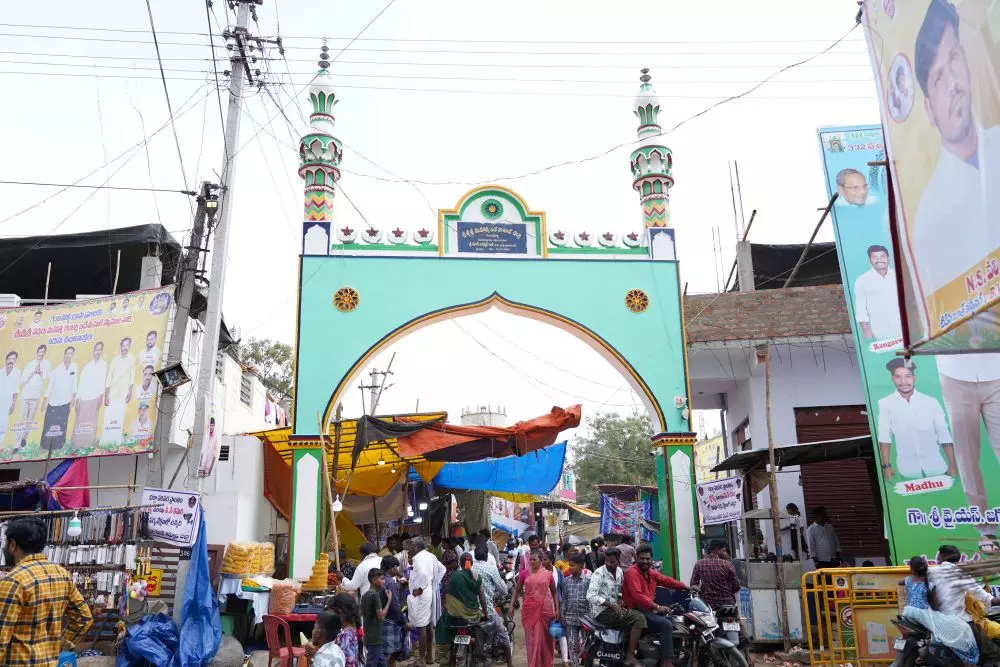
The dargah of Bade Saheb built by the villagers. Photo: Komanabelli Kiran Kumar
Syed Chinna Mudgol, who claims to be an eighth-generation descendant of Bade Saheb’s family and is the honorary chairman of the Bade Saheb dargah says the village “cultivates fodder on nearly 50 acres of land to feed the cattle”. “In our village, milk and curd are never sold. Cow slaughter is also prohibited. It is believed that if anyone violates these rules, misfortune will strike their family and their lineage will decline.”
Basha, quoted above, also claims to be a descendant of Bade Saheb.
Interestingly, the ban on the sale of milk and milk products is followed not only in Ganjihalli, but also in another nearby village, Kadimetla. While some accounts attribute the tradition here to the spread of Bade Saheb’s influence, others claim it originated in a curse pronounced by the village deity Chennakesava Swamy on members of the Yadava community, who traditionally rear cattle.
In Kadimetla, locals say they first offer milk produced as naivedyam (sacred offering) to the deity and then use it for household consumption. Some Yadava families also purportedly follow strict rules regarding milk consumption—drinking milk only on Saturday nights and Sunday mornings. Milk or buttermilk is distributed free to the sick and infants.
Even restaurant owners in these villages bring milk from nearby towns instead of procuring it locally. “Milk produced in Ganjihalli is largely meant for the needs of local residents. So, the thought of buying milk from villagers does not even arise for us. We purchase it from outside towns,” says Venkata Subbaiah, 52, who runs a small eatery in Emmiganur.
Sourcing milk from outside towns does take extra effort, but restaurant owners say they respect the tradition.
Also read: How a groundnut festival to appease a bull became a part of Bengaluru's cultural calendar
The ban on the sale of milk and milk products in Ganijihalli and Kadimetla is ironic, considering that Kurnool produces more milk than many other districts of Andhra Pradesh, according to available data. The Rayalaseema region, comprising the districts of Kurnool, Anantapur, Kadapa, Chittoor, Sri Sathya Sai, Nandyal, Annamayya and Tirupati, receives relatively low rainfall, making agriculture uncertain. Because of this, many farmers have traditionally depended on livestock rearing here — cows, buffaloes, and sheep — as an alternative means of livelihood.
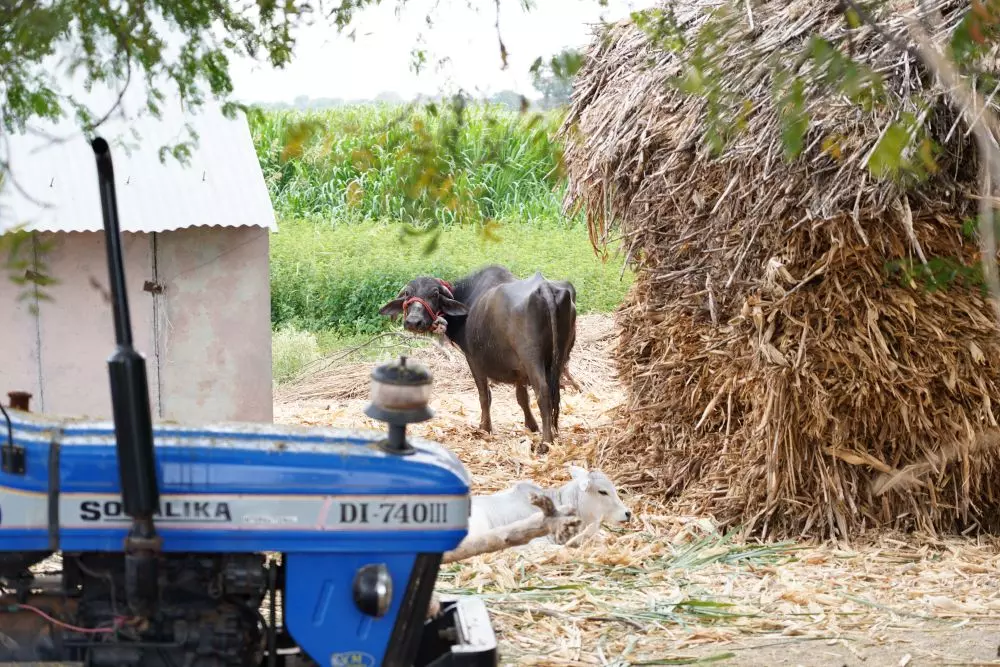
Even restaurants in the area do not buy milk locally and source it nearby towns. Photo: Komanabelli Kiran Kumar
But often local legends become more important than considerations of financial benefits, say observers. According to M. A. Srinivasan, an assistant professor in the department of history at the Suravaram Pratapa Reddy Telugu University in Hyderabad, the story of Ganjihalli reflects deeper traditions of social harmony in India.
“In today’s times, when cow slaughter often becomes the centre of communal tensions, this episode shows how Muslim Sufis approached the issue with harmony and sensitivity,” says Srinivasan. “Throughout Indian history, there have been numerous examples of religious coexistence. Figures like the Sufis and saints such as Kabir represent the interaction between faiths and the spirit of unity. Stories like that of Bade Saheb remind us of the diversity and harmony that define Indian society,” he said. He added that traditions such as the ban on milk sale in Ganjihalli, even if rooted in lore, often become powerful community norms that shape local culture and identity for centuries.
For generations, residents of Ganjihalli have continued to follow the path shown by Bade Saheb. In an age when profits dictate most life decisions, Ganjihalli offers a powerful message: “Earning goodwill is greater than earning money.”