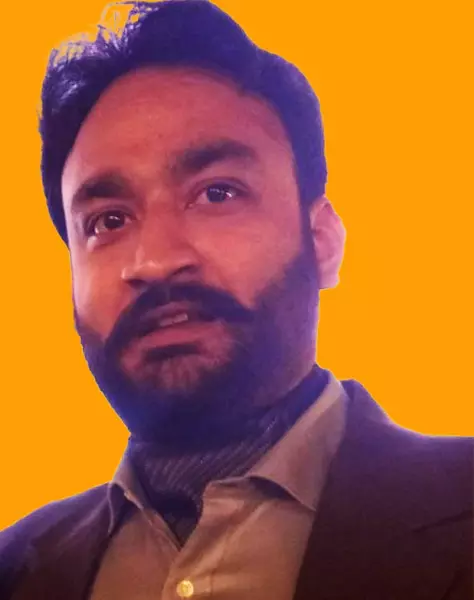
Arvind Kejriwal has shaped the AAP through autocratic control but needs to now prioritise inner party democracy over personal authority to allow honest feedback to reach him.. File photo
The CBI’s excise policy case, in which a trial court had discharged Arvind Kejriwal and his close associates, is now under appeal at Delhi HC. AAP MPs Raghav Chadha and Sandeep Pathak have joined the BJP, taking with them 5 others. At the centre of this churn is Kejriwal, whose political journey is indistinguishable from the trajectory of the party's – disruptive, meteoric and increasingly burdened by paradox.

In what has, for the past few years, become a cyclical pattern, Arvind Kejriwal and his Aam Aadmi Party (AAP) are once again besieged by multi-pronged crises.
The Central Bureau of Investigation’s (CBI’s) excise policy case, in which a trial court had discharged Kejriwal and his close associates, is now under appeal before a Delhi High Court judge visibly ranged against the AAP leadership. Raghav Chadha and Sandeep Pathak, two of Kejriwal’s most trusted aides, have not so long ago walked out of the party into the Bharatiya Janata Party’s (BJP’s) saffron embrace and taken with them five other Rajya Sabha MPs of the AAP. In Punjab, where polls are due early next year, the BJP is banking on Chadha and Pathak – authors of the AAP’s stupendous 2022 assembly triumph – to engineer en masse defections from the ruling AAP to its side. In Delhi, where the AAP’s political foundation was already shattered a year ago with a BJP sweep in the assembly polls, Kejriwal has been unable to revive the party.
Raghav Chadha and Sandeep Pathak with others. PTI file photo
To view this moment as a sudden collapse would be to ignore the deeper patterns that have shaped AAP’s journey since its inception in 2012. To many who have observed the AAP’s trajectory – its meteoric rise, its steady expansion beyond Delhi and now its descent into chaos – the current crisis is, as former AAP MLA and now Congress leader Rajendra Pal Gautam describes, “not an aberration but a logical culmination of Kejriwal’s dubious politics”.
At the centre of this churn, of course, is Arvind Kejriwal, whose personal political journey is indistinguishable from the trajectory of the party he founded – disruptive, meteoric and now increasingly burdened by paradox.
The immediate triggers of AAP’s present disarray may lie in a convergence of political setbacks, legal cases and organisational unrest, but to those who were Kejriwal’s early co-travellers in the party before they parted ways voluntarily or were hounded out by their Comrade-in-chief, this unravelling had been in the making for as long as the party’s own existence.
Also read: How Jitu Munda — Odisha man who carried dead sister’s skeletal remains to bank — became ‘a VIP’
The party was born out of the India Against Corruption movement led by Anna Hazare, a mass mobilisation that channelled widespread anger against corruption into a moral uprising. Kejriwal’s decision to transform that agitation into a political party had the makings of an experiment that sought to redefine Indian politics through the language of probity, transparency and participatory governance. That in just over a decade, the AAP is being accused of perpetrating the ills it had promised to rid Indian politics of is, according to a founding member of the AAP who returned to activism in Maharashtra after being disillusioned by AAP’s early political decisions, “a consequence of Kejriwal’s style of leadership and the choices he made”.
“He has no one else to blame but himself for turning what was intended to be a movement of peers into a party that is forced to worship him like a cult figure whose diktats can’t be questioned; someone who is above any kind of accountability. The decision to impose a liquor policy in Delhi that was clearly dubious even to those who don’t understand policy-making was Kejriwal’s, but the entire senior leadership of the party has got embroiled in cases because no one was allowed to question him. Same thing happened when wealthy industrialists and businessmen were chosen above ordinary party workers to represent AAP in Rajya Sabha; everyone knew these are people the BJP will find easy to compromise, but none confronted Kejriwal because they saw how Yogendra Yadav and Prashant Bhushan were hounded out of the party for demanding some ideological grounding for the party,” the AAP co-founder told The Federal.
Early members of the AAP say the party’s choice to keep its ideological foundations amorphous was deliberate in the beginning, for by not taking a hard Left nor Right ideological position, the AAP distinguished itself from legacy outfits by foregrounding as its guiding principles anti-corruption, administrative efficiency and decentralisation of power – easy promises to draw voter attention and admiration. The strategy allowed Kejriwal to attract a diverse set of voters, irrespective of their ideological tilts, and storm to power not just in a largely ideologically-neutral urban space like Delhi but also expand, in time, in rural Punjab or Gujarat.
“The ambiguity proved electorally advantageous in the short term. AAP’s consecutive victories in the 2015 and 2020 Delhi Assembly elections appeared to validate its model of politics built on a carefully crafted narrative of moral superiority and administrative efficiency. It continued to reap dividends in Punjab and even pockets of Narendra Modi’s Gujarat. In time, however, the complete absence of an intellectual core has come to haunt the AAP – attracting accusations from the Right of not being Right enough and from the Left of being too Right; the BJP’s B-Team,” says political commentator Sushil Kumar Singh.
If ideological ambiguity created the conditions for confusion, Kejriwal’s leadership style, says former AAP spokesperson Brijesh Kalappa, “ensured that this confusion translated into organisational frailty”.
“Authority within AAP has always been concentrated around Kejriwal; others can suggest ideas but only if they align with what Kejriwal has already decided on. This centralisation stunted any scope for honest organisational introspection when things began to go wrong after the liquor policy case, but since there was never any mechanism to raise concerns within, there was nothing anybody could do,” Kalappa explains.
Over time, loyalty to Kejriwal alone came to be valued while “independent political thinking was strongly discouraged; even penalised”, says former AAP MLA and now Congress’ women’s wing chief Alka Lamba. The rise of Raghav Chadha and Sandeep Pathak to positions of significant organisational influence exemplified this trend. Their elevation reflected the absence of a leadership grounded in ideological clarity or political and organisational experience but was, ironically, passed off as a sign of building a second rung that could carry the AAP’s baton forward if and when Kejriwal, Sisodia, Sanjay Singh and other A-listers of the party got enmeshed in the BJP’s crosshairs (as they eventually did).
The party’s reliance on figures like Chadha and Pathak for overseeing critical electoral and organisational matters, coupled with Kejriwal’s decision to parachute businessmen like Vikramjit Sawhney, Rajinder Gupta and Ashok Mittal – all in the BJP now – to the Rajya Sabha, underscored the AAP’s centralised control that has now turned into the main source for destabilising the party.
Also read: How some of Delhi’s erstwhile ‘refugee colonies’ evolved into upscale neighbourhoods
Simultaneously, the erosion of AAP’s anti-corruption plank following mounting graft cases against Kejriwal and his aides, no matter how politically motivated they may or may not be, has dealt a double whammy. The organisation has been destabilised and its avowed raison d'être – a crusade against corruption – has turned into the biggest recrimination Kejriwal and his coterie now face.
“For a party that derived its legitimacy from the promise of clean governance, the mere perception of its corruption is electorally fatal. Kejriwal’s own position within this narrative has become the AAP’s greatest liability for reasons that are both electoral and organisational. Electorally, the liquor scam and the whole tamasha over Sheesh Mahal have done irreversible damage to the AAP’s image. These allegations have also given AAP leaders a convenient excuse to quit the party. Many AAP leaders also fear they are being targeted by central probe agencies only because the BJP wants to fix Kejriwal and so those who can’t take that pressure are deserting the party,” explains Singh.
The spiralling atrophy of AAP, coupled with the pressures its top leadership faces from central probe agencies, has also forced Kejriwal to be on a perpetual campaign of soliciting support from the very Opposition leaders he once dissed as corrupt and worthy of a prison cell. If Sharad Pawar, Lalu Yadav, MK Stalin, the entire Congress party and countless other Opposition leaders who were part of the United Progressive Alliance (UPA) government when the AAP was born were graft-tainted untouchables for Kejriwal in the early life of his party, he projects today with all of them a common bond — victimhood. The only exception to Kejriwal’s generous clean chits remains the Congress party and its first family — the Nehru-Gandhis — who Kejriwal continues to berate every time he wants to expand the AAP in a territory where the Congress is the BJP’s principal rival.
Arvind Kejriwal with Manish Sisodia after being discharged in the excise case. File photo
This hypocrisy manifests not just in Kejriwal’s rhetoric but practically in every aspect of AAP’s functioning. Mayank Gandhi, another AAP co-founder who quit the party in 2015 and went on to author AAP and Down: An Insider’s Story of India’s Most Controversial Party in 2018, long before Kejriwal became truly synonymous with controversies, believes AAP’s core ideology is “political advancement through deception, hypocrisy and compromise”.
“Hypocrisy is Arvind’s second nature and it has rubbed off on AAP too. The signs were visible right from the start, but everyone chose to rationalise or overlook them. Transparency in the party’s finances, fixed terms for the party chief, not giving tickets to people with a criminal record, our MLAs and ministers not taking government accommodation or other perks – these were promises we made when the AAP was formed and every one of them was broken by Kejriwal... The way Rajya Sabha MPs were chosen in Punjab, all those people who have now gone over to the BJP; it was always clear there was money involved. The liquor policy, the Sheesh Mahal controversy, the manner in which Arvind and others have been wasting government resources and public money in Punjab; this is not why we built the AAP but this is what AAP is now defined by,” says Gandhi.
The AAP’s rout in Delhi in 2025, with Kejriwal and Manish Sisodia too losing their seats, marked a tipping point. It laid bare the harsh truth that Kejriwal’s political capital was neither infinite nor immune to erosion. The current wave of defections and internal discord has only reinforced the perception of a party struggling to maintain its coherence in the face of mounting challenges.
In little over a decade, the AAP has gone from what veteran political commentators such as Pratap Bhanu Mehta, Ramachandra Guha and Harish Khare had variously described as a party that had the potential to become the BJP’s main national alternative to an outfit struggling to fend off a crisis of the scale that often unfolds for legacy political parties like the Congress over a span of decades.
Also read: Why, despite laws and court orders, sanitary workers continue to die in toxic fumes-filled manholes
The present moment, marked by legal battles, political defections and internal turmoil, portends a reckoning. Can Kejriwal and his remaining cohort confront the contradictions that have defined and stunted the party’s journey? It’s hard to predict, but questions to this end meet with a deafening silence from party spokespersons like Saurabh Bharadwaj and Priyanka Kakkar or are simply dubbed as propaganda by AAP leaders like party legislator Kuldeep Kumar, who bluntly told this reporter that “questioning Kejriwal’s integrity or AAP’s honesty is a sin”.
Kumar’s assertion only reaffirms a refusal within the AAP to introspect the triggers for its current morass. To navigate its current crises, the AAP needs to “reinvent and redefine itself”, says former AAP spokesperson Prof. Akashdeep Muni, and “spell out its ideology unambiguously, decentralise authority, bring in a system of accountability and purge itself of the opportunists who have sidelined honest party workers”. A tall ask, all things considered,
For Kejriwal, whose anarchist leadership has been both the party’s greatest asset and its most significant liability, the challenge is particularly acute. He has shaped the AAP through autocratic control but needs to now prioritise inner party democracy over personal authority to allow honest feedback to reach him. Whether he is willing or able to undertake such a shift is hard to tell.
The AAP, for millions, began as a promise. Today, it’s been downsized to a paradox. The bold experiment of redefining Indian politics has been replaced with the traditional political model of expediency, compromises and cult-worship. Can it be redeemed?