



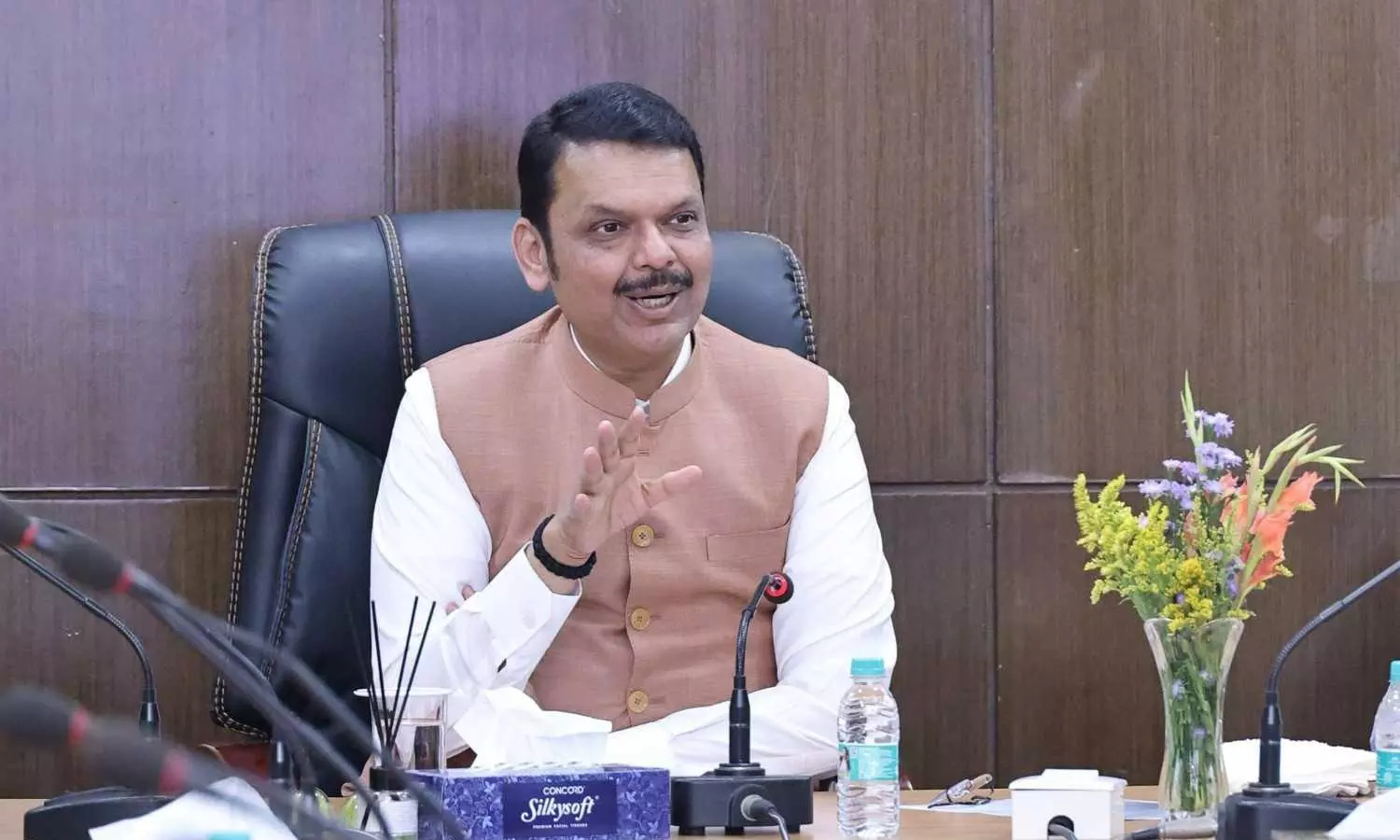
'Paatal Lok' tunnel network: Fadnavis unveils major plan to ease Mumbai traffic
Maharashtra CM Fadnavis noted that the planned underground roads are designed to provide seamless travel across multiple directions and ease pressure on Mumbai’s arterial routes

Maharashtra Chief Minister Devendra Fadnavis on Monday (November 24) announced plans for an extensive underground network of tunnels across Mumbai, aimed at easing the city’s persistent traffic congestion.
Speaking at the IIMUN (India’s International Movement to Unite Nations) Youth Connect session, Fadnavis referred to the proposed tunnel system as a “Paatal Lok”, drawing a light-hearted comparison with the popular Hindi web series of the same name.
The remark quickly went viral, as the web series Paatal Lok is widely known for its depiction of the netherworld.
Fadnavis announces Mumbai's 'Paatal Lok'
Explaining the initiative, the Chief Minister said, “We are creating a ‘Paatal Lok,’ a widespread network of tunnels across Mumbai for complete decongestion.”
“It will function as a parallel network to the existing roads,” he said, adding that the tunnels would complement the ongoing metro expansion to create an integrated urban transport system.
Also Read: Devendra Fadnavis asserts Mahayuti unity ahead of Maharashtra local polls
Fadnavis noted that the planned underground roads are designed to provide seamless travel across multiple directions in the city.
The government, he said, has a comprehensive plan to construct a city-wide web of tunnels and parallel routes alongside chronically overcrowded roads to ease pressure on Mumbai’s arterial routes.
Network of parallel roads to ease traffic
He also cited the coastal road from South Mumbai to Bhayandar in Thane district as a key element of the plan, which would serve as a barrier-free alternative to the Western Express Highway.
“Sixty per cent of Mumbai travels on the Western Expressway. Unless you decongest it, there is no solution. We are creating a network of parallel roads where your average speed will be 80 km per hour,” Fadnavis said.
Also Read: When promises run dry: Maharashtra’s farmers and the post-Diwali uprising
The Chief Minister provided details of ongoing and upcoming tunnel projects, including the Thane-Borivali and Mulund-Goregaon tunnels, which are expected to improve east-west connectivity.
A parallel road linking Borivali and Goregaon and the Worli-Shivdi connector, due to open next year, are planned to connect the Atal Setu with the Bandra-Worli Sea Link, allowing smoother movement across the city, he said.
Fadnavis further outlined a proposed tunnel linking the Atal Setu to Girgaon Chowpatty via the Eastern Express Highway, slated for completion in three years.
“This underground stretch will reach Girgaum Chowpatty and is expected to significantly reduce congestion in south Mumbai,” he added.
'Mumbai One' app to streamline commuting
Additionally, a planned tunnel from Bandra to the Bandra Kurla Complex is expected to cut travel time to the domestic airport to just 20 minutes.
On public transport, the Chief Minister highlighted the launch of the integrated "Mumbai One" app, which will allow commuters to use a single ticket for the Metro, suburban rail, and BEST buses.
Also Read: CM Fadnavis mocks Aaditya Thackeray, says he should not become 'Maharashtra’s Pappu'
“Nearly 90 lakh people use suburban trains daily. Despite these changes, the second-class fare will not increase by even a single rupee,” he assured.
He also stated that all suburban train services will gradually transition to air-conditioned coaches to enhance passenger comfort.