



‘Modi Tattva’ makes academic debut as Gujarat university updates sociology syllabus
Maharaja Sayajirao University in Gujarat introduces a sociology course examining PM Modi’s leadership, “Modi Tattva,” and RSS history through a sociological lens

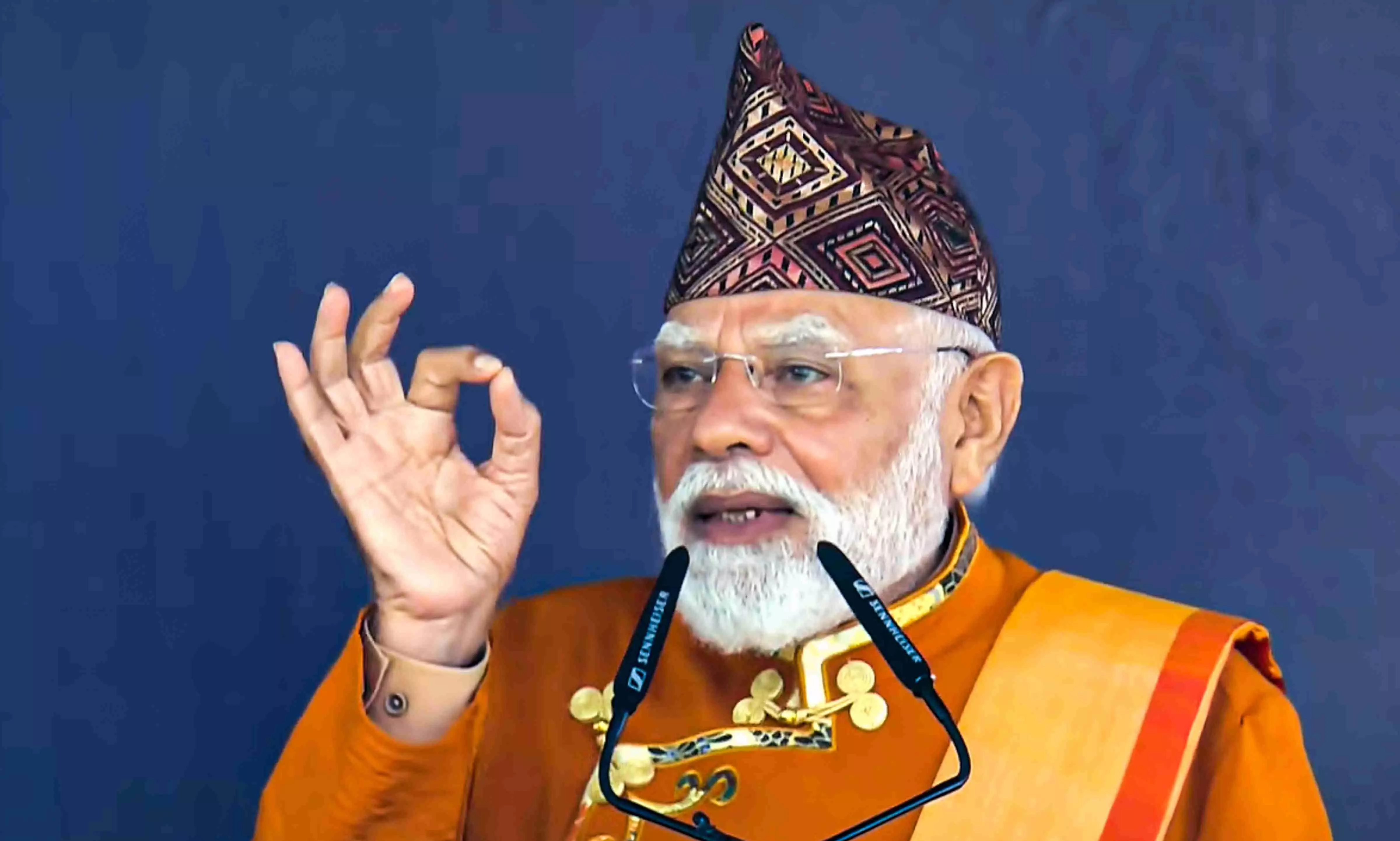
Prime Minister Narendra Modi, or to be more precise, his "charismatic leadership" described as "Modi Tattva" and the history of the RSS, have entered university textbooks in Gujarat, with a university in Vadodara introducing the two topics into its Sociology syllabus to study their impact on society.
New course framework
The initiative has been taken by the Maharaja Sayajirao University through its new course "Sociology of Patriotism" in its two-year Master's in Sociology programme. According to Dr Virendra Singh, the head of the sociology department, the move is aimed at scientifically analysing "Modi Tattva" and the works of social reformers like Chhatrapati Shivaji Maharaj and Sayajirao Gaekwad III.
Also Read: PM Modi says he will return to Bengal for BJP CM swearing-in, attacks TMC rule
Singh argued that PM Modi’s impact on the political field and in the leadership has to be discussed, whether anyone likes it or not. Elaborating further, he said that the aim is to study sociologist Max Weber's charismatic leadership observed in Mahatma Gandhi and Martin Luther King, adding that the same quality is present in PM Modi.
"Whether you like it or not, you will have to discuss PM Modi in a political field and a leadership role. He is an element that will remain there for a long time. We wanted to study sociologist Max Weber's charismatic leadership, seen in Mahatma Gandhi and Martin Luther King. The same kind of charismatic leadership is seen in PM Modi. That is a scientific matter that needs to be inquired into," said Singh.
What is ‘Modi Tattva’?
Singh, who is also a part of the NITI Aayog's project to monitor public projects, further stated that the "Modi Tattva" will also be the focus of topics like media and digital nationalism, citizenship and dissent, and globalisation and identity politics, which are all part of the syllabus.
Also Read: Modi attacks TMC over ‘Maa, Mati, Manush betrayal', says ‘sins will be exposed’
"These three parts will work scientifically on the concept of Modi Tattva, and talk about why he is becoming so famous, how his acceptability is so widespread, what is so great about him as he remains in power for the longest period in India," he added.
Singh claimed that PM Modi’s policies, such as demonetisation, digital revolution, Fastag, Jal Shakti Ministry, etc., reflect how well he captures what people want, and that may be the reason he gets such support from them.
Course structure
The "Sociology of Patriotism" module will have four papers, each with 15 hours of teaching, Singh said.
He explained that the idea for the modules came when the department's MA students were conducting surveys in remote villages as part of the NITI Aayog's monitoring of public policies.
Also Read: PM Modi says ‘positive progress’ being made on UCC, One Nation One Election
"We realised that certain groups of people were working in these villages for implementation of these projects, and they were associated with the Rashtriya Swayamsevak Sangh (RSS)," Singh said, adding that a scientific sociological inquiry into the group was required.
Broader historical lens
He said that the papers will also cover units on understanding nationalism, the nation-state, and cultural nationalism with a global perspective, and on pioneers who have worked on social reforms, including Maharaja Sayajirao Gaekwad III, the erstwhile ruler of Baroda, and Chhatrapati Shivaji Maharaj, the first person to talk about Hindu Swaraj.
(With agency inputs)