



DMK shapes its ‘support’ for Delimitation Bill around a single point: seat freeze
DMK's support is linked to the freeze that has protected TN's Lok Sabha tally since the 1970s: keep it, extend it by another 25 years, and its opposition to the Bill largely melts away

Three months ago, DMK cadres were setting fire to copies of the Delimitation Bill on the streets. Today, the party is quietly signalling it could vote for it.
The reversal isn't unconditional, and hinges almost fully on data from a nearly six-decade-old Census.
The party’s support is linked to the freeze that has protected Tamil Nadu's Lok Sabha tally since the 1970s: keep it, extend it by another 25 years, and the party's opposition to the Bill largely melts away.
That freeze — introduced by the 42nd Constitutional Amendment in 1976 and pegged to the 1971 Census — is due to expire once the ongoing Census is published, sometime in 2027. Losing it would open the door to a full population-based reallocation of seats, one that would almost certainly cost Tamil Nadu and its southern neighbours. Everything else in the DMK's current bargaining position flows from trying to stop that.
From black flags to a checklist
When the DMK still ran the state government, it fought the delimitation proposal harder than any other opposition party, the Congress included. Then-Chief Minister MK Stalin brought non-BJP Chief Ministers — Mamata Banerjee, Siddaramaiah, Pinarayi Vijayan, none of whom is in power now — to Tamil Nadu for a joint show of strength.
He called delimitation a Damocles sword over the South, torched a copy of the bill, and led marches across the state. The party's argument was simple: states that controlled their population growth shouldn't be punished for it with fewer MPs.
Also read: TMC split, DMK-Congress divorce: New Delimitation path opens up for BJP
Since the 2026 Assembly elections, the ground has shifted under the DMK. Joseph Vijay's Tamilaga Vettri Kazhagam (TVK) won power in Tamil Nadu, the Congress broke from the DMK-led alliance to back the new TVK government, and the DMK's old anchor to the INDIA bloc came loose. Freed from some of those old alignments, the party has room to negotiate on its own terms — and it appears to be doing exactly that.
What the DMK is actually asking for
Party sources say the conditions are:
a) Extend the freeze by 25 years. The seat count frozen at 1971 Census levels should stay untouched for another quarter-century rather than being reset against the new Census.
b) Alternately, if at all the seats are to be increased, there should be a flat 50 per cent increase in seats for every state, and the enabling provision for this should be explicitly mentioned in the Bill.
Also Read: DMK hasn’t softened stance on delimitation; Stalin will never align with BJP: MP Salma
Rather than reallocating seats by population, the DMK wants every state's Lok Sabha strength bumped up by the same proportion — something Union Home Minister Amit Shah had verbally assured political parties when the Constitution (131st Amendment) Bill was first discussed in the Lok Sabha in April. Shah's assurance, however, was not mentioned in the Bill that was introduced in Parliament.
c) Full transparency on the redrawn map. The Centre should publish the complete list of revised constituencies for every state alongside the legislation, not after the legislation is passed.
BJP needs two-thirds majority
The logic behind the flat increase is straightforward: if every state's seats grow by the same percentage, no state's representation in Parliament changes, even as the House itself gets bigger.
The numbers involved have moved around. The Constitution (131st Amendment) Bill introduced in April sought to take the Lok Sabha from 543 to 850 seats. As the Centre failed to muster the two-thirds majority required to pass a constitutional amendment, the Bill was defeated.
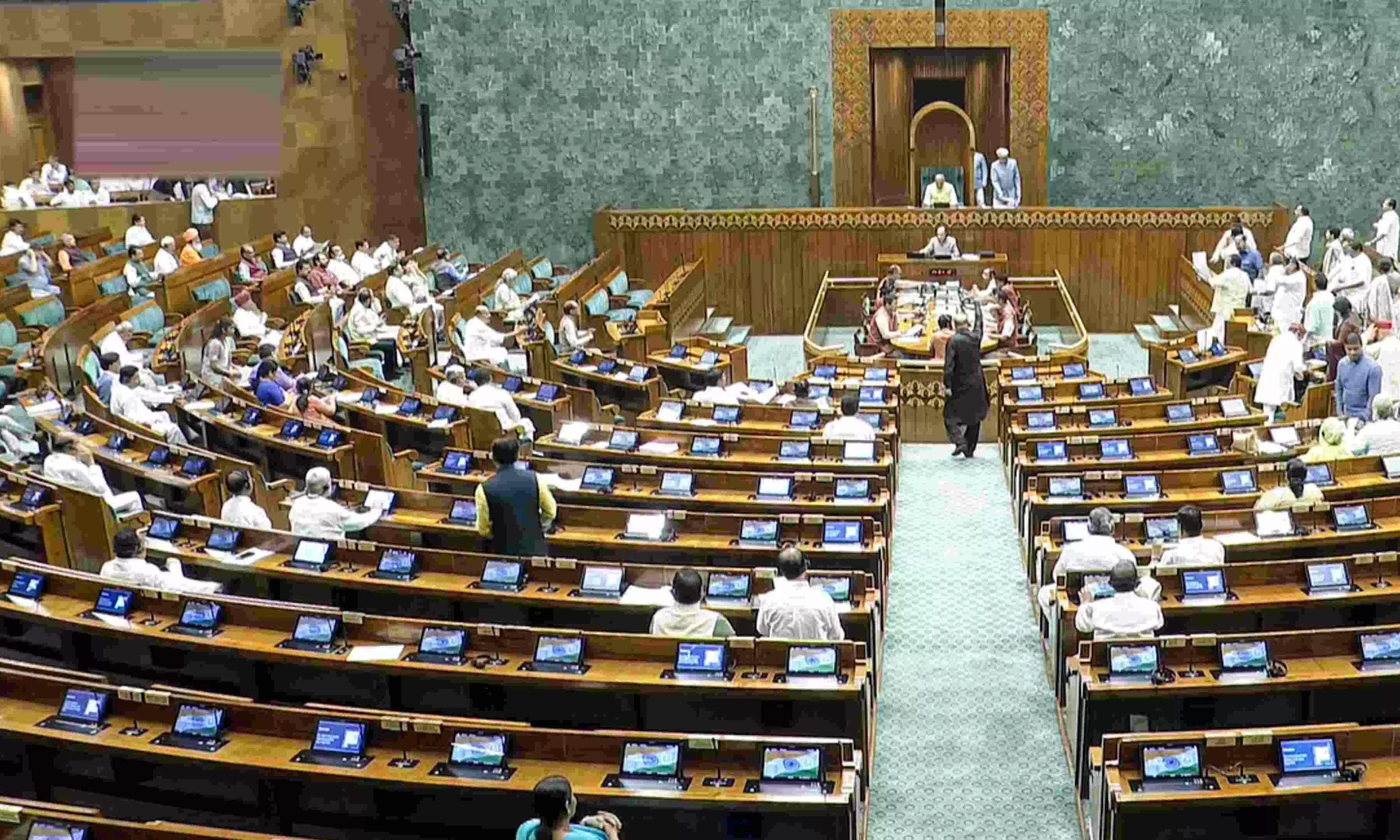
Either way, the Bill needs a two-thirds majority in both Houses to pass, which the Modi government currently lacks in the Lower House. This is why the Centre is courting regional parties like the DMK to give it the numbers needed to push the Bill in the Lok Sabha.
Cautious stand
The DMK spokespersons are still choosing words carefully in public, even as the conditions circulate privately.
DMK MP Tiruchi Siva told The Federal that the party couldn't comment without knowing the government's intentions on the bill. The party's Organising Secretary RS Bharathi struck a similar note: the DMK has already defeated one version of the bill, it would examine any new one on its merits, and would not need to oppose it if its recommendations are incorporated in the bill. Media Relations Committee chief TKS Elangovan pointed out that the freeze has shielded the South for two decades, and said the party would study whatever comes next.
Also Read: Inside the delimitation battle: What Centre wants and why Opposition is resisting
Senior journalist RK Radhakrishnan, who has tracked the DMK's internal deliberations, told The Federal that the timeline matters: the bill needs to pass before the end of 2026, or the freeze lapses and delimitation proceeds on raw census numbers regardless. If the Centre agrees to hold Tamil Nadu's roughly 7.3 per cent share of the seats steady, he expects the DMK to fall in line. He also flagged Rahul Gandhi's recent dig at supporters of the bill in Tamil Nadu — calling them traitors — as a sign of where the DMK-Congress relationship now stands.
Political cost
The Centre, for its part, has been reaching out to DMK leaders to build support for a revised bill. But Parliamentary Affairs Minister Kiren Rijiju has denied that any special session is planned for mid-August to take up the women's reservation and delimitation bills together, so the immediate timeline remains unclear.
There's also a political cost to weigh. Open support for a BJP-led constitutional amendment could dent the DMK's standing with a base that has spent two decades associating the party with anti-BJP politics. The DMK insists it hasn't gone soft on state rights — only that it will judge the bill on its final text, not its origin.
Also Read: Why delimitation Bills appear more ominous than originally thought
The party has walked this line before. Under M Karunanidhi, it allied with the BJP during the Vajpayee years before becoming one of the party's most consistent opponents. Its leaders have previously drawn a line between the "Vajpayee BJP" and the "Modi-Amit Shah BJP" to explain that earlier alliance. Whether a similar explanation holds up if the DMK ends up voting for a Modi government bill is, for now, an open question.
