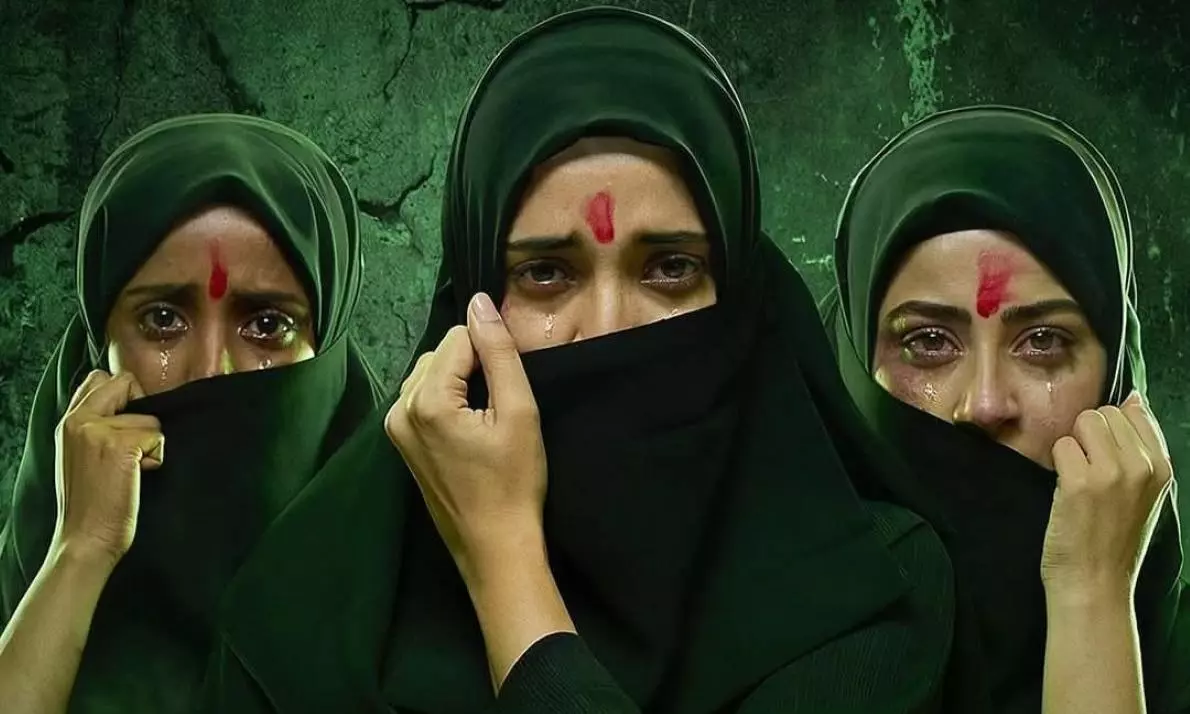
‘The Kerala Story 2’ release in limbo as HC reserves order on appeal
The petitioners opposing the film’s release contended that, as individuals born and living in Kerala, they were personally affected by the title and promotional material

The Division Bench of the Kerala High Court on Thursday (February 26) reserved its verdict on an appeal challenging the interim order that stayed the release of ‘The Kerala Story 2’ for 15 days. The appeal was moved against the single Bench order that had restrained the film’s theatrical release and directed the Centre to consider a pending revision petition against its certification.
A Bench comprising Justices Sushrut Aravind Dharmadhikari and PV Balakrishnan heard arguments even after normal hours for nearly two-and-a-half hours after proceedings began at 7:30 pm. The producers of the film sought urgent lifting of the stay, arguing that any further delay would cause substantial financial losses. The Bench, however, indicated that orders would be pronounced later.
Interim order
The appeal arises from a February 26 order passed by Justice Bechu Kurian Thomas in two writ petitions challenging the certification granted by the Central Board of Film Certification for the film titled ‘The Kerala Story 2 – Goes Beyond’. The petitioners had sought reconsideration of the certification under Section 5B of the Cinematograph Act, 1952, and also filed a revision petition before the Union government under Section 6 of the Act.
Also read: Kerala Story 2 plea: ‘Kerala lives in total harmony’, says HC; orders removal of teaser
In his interim order, Justice Thomas held that the writ petitions were maintainable, rejecting objections that they were in the nature of public interest litigation. The petitioners had specifically pleaded personal injury, including reputational harm as residents of Kerala, and contended that the portrayal of the State in the film affected their fundamental rights.
The single Bench referred to specific screenshots from the teaser that were produced before the court, including the epigraph “Inspired by true events”, a dialogue stating “Our mission is to convert Hindu girls”, and visuals suggesting the enforcement of Sharia law across India. The Central Board of Film Certification (CBFC) conceded that these visuals formed part of the film and had not been excised.
Influencing public perception
Citing the Supreme Court’s judgment in S Rangarajan v P Jagjivan Ram, the court underscored the powerful impact of cinema as a medium and the need for careful scrutiny where content may affect public order or communal harmony. It observed that while courts must be slow to interfere at the 11th hour, prima facie material indicated a possible failure to apply statutory guidelines relating to public order, decency and communal harmony.
The single Bench noted that the film is a sequel to ‘The Kerala Story’ and that repeated portrayal of similar themes could cumulatively influence public perception. It expressed concern that the depiction might create contempt for a religious group or portray Kerala as a hub of communal division, potentially affecting the State’s reputation globally.
While admitting the writ petitions, the court directed the Union government to consider and dispose of the revision petition within two weeks after hearing all stakeholders. In the meantime, it ordered an interim stay on the release of the film for 15 days to ensure that the statutory remedy was not rendered infructuous.
What producers said
Before the Division Bench, the producers contended that the writ petition itself was not maintainable and that there was nothing in the film that portrayed Kerala in a derogatory manner. They argued that the film exposes a social evil and that highlighting instances of radicalisation or forced conversion by a few individuals belonging to a religion cannot be equated with targeting an entire community.
According to the producers, the first part of the film depicted a social menace involving a limited number of individuals in Kerala, while the sequel expands the narrative to other States such as Madhya Pradesh and Rajasthan. They maintained that the CBFC had filed an affidavit stating that nothing in the film denigrates Kerala. The CBFC, they said, had examined the film in detail and directed 15 excisions, resulting in removal of nearly two minutes of footage.
They further argued that the existence of opposition from a section of viewers cannot justify restraining the release of a certified film. Relying on Supreme Court precedents, counsel submitted that once a film is certified, courts should not ordinarily interfere unless there is a clear violation of statutory provisions. The producers also pointed out that the writ petition was styled as a public interest litigation, which, under High Court rules, ought to have been considered by a Division Bench at the outset.
What petitioners said
On the other hand, the petitioners opposing the film’s release contended that, as individuals born and living in Kerala, they were personally affected by the title and promotional material. The teaser and trailer, they argued, created a negative impression about the State and its people, thereby infringing their right to reputation. In such circumstances, they said, they were entitled to approach the court, and the writ petition was maintainable.
They reiterated that the film’s tagline and visuals could foster communal disharmony and that the certification process had failed to adequately consider the statutory guidelines intended to safeguard public order and communal harmony.
With the Division Bench now having reserved orders on the appeal against the interim stay, the immediate fate of ‘The Kerala Story 2’ hinges on whether the court will permit its release pending consideration of the revision petition, or allow the single Bench’s protective order to continue.