



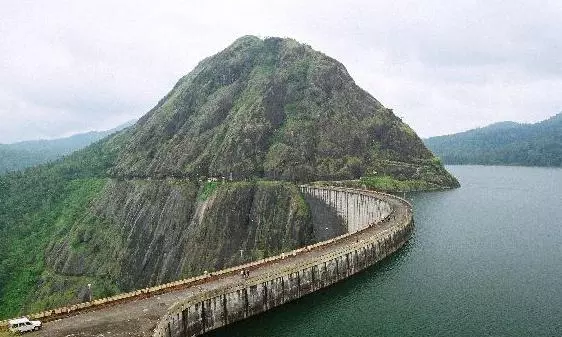
Kerala dams fill up as rains boost hydel prospects; Idukki storage crosses 43 pc
With catchment areas still receiving rain, state’s immediate priority is to closely monitor inflows, storage, and control releases at reservoirs approaching operational limits

Water levels in Kerala’s major hydel reservoirs have risen sharply following sustained monsoon rains, improving the state’s power-generation prospects even as the continuing inflow keeps the dam management system under close watch.
The latest Kerala State Electricity Board Limited (KSEB) figures show that Idukki, Kerala’s largest hydel reservoir, is holding 43.47 per cent of its live storage capacity, with 634.45 million cubic metres (MCM) of water as of 11 am on August 4.
Storage up by 11 percentage points
The improvement comes after three consecutive days of heavy inflow into the reservoirs. Over the three days, the overall storage in KSEB reservoirs increased by around 11 percentage points. Although rainfall intensity in the catchment areas has eased slightly, water levels are not expected to fall immediately because inflows from upstream areas are likely to remain substantial.
Also read: Kerala rain crisis: 15 dead as key reservoirs hit high-alert levels
The sustained inflow is particularly significant for Kerala’s power sector. Higher reservoir storage provides KSEB with greater flexibility to operate its hydel stations and generate electricity, potentially reducing the pressure to rely on more expensive power purchases from outside the state. The availability of water also gives the utility greater room to manage generation through the remaining monsoon months.
Water levels improve in key reservoirs
The latest figures show that several of the state’s major reservoirs are now carrying substantial storage. Kakki-Anathode in Pathanamthitta has reached 50.51 per cent of its storage capacity, with live storage of 226 MCM, while Pamba stands at 43.15 per cent and Moozhiyar at 45.60 per cent. In Idukki district, besides the main Idukki reservoir at 43.47 per cent, Ponmudi has recorded 62 per cent storage, while Anayirankal is at 24.98 per cent, Kundala at 30.85 per cent, and Kallar at 26.96 per cent.
The Idamalayar reservoir in Ernakulam is at 48.85 per cent of its total storage capacity, while Sholayar in Thrissur has 48.43 per cent storage. Banasurasagar in Wayanad has the highest storage among the major reservoirs listed in the latest bulletin – at 58.08 per cent.
Also read: How Wayanad tragedy has exposed invisibility of Kerala's migrant workers
The situation marks a significant improvement from the position a little over a week ago. The combined storage in KSEB’s major reservoirs stood at around 30 per cent on July 25, equivalent to 1,225.7 million units (MU). By August 2, it had climbed to 43 per cent, or 1,762.33 MU. Though this remained below the storage recorded on the same date in 2024 and 2025, it was higher than the corresponding level in 2023.
Highest single-day inflow in 5 years
The intensity of the inflow is also noteworthy. KSEB reservoirs recorded their highest single-day inflow in five years on Sunday (August 2), with inflow equivalent to around 147.599 million units of electricity. Such inflows can rapidly alter reservoir levels, particularly when heavy rainfall is concentrated in the catchment areas of power projects.
The latest KSEB bulletin also indicates that there are currently no warnings for the major reservoirs listed in the August 4 update. This represents a change from the situation on August 3, when six reservoirs were under alert conditions.
Also read: Met department forecasts below-normal rainfall in Aug-Sept, barring parts of India
The August 3 alert bulletin had placed Moozhiyar, Kallarkutty, Erattayar, Lower Periyar, Poringalkuthu and Kuttiyadi under various stages of warning. Lower Periyar had reached 100 per cent of its live storage at full reservoir level, while Kallarkutty was at 98.48 per cent and Kuttiyadi at 96.86 per cent. Poringalkuthu was at 56.93 per cent, with a spillway release of 177.08 cubic metres per second. The situation underlines how quickly reservoir conditions can change during an intense spell of monsoon rainfall.
Opportunity and challenge
For KSEB, the rise in storage is both an opportunity and a management challenge. Greater water availability means increased potential for hydel generation, but the utility has to balance generation requirements with reservoir safety and downstream flows. If heavy rainfall continues, controlled releases may become necessary at reservoirs approaching their operational limits.
For consumers, the improved storage position could provide some relief on the power front. Hydel generation is a relatively important component of Kerala’s electricity mix, and better water availability allows KSEB to maximise generation from its own stations when operational conditions permit.
The immediate concern, however, is not a shortage of water but the pace of inflow. With catchment areas still receiving rain, reservoir levels could remain elevated even after rainfall intensity has marginally declined. KSEB will therefore have to closely monitor inflows, storage and spillway conditions while simultaneously making the best use of the additional water for power generation.
Also read: Flood here, drought there: A tale of two Indias in monsoon
For now, the latest figures point to a clear turnaround: Kerala’s reservoirs have moved from water scarcity concerns to a position where abundant inflows are strengthening the state’s hydel generation potential, while keeping dam management firmly at the centre of the monsoon response.
Red Alert issued
The India Meteorological Department (IMD) has issued a Red Alert for Kerala, warning of very heavy rainfall at isolated places. However, the department has clarified that the alert does not indicate a likelihood of “extremely heavy rainfall”. The Red Alert has been issued considering the forecast of very heavy rain as well as the cumulative impact of rainfall received across the state in recent days.
According to the IMD, a cyclonic circulation is currently situated over southern Karnataka and adjoining areas at an altitude of around 5.8 km above mean sea level. Another cyclonic circulation is located over the central-western Bay of Bengal and adjoining coastal Andhra Pradesh, extending up to around 4.5 km altitude.
Kerala is expected to receive light to moderate rainfall from August 4 to 8, with isolated heavy rainfall likely during the period. The weather department has also warned of strong winds and rough weather along the Kerala-Lakshadweep coast. On August 4, 5 and 6, winds are expected to reach 40–50 kmph, gusting up to 60 kmph at times.