West Asia conflict has Karnataka’s garment, silk sectors rattled
If the situation continues, the state's garment sector could lose more than Rs 1,000 crore a month, according to trade sources

The Middle East conflict has moved well beyond oil prices. It is now cutting deep into Karnataka's garment factories and silk farms — threatening livelihoods across the state.
Garment hubs in limbo
Major garment centres like Bellary and Bengaluru are bleeding. International buyers are cancelling contracts as shipments pile up at ports and airports, unable to move. Overall, new orders in March 2026 have fallen by an estimated 25–30 per cent.
Also read: As Iran war hurts international trade, inflation looms large for the common man
The numbers put the stakes in perspective. India exported readymade garments worth USD 16–18 billion annually in 2024–25, with the EU (32 per cent), the US (27 per cent), the UAE and Arab countries (12–15 per cent), and the UK (10 per cent) as its biggest markets. The government had set an ambitious target of USD 100 billion in textile exports by 2030. That target is now looking increasingly out of reach.
Exports have already dropped 15–20 per cent over the past few months, and goods worth an estimated USD 2 billion are believed to be stranded on ships or at airports. Karnataka alone accounts for 20 per cent of India's total garment exports. "If the situation continues, the state's garment sector could lose more than Rs 1,000 crore per month," one industry insider told The Federal Karnataka — speaking on condition of anonymity.
Silk farmers feeling the pinch
The Gulf Cooperation Council countries - Saudi Arabia, UAE, Kuwait - are the biggest buyers of Indian silk. With war looming, consumers are cutting luxury spending. The result: an 8 per cent drop in demand for Indian silk exports, and a flood of unsold inventory now flowing back into the domestic market.
The consequences are already visible on the ground. In Ramanagara and Shidlaghatta, Karnataka's silk heartland, cocoon prices have collapsed. A kilogram that once touched Rs 1,000 has not crossed Rs 700 in over a week. Since Karnataka produces 45–50 per cent of India's mulberry silk, when large exporters pull back, small cocoon farmers bear the brunt directly.
Also read: Zero-tariff hopes rekindle Tiruppur’s textile momentum
Transportation costs have surged 30 per cent, pushing up the price of Indian silk in global markets at precisely the moment demand is softening. Payment delays of 45–60 days are squeezing cash flows further.
S. Gangadhar, chairman of the Karnataka Silk Marketing Board (KSMB), offered a cautiously measured assessment, noting no major damage yet, given the industry's reliance on domestic markets. But he warned that if fuel prices rise further, export costs will climb and the department will begin to feel real losses.
Jobs at risk
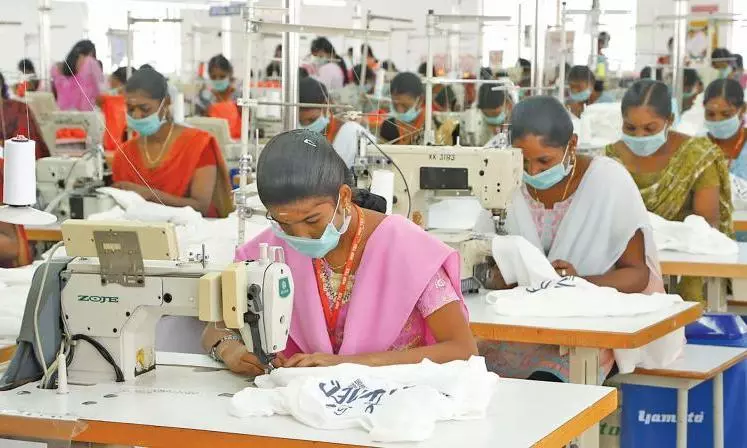
Karnataka's garment sector employs lakhs of women. As production scales back, shifts are being cut and monthly wages are shrinking. Meanwhile, banking disruptions in the Middle East are delaying export payments — pushing MSMEs closer to loan default.
Also read: Why Tirupur exporters are upbeat on US market despite tariff confusion
The war's front lines may be far away. But for Karnataka's weavers, silk farmers, and garment workers, the fallout is arriving right at their doorstep.
This article was originally published in The Federal Karnataka