Meerut Dalit murder: Police clampdown in Kapsad raises questions on justice
Despite Yogi govt’s claims of strong governance, case draws criticism as main accused was arrested after 3 days and police barred media from entering village

The murder of a Dalit woman and the abduction of her 20-year-old daughter in Meerut’s Kapsad village has sparked fresh questions over law and order in Uttar Pradesh. The crime, and the events that followed, have triggered political outrage and anger among Dalit rights groups.
Even as the Yogi Adityanath government reiterates its claim of strong governance, the handling of the Kapsad case has drawn sharp criticism. The main accused, Paras Singh Som, was arrested only after three days, while police sealed off the village and prevented outsiders, including journalists, from entering.
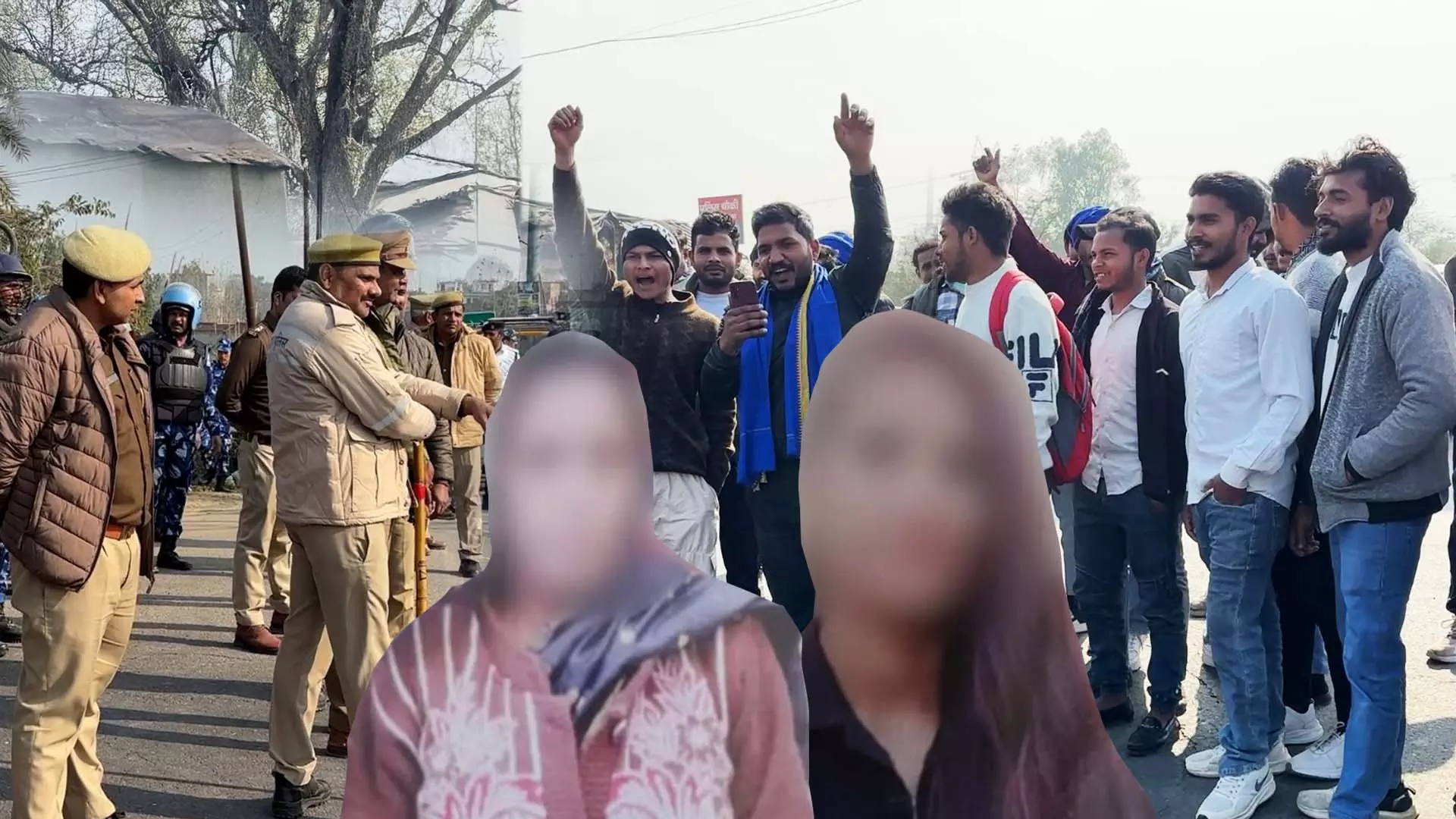
The Federal Desh team’s ground report revealed an unusual security clampdown around Kapsad village, with heavy police and Rapid Action Force deployment raising concerns about transparency in a case that has already unsettled the region.
Rule of law questioned
“Ram Rajya or Jungle Raj?” is the question being raised after the brutal killing of a Dalit woman identified as Sunita. She was allegedly attacked with an axe while her daughter was abducted, triggering fear and outrage in the area.
Also Read: Ground Report: Why were roads to UP's Kapsad village blocked after Dalit murder, abduction?
The delay in arresting the accused has become a focal point of political criticism. Opposition leaders and activists argue that swift police action could have saved Sunita’s life and prevented the abduction of her daughter.
Samajwadi Party MLA from Sardhana, Atul Pradhan, accused the Yogi government of police inaction. He alleged that the ruling party was quick to blame the Opposition instead of addressing lapses in law enforcement.
Blocked access
When The Federal Desh team attempted to reach Kapsad village, police blocked all entry routes. Even 3 km away, at Aterna near the Ganga canal, the team was stopped and denied permission to proceed.
SP Rural Abhijeet Kumar was present at the spot but declined to speak on camera. Off the record, he said that only senior officials were authorised to comment. Other police personnel also refused to respond to questions.
The heavy security presence stood in contrast to the circumstances of the crime itself, prompting questions over why such measures were enforced only after the incident and not earlier.
Anger on the ground
On one side of the canal, police forces maintained a tight vigil. On the other hand, supporters of Dalit rights groups and Kisan Morcha workers raised slogans, demanding accountability and justice.
Protesters questioned the timing of the security deployment. “If the police had acted swiftly, Sunita would be alive, her daughter would not have been abducted, and the accused would have been behind bars earlier,” they said.
Also Read: Yogi govt faces backlash as SC woman killed, daughter abducted in Meerut
Anger was particularly visible among Dalits in nearby Kunjalvan village. Residents repeatedly asked whether bulldozer action would be taken against the accused or whether such actions were reserved only for Dalits, backward classes, and minorities.
Case details
According to Sunita’s son, Paras Singh Som intercepted the mother and daughter, attacked Sunita with an axe, and abducted her daughter. Police searched for the accused and his accomplices for three days before finally tracking him down in Haridwar.
The abducted girl was recovered, and the arrest brought some relief. However, the delay has continued to fuel anger and distrust among villagers and rights groups.
The Kapsad incident has now escalated into a political flashpoint, intensifying debates over law and order in Yogi Adityanath’s Uttar Pradesh. As the village grieves, a troubling question lingers: who truly gets justice in the state?
The content above has been transcribed from video using a fine-tuned AI model. To ensure accuracy, quality, and editorial integrity, we employ a Human-In-The-Loop (HITL) process. While AI assists in creating the initial draft, our experienced editorial team carefully reviews, edits, and refines the content before publication. At The Federal, we combine the efficiency of AI with the expertise of human editors to deliver reliable and insightful journalism.