



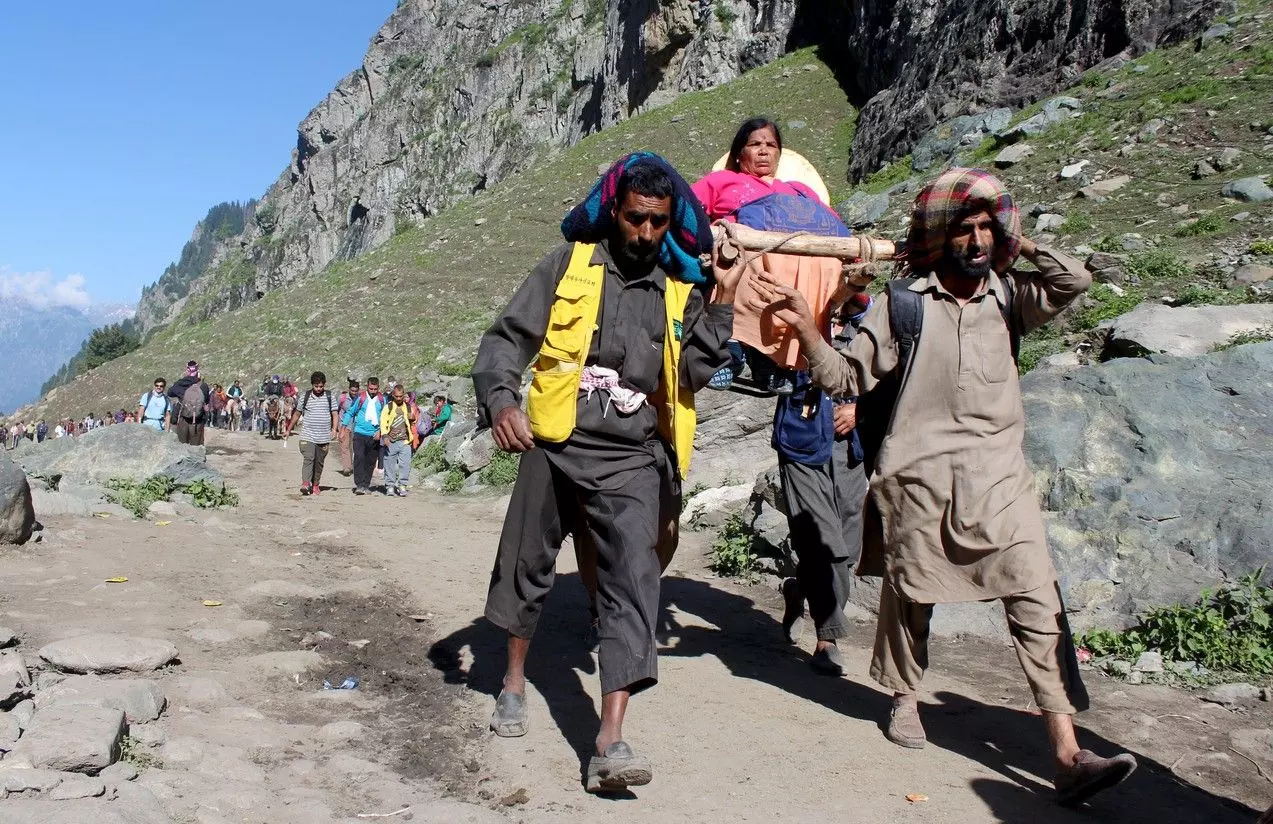
Hindu pilgrims seen on their way to the Amarnath cave, one of India's most popular pilgrimage destinations. Photo: iStock
Amarnath Yatra begins July 3: Here’s all you need to know
The pilgrimage to run till August 28, with registration starting April 15; improved routes, technological tracking and medical facilities in place

The annual pilgrimage to the holy Amarnath cave shrine this year will begin on July 3 (Friday), with mandatory registrations beginning Wednesday (April 15). The pilgrimage will continue for 57 days, with the yatra concluding on August 28, Jammu and Kashmir Lieutenant Governor Manoj Sinha said on Sunday (April 12).
Also read: J&K govt charts plan to revive tourism | Can Kashmir recover?
Speaking with reporters at the Lok Bhavan in Jammu, he confirmed the dates. He also said pilgrims between 13 and 70 years could undertake the yatra.
The dates were finalised during a meeting of the Shri Amarnath Ji Shrine Board (SASB), chaired by Sinha. The first puja will be performed on June 19 on the occasion of Jyeshtha Purnima, the L-G added.
Here’s all you need to know about the pilgrimage:
Eligibility
Pilgrims between the ages of 13 and 70 are eligible to undertake the yatra.
Also read: From Varanasi to Mecca, how pilgrimages changed 19 cities around the world
Registration details
Registration has been made mandatory and will begin from April 15. Online registration will be available through the official SASB website (jksasb.nic.in). Registrations will also be facilitated through branches of Yes Bank, ICICI Bank, Punjab National Bank, State Bank of India and Axis Bank. The registration for a particular yatra date will close seven days in advance.
Advance registration can be done at approximately 556 designated bank branches nationwide, and online registration can also be completed via the official website of SASB. The registration fee is Rs 150 per person.
Health certificate requirement
Applicants are required to present a valid compulsory health certificate (CHC), which must be issued on or after April 8, 2026, by authorised medical professionals or institutions. To assist pilgrims, a detailed list of recognised medical facilities across 37 States and Union Territories has been made available.
Pilgrimage route
The yatra will commence via two routes — the traditional 48-kilometre (km) Nunwan-Pahalgam route in Anantnag district and the shorter but steeper 14-km Baltal route in Ganderbal district. Both routes have been widened significantly to ensure smoother movement. According to Sinha, several stretches have been expanded to around 12 feet, and vulnerable sections and bridges have been improved by the Border Roads Organisation.
Also read: Sabarimala: 2 lakh pilgrims in 48 hours; temple struggles to manage crowd
New measures for pilgrims’ safety
Over the past four years, several measures have been introduced to facilitate the pilgrimage. For example, Radio Frequency Identification cards have been made mandatory for all pilgrims. Group accidental insurance has been increased from Rs 5 lakh to Rs 10 lakh, with an additional Rs 50,000 provided in case of natural or accidental death of ponywalas.
Accommodation and other facilities
Facilities have been expanded to accommodate more pilgrims, even during adverse weather conditions. Expanded yatri niwas facilities are available at Chandanwari, Baltal and Srinagar. The Jammu facility is also expected to open soon.
Also read: Where tigers roam and gods watch: A pilgrimage through the wild heart of Bandhavgarh
Tented accommodation is available on a rental basis at various Yatra camps like Panchtarni, Sheshnag, Nunwan, Baltal and others en route to the cave shrine, says the SASB website. Various societies/NGOs also offer food, drinking water, and refreshments for free to the pilgrims at various locations along both yatra routes.
Medical facilities
Jammu and Kashmir health and medical education department, along with the assistance of various NGOs, Army and Central Armed Police Forces, offers various health care facilities such as base hospitals, medical/emergency aid centres, oxygen booths, and ambulances at various locations during the yatra.
Security arrangements
(With agency inputs)