The Delhi Police's decision to give Bhardwaj a 72-hour window before arrest has raised questions about whether the law is being applied consistently.
Swatantra Bhardwaj case: Does 72-hour deadline suggest a perfunctory probe?
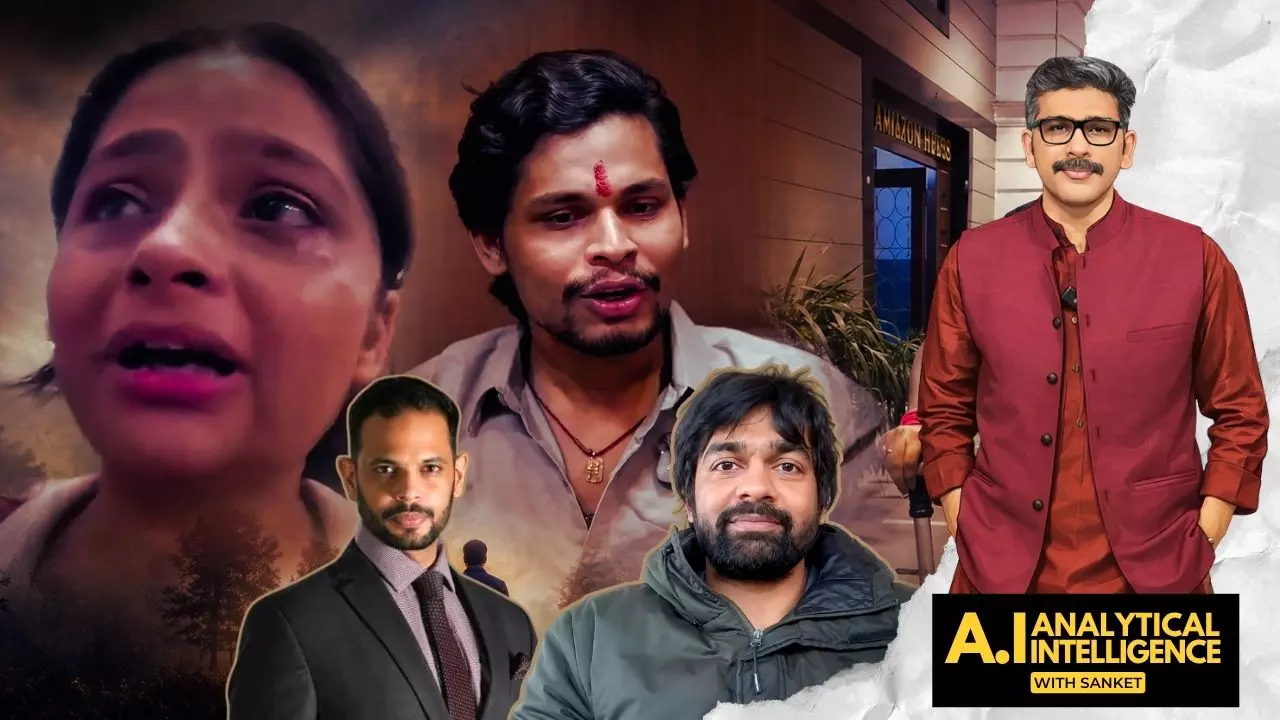
Advocates Kapil Madan and Raghav Awasthi debate the assault case, the medical report, and questions over Delhi Police’s handling of the matter

If police have grounds to arrest, why wait 72 hours?
That's the question now at the centre of a growing controversy over Delhi Police's handling of the case against Swatantra Bhardwaj, accused of assaulting the father of a participant in the Cockroach Janata Party (CJP) protest — an incident that took on new weight after a podcast surfaced in which Bhardwaj appears to boast about "cracking" the victim's head.
The Delhi Police's decision to give Bhardwaj a 72-hour window before arrest has raised questions about whether the law is being applied consistently. Advocate and political analyst Kapil Madan argues the case warrants serious investigation and possibly charges under Section 307 — attempt to murder. Update: According to a PTI copy, the Delhi police detained Bhardwaj late Friday evening.
Has the Delhi Police shown a different degree of urgency here compared to its handling of the protesters themselves? That is the big question.
The 72-hour question
For political analyst and advocate Kapil Madan, the deadline itself is the tell. If sufficient legal grounds for arrest already existed, he argued, there should be no need to give an accused a window of time before action is taken. The decision to set a deadline — rather than act immediately — suggests, in his view, that the investigation hasn't been handled with the urgency the case demands. Madan was speaking on the latest episode of AI with Sanket.
Also Read: Activist's claim of 'cracking skull' at CJP protest sparks Oppn attack on Delhi Police
Speaking on the same show, advocate Raghav Awasthi pushed back, maintaining that the legal process must follow the evidence, particularly the medical documentation and other material relevant to the alleged offence, rather than the optics of timing.
Investigation questions
Madan described the case as a "textbook classical example" of what he called a perfunctory investigation. He argued that Bhardwaj's alleged statements about the assault, along with his claimed political connections, warranted greater scrutiny — and suggested a court could monitor the investigation to ensure the law was applied without favour.
Also Read: CJP hails SC order quashing protest FIRs , says compensation policy must reach NEET victims' kin
He also pushed back on reducing the case to the severity of the injury alone. Even if the medical report found the injury to be simple, he argued, that wouldn't settle whether an attempt-to-murder charge applied — comparing it to a case where a firearm is fired at someone but misses.
What the medical report says
Awasthi took a different approach, stressing the importance of the medico-legal case (MLC) report in establishing the nature of the injury. He explained that when an injury is inflicted and the person is hospitalised, the attending doctor's assessment becomes central to how police classify the offence.
He cautioned against determining the legal character of the assault purely from Bhardwaj's podcast remarks, and argued that a metal kada could not automatically be treated as a deadly weapon.
Also Read: CJP put Rajasthan students’ plight in the spotlight; ‘We Too’, say teachers
Delhi Police, for its part, said the victim was examined at Ram Manohar Lohia Hospital, that the injuries were simple, that they were caused by a kada during a scuffle, and rejected claims of a skull fracture.
Intent versus injury
Madan rejected the idea that the medical report alone should determine whether an attempt-to-murder case applies. He kept returning to the question of intent — arguing that the location of the blows (allegedly aimed at the head), the circumstances of the attack, and Bhardwaj's own statements all mattered in assessing whether there was knowledge or intention that the act could cause death.
Awasthi said that the underlying medical documentation should be made public so the injury could be independently assessed, rather than debating intent based on a podcast.
Also Read: CJP will keep trying, but can’t solve all problems: Abhijeet Dipke | Interview
Politics versus process
Bhardwaj's claimed political connections, referenced in his podcast, added another layer to the debate. Awasthi warned against assuming that photographs or associations with politicians establish responsibility for someone's conduct.
Madan countered that even if those claims turn out to be false, it wouldn't remove the need for a proper investigation — the law, he said, should apply irrespective of the identity or political affiliation of the accused or the victim.