







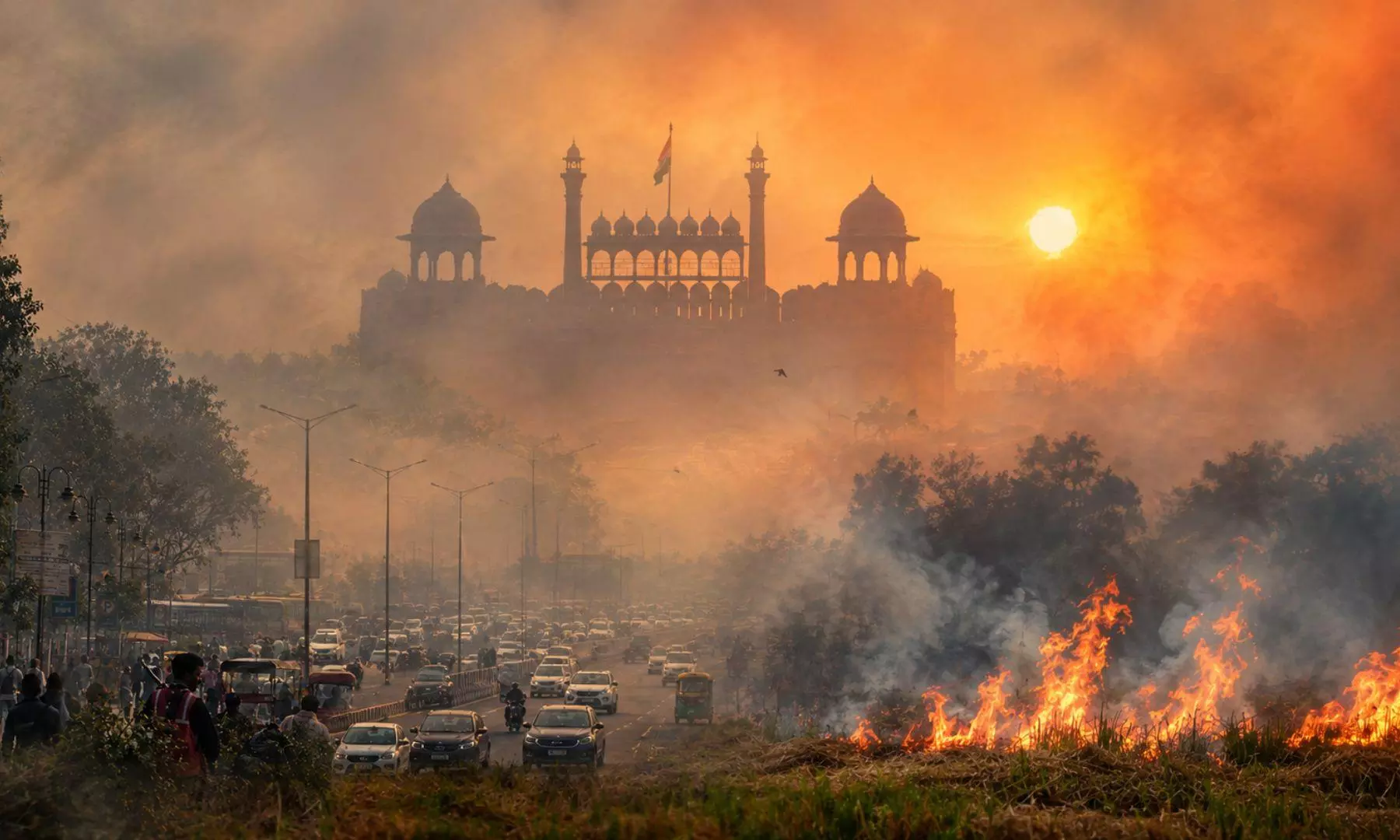
Delhi vehicle entry rules from November 1: Which are allowed and which are not?
Delhi's revised vehicle entry rules take effect on November 1. Check which vehicles are exempt, PUCC requirements and restrictions under GRAP

The Delhi Traffic Police on Friday (October 30) announced that from November 1, vehicles entering Delhi will have to meet the conditions in line with the revised Graded Response Action Plan (GRAP).
Delhi tightens vehicle entry rules from November 1
Taking to X, the Delhi Traffic Police further stated that the restrictions will continue to be in force until January 31, 2027. Motorists planning to travel to the capital have been asked to check their vehicle documents and emission category before they enter the national capital.
The order covers selected vehicle categories and is aimed at curbing pollution in the capital.
Delhi had recorded several days of poor air quality before rain and thunderstorms brought some relief on Friday. The AQI stood at 90 at 9.05 am, against 222 at 4 pm on Thursday, when the reading fell in the poor category, reported the Hindustan Times.
Which vehicles are exempt from the restrictions?
Under the new restrictions, vehicles registered outside Delhi will be barred from entering the capital during the three-month period. The order exempts those running on CNG or electricity, along with vehicles that meet BS-VI emission standards.
A valid Pollution Under Control Certificate (PUCC) will be required from every vehicle entering Delhi. The rule also covers BS-VI vehicles. Those without a valid certificate will be stopped at entry points.
Also Read: Delhi’s air turns toxic post-Dussehra, despite a six-year low in farm fires
Goods vehicles with no destination in Delhi have been asked to take the Eastern or Western Peripheral Expressway instead of passing through the city. Interstate diesel buses that fall below BS-VI standards will also not be allowed to enter Delhi.
The maximum amount of pollutants that motor vehicles can emit is fixed as per the Bharat Stage norms. These limits include carbon monoxide, nitrogen oxides, hydrocarbons and particulate matter. The BS-VI standard became mandatory across India in April 2020.
How does the GRAP work?
The GRAP is activated across Delhi-NCR by the Commission for Air Quality Management (CAQM) when pollution levels rise. Its first stage applies when the AQI falls between 201 and 300, a reading classified as poor.
Also Read: Why Delhi’s discourse on air pollution seems to have moved from action to adaptation
At Stage-I, authorities are required to tackle dust from roads and construction sites. Checks are also directed at emissions from vehicles and industrial units. Open waste burning falls under the restrictions as well.